Why You Should Check a Phone Number on Classifieds
Learn how to check a phone number on classifieds to spot scams, verify sellers, and avoid risky listings before you contact anyone.
On this page
- Why You Should Check a Phone Number on Classifieds
- First Checks Before You Call or Text
- How to Identify a Scam Phone Number
- Seller Verification: What to Confirm About the Person Behind the Listing
- Safe Ways to Contact a Seller
- What to Do If the Number Looks Suspicious
- Tools and Search Methods for Checking a Number
- Final Checklist Before You Meet or Pay
Why You Should Check a Phone Number on Classifieds
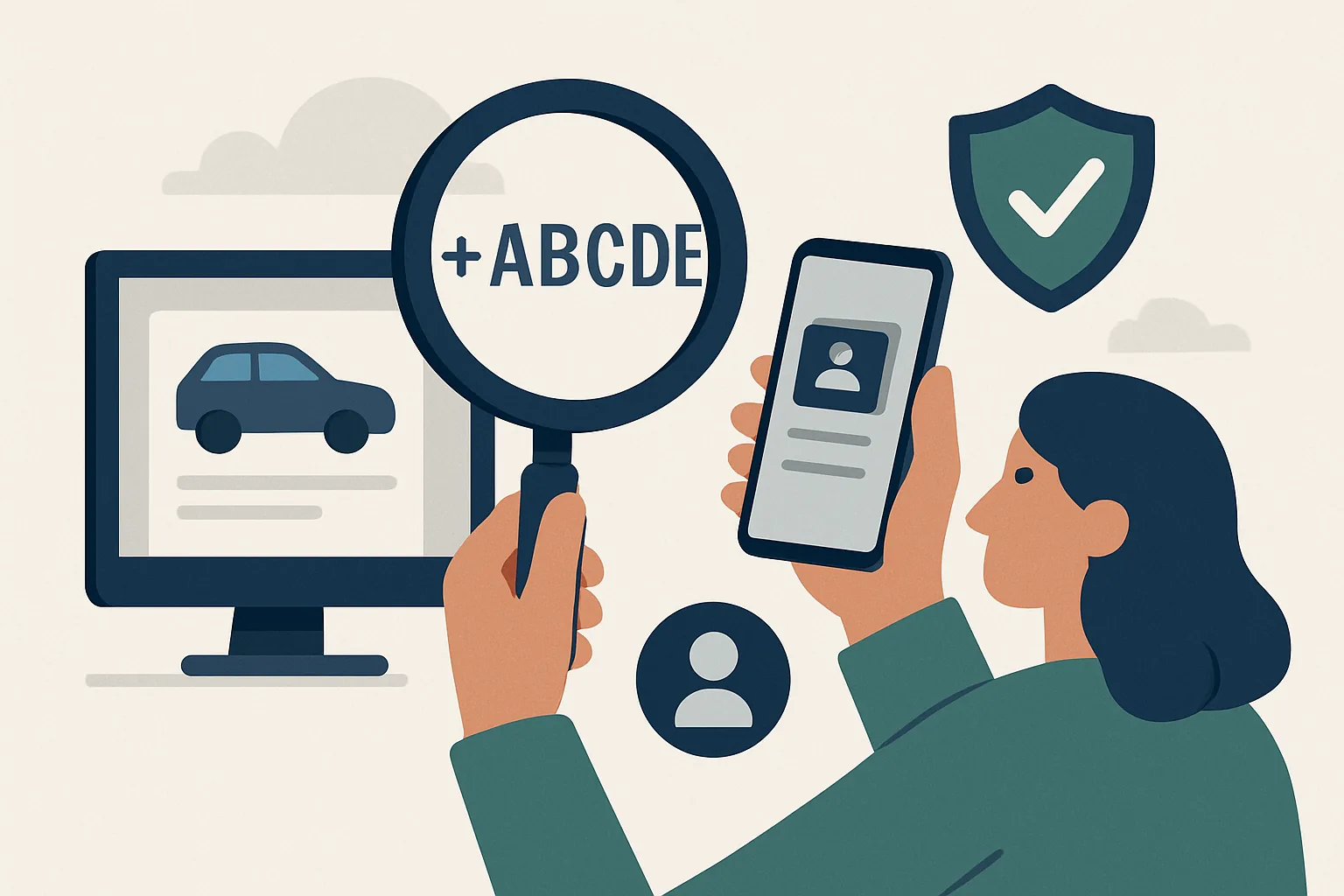
On classifieds sites, a phone number can tell you more than a polished listing ever will. A good number often connects to a real person with a traceable history: the same name on a profile, consistent item descriptions, or a few sensible messages that sound like someone who actually owns what they’re selling. A bad one may hint at the opposite. It might belong to a scammer cycling through accounts, a seller who is rushing buyers for the wrong reasons, or someone who changes details every time you ask a simple question.
That is why it makes sense to check a phone number on classifieds before you get invested. You are not trying to conduct a detective case. You are doing a practical risk check. A number can help you spot repeating patterns, confirm whether the seller seems consistent, and decide whether it is worth replying at all.
Think of it this way: a listing is a promise, but a phone number is a thread. Pull on it carefully and you may find useful context. If the same number appears across multiple ads with different names, that is worth a pause. If the seller reacts normally and the details line up, that is reassuring too. For a broader overview of platform safety features, it can help to review The 7 Admister services before you start contacting people.
First Checks Before You Call or Text
Before you pick up the phone or send a message, do a few quick checks. They are simple, but they often reveal enough to save you time.
- Compare the number across listings. Does it appear in more than one ad? If so, do the items, names, and locations match?
- Search the number in a search engine. Sometimes a few results are enough to show whether it has been associated with complaints, business pages, or other classifieds ads.
- Look for repeated ad text. If the wording is identical across different locations, that can suggest mass posting or copied content.
- Check whether the name in the profile matches the name mentioned in the message or listing. Small differences happen, but unexplained changes are worth noticing.
- See whether the seller’s location and the phone number’s area code make sense together. They do not have to match perfectly, but obvious mismatches can be a warning sign.
None of these steps proves fraud on its own. A seller may use a work number, travel often, or post for a family member. Still, the more pieces that line up, the better. And if the listing feels vague from the start, you do not need to force it. There are plenty of other offers.
How to Identify a Scam Phone Number
A scam phone number is rarely suspicious in just one way. The warning signs usually come as a cluster. A message arrives quickly. The seller seems eager to move the conversation elsewhere. They may push for a deposit, ask for a code, or avoid direct answers about the item. That kind of pressure is the real alarm bell.
Common red flags include the following:
- High-pressure language such as “buy now,” “I have another buyer,” or “send money today.”
- Requests to move off-platform immediately, especially before you have confirmed basic details.
- Inconsistent area codes or international numbers when the listing is clearly local.
- Multiple complaints tied to the same number in search results, forums, or social posts.
- Refusal to answer simple questions about condition, pickup, or exact location.
Scammers often rely on speed. They want you to stop thinking and start reacting. If a number is attached to that kind of behavior, treat it as a signal to slow down. A legitimate seller may be busy, but they usually do not mind a normal conversation about the item.
There is also the problem of recycled contact details. One phone number can be passed between accounts or reused in different schemes. That is why it helps to look for repetition across ads and complaints rather than focusing on a single message. For safer communication habits in general, see How Admister works and the support guidance in Getting support.
Seller Verification: What to Confirm About the Person Behind the Listing
Phone numbers matter, but they are only one part of seller verification. You are really trying to confirm that the person behind the listing is who they claim to be, and that the item exists as described. A short, respectful exchange can reveal a lot.
Start with the basics. Ask the seller to confirm the item’s condition, brand, model, or size, depending on what is being sold. If the answer is vague or oddly scripted, pay attention. A real owner should usually know the everyday details: where the item was used, whether anything is missing, or why they are selling it.
Useful checks include:
- Matching the phone number to the seller’s name or profile name, when available.
- Reviewing account history, including how long the profile has existed and whether it has other active listings.
- Asking for basic proof of ownership when appropriate, such as a photo of the item with a handwritten note or a close-up of a specific feature.
- Confirming that the item details in the chat match the listing exactly.
- Noticing whether the seller can answer practical questions without changing the story.
Be careful not to overcomplicate this. You are not asking for personal documents, and you do not need to become intrusive. The goal is to see whether the conversation is coherent. If the seller says the phone number belongs to a relative or a business line, ask for a clear explanation and see whether everything still fits. If it does, fine. If it does not, move on.
Safe Ways to Contact a Seller
The safest contact habits are usually the simplest ones. Keep the conversation on the classifieds platform whenever possible, especially at the beginning. That way, you have a record if something goes wrong and you avoid giving away more personal details than needed.
A few good rules help a lot:
- Do not share your home address, workplace, or identity documents in early messages.
- Avoid clicking links sent by strangers unless you are absolutely sure they are legitimate.
- Do not share verification codes, one-time passwords, or account login information, even if the message sounds official.
- Keep payment talks separate from casual chatting, and only move forward once the item and the seller make sense.
- If the seller insists on switching to another app immediately, ask yourself why.
It is also wise to keep your tone calm and specific. Ask one question at a time. For example: “Is the item still available?” “Can you confirm the exact model?” “Would pickup be possible at a public location?” Simple questions are hard to fake for long. When people become evasive at this stage, they often become more evasive later.
If you are arranging a local pickup, it is worth reading how to create a safe pickup. A solid pickup plan is part of safe contact, not an extra step added at the end.
What to Do If the Number Looks Suspicious
If something feels off, do not argue with it. Stop the conversation. You do not owe a suspicious seller a long explanation, and you definitely do not need to keep replying just to be polite.
First, save what you can. Take screenshots of the listing, the number, the profile name, and the messages. If the seller sent links or payment instructions, keep those too. Evidence matters, especially if the same contact is used again later on other accounts.
Next, report the listing through the platform’s tools. If the site has a complaint or moderation process, use it. If you need help understanding the route, the page on Getting support is a sensible place to start. Reporting is not just about your own transaction; it may protect the next person who sees that number.
If you already shared something sensitive, act quickly. Change passwords if you gave away account information. Contact your bank or payment provider if any financial details were exposed. If a code was shared, assume that the account tied to that code may be at risk and secure it immediately.
And if you paid before noticing the warning signs, gather every record you have: messages, receipts, names, screenshots, timestamps. Even when recovery is uncertain, organized evidence makes any follow-up easier.
Tools and Search Methods for Checking a Number
There are several ways to check a number, and none of them is perfect on its own. The best approach is to combine a few simple methods and look for overlap.
Search engines are the easiest starting point. Put the full number in quotation marks and see what appears. Sometimes you will find the number tied to business pages, classifieds posts, or complaint threads. Sometimes you will find nothing at all, which does not prove safety or risk. It just means the trail is thin.
Reverse phone lookup services can also help. They may show a name, region, or possible carrier, but results can be incomplete or outdated. Treat them as clues, not final proof. The same caution applies to social platform searches. People sometimes reuse numbers on profiles or recovery contacts, but privacy settings and outdated records can limit what you see.
Useful search methods include:
- Search the exact number in a browser.
- Search the number together with the item category, such as “phone number + laptop” or “phone number + apartment”.
- Check whether the number appears in image-based listings, forum comments, or marketplace profiles.
- Compare the results with the seller’s name, city, and item description.
One caution worth repeating: old information can linger. A number may have belonged to someone else years ago, or a business may have changed hands. That is why context matters more than any single result. You are looking for a pattern, not a verdict from one search page.
For buyers who want a broader safety routine, Frequently asked questions — Admister can help clear up common concerns about platform use and account safety.
Final Checklist Before You Meet or Pay
Before you meet the seller or send money, give the transaction one last calm review. This is the point where many people skip a step because they are excited, tired, or afraid someone else will buy first. That is exactly when a checklist earns its keep.
- Confirm the phone number still matches the seller and the listing.
- Make sure the item details, price, and condition still make sense.
- Check that the meeting place is public and practical.
- Inspect the item in person if possible, including basic functionality.
- Choose a payment method that offers the right level of protection for the situation.
- Keep your personal information limited to what is necessary for the exchange.
- Walk away if the seller changes terms at the last minute.
The best classifieds transactions feel steady, not dramatic. The seller answers plainly. The phone number checks out. The item matches the photos. The meeting is simple. There is no rush, no mystery, no hidden pressure. That does not mean every unusual detail is a scam, but it does mean you should trust the balance of evidence.
In practice, checking a phone number is less about catching a criminal and more about protecting your own judgment. The process is quick, and the payoff is often substantial: fewer bad deals, fewer awkward conversations, and a much better sense of who you are dealing with before you commit. If a number passes the basic tests, you can continue with more confidence. If it does not, you have already done the smartest thing possible — you noticed early.