What to Do When a Buyer Reports a Damaged Item After Delivery
Learn what to do when a buyer reports a damaged item after delivery on classifieds, from evidence to refunds and calm replies.
On this page
- What to Do When a Buyer Reports a Damaged Item After Delivery
- 1) Did the buyer report the damage quickly enough to matter?
- 2) What should you ask the buyer to send first?
- 3) Could the damage have happened after delivery?
- 4) Should you respond with a refund, a replacement, or a partial refund?
- 5) How do you handle the message without admitting fault too early?
- 6) What if the buyer wants to return the item?
- 7) When should you involve the platform, carrier, or payment service?
- 8) What should you do if the buyer is being unreasonable or hostile?
What to Do When a Buyer Reports a Damaged Item After Delivery
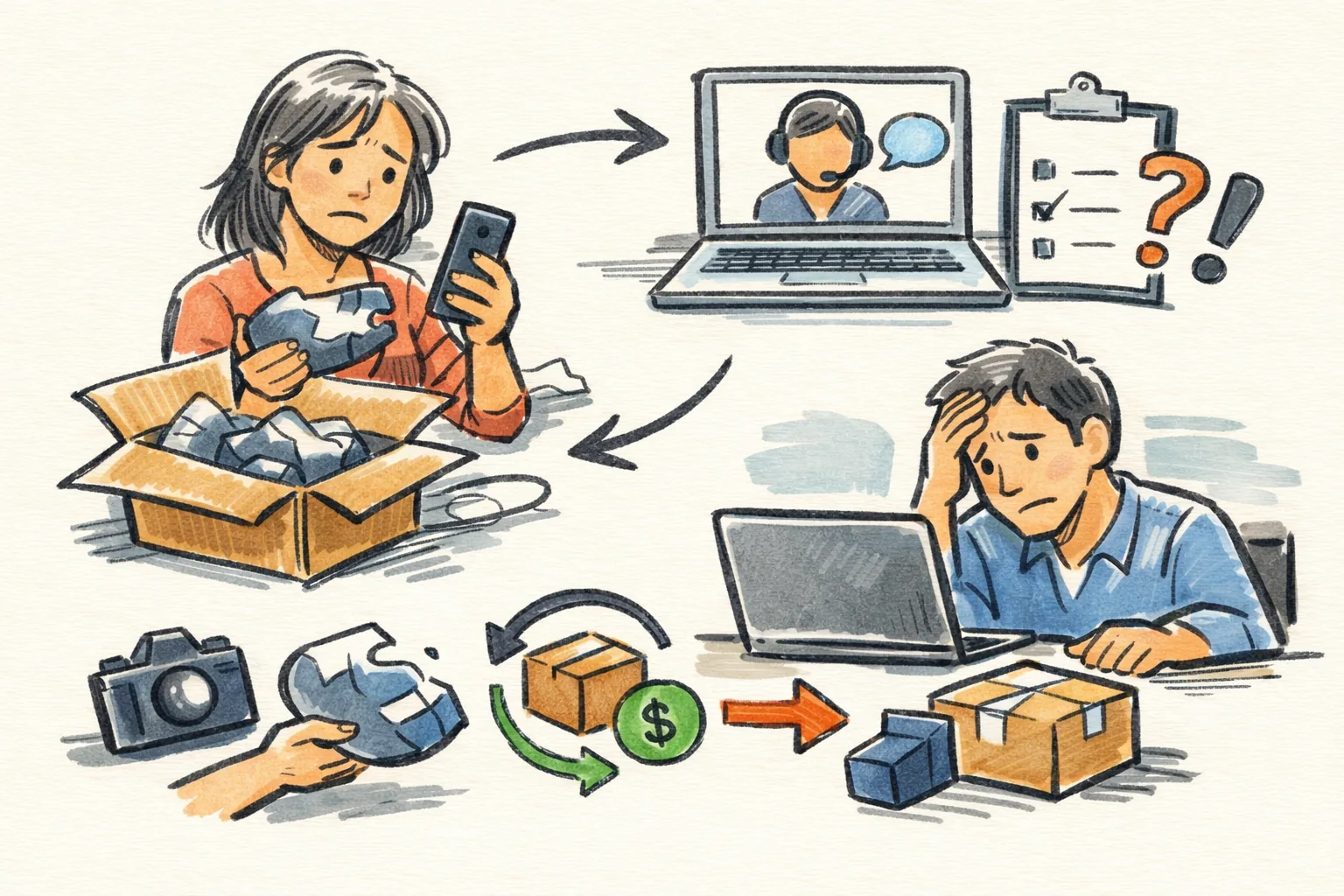
A damaged-item message arrives fast, and it can rattle even an experienced seller. One buyer says the lamp is cracked, another says the laptop screen arrived with a line across it, and suddenly the question is not just “what happened?” but “what do I do next?” The first move is not panic. It is timing, facts, and a clean reply.
If you sell through classifieds, this situation is common enough to plan for, and what to do when a buyer reports a damaged item after delivery on classifieds often comes down to the same basics: timing, photos, and calm communication. The buyer may be honest. The shipping box may have taken a hit. A neighbor may have left the parcel in the rain. Or the item may have been damaged after delivery, which is why the phrase वर्गीकृत विज्ञापनों पर बेचते समय शिपिंग matters here even if you were not trying to run a shipping-heavy sale. The next 24 hours often decide how cleanly the claim gets resolved.
1) Did the buyer report the damage quickly enough to matter?
Start with the clock. If the buyer messages you within hours of delivery, that is different from a message sent after 5 days, 10 days, or “I just opened it this weekend.” Ask when the package was delivered, when it was opened, and whether the damage was visible immediately. Short sentence. Big difference.
Timing does not prove everything, but it matters. A buyer who reports damage the same day has a stronger case than someone who waited until after using the item, moving it, or repacking it. A delay can also mean the item was fine on arrival and damaged later. You do not need to accuse anyone. You do need the facts.
Ask one direct question: “Was the item damaged when you first received it, or did you notice it later?” That single line helps separate delivery problems from post-delivery handling. If the buyer says the damage was noticed after opening the box, ask for the time they opened it and whether the outer packaging showed any visible harm. Four details. That is enough to begin.
2) What should you ask the buyer to send first?
Request evidence before offering a remedy. Photos of the item, the packaging, the shipping label, and the damage itself should come first. A video is even better if the buyer has not opened everything yet. Ask for one wide photo and two close-ups at minimum. If the item is electronic, ask for a short clip showing the defect in use. No guessing.
These images do more than prove damage. They show whether the box was crushed, whether the padding was thin, whether the item was wrapped loosely, and whether the label matches the parcel you sent. A shipping label with the tracking number helps you tie the claim to the exact delivery. If the buyer can send a photo of the package as received, that is ideal. If not, you still need what they have.
It helps to ask for a brief written description too. Ask what is damaged, where the damage is located, and when it was first noticed. Keep the request plain. “Please send 3 photos and a short note” sounds reasonable because it is reasonable. If you need a model message, the same evidence-first logic used in वर्गीकृत विज्ञापनों पर बेचते समय शिपिंग is the right instinct here as well. Facts first. Opinions later.
3) Could the damage have happened after delivery?
Yes, and you should think through that possibility without turning the conversation into a fight. Transit damage is one cause. Poor packaging is another. Handling after delivery can also matter: a heavy box dropped on a floor, a pet knocking something off a table, or moisture getting into a package left outside for 2 hours. Small details matter here.
Pre-existing issues are possible too. A seller may miss a hairline crack, a loose joint, or a weak hinge before shipping. That is why condition notes and photos before shipment are useful. If you have your own pre-shipment photos, compare them to the buyer’s images side by side. A missing chip on the corner, a dent that was already there, or a fresh break line can change the story quickly.
Do not accuse the buyer of careless handling. Do not claim the carrier is at fault before you have evidence. Say only that you want to compare the photos and understand what happened. One sentence. One step. If the item is fragile, bulky, or oddly shaped, the chance of damage in transit is higher, and that fact should shape your next move.
4) Should you respond with a refund, a replacement, or a partial refund?
The remedy should fit the item. If the damage makes the item unusable, a full refund or replacement may be the cleanest path. If the damage is cosmetic and the item still works, a partial refund may be more practical. That is especially true for items with limited resale value, where a return would cost nearly as much as the item itself.
Think in three buckets. One: the item is total-loss or unsafe, so a full refund is reasonable. Two: the item still functions, but the damage lowers value, so a partial refund may make sense. Three: you have a spare copy, a duplicate part, or a simple fix, so a replacement or repair could solve the problem faster. Keep the decision tied to the item, not to irritation.
If you are selling a collectible, a vintage chair, or a camera lens, a small crack can change the entire value. If you are selling a kitchen tool or a basic shelf, the buyer may care more about function than appearance. The right amount depends on condition, demand, and what you can honestly support. The item decides.
5) How do you handle the message without admitting fault too early?
Write like you are trying to solve a problem, not win an argument. A good first reply sounds neutral: “Thanks for letting me know. Please send a few photos of the item and packaging so I can understand what happened.” That line does not admit fault, deny fault, or lock you into a remedy. It simply opens the door.
Avoid phrases like “I’m sorry I damaged it” or “I know the carrier broke it” before you have proof. Those words can be read as admissions. Instead, keep the message focused on verification and next steps. If you need a stronger template, you can say: “I want to review the photos and delivery details before deciding the best way forward.” Clean. Calm. Direct.
There is one small trick that helps. Use the same words the buyer uses for the item, the packaging, and the damage. Repeating those exact details keeps the conversation grounded. It also helps if the claim later moves to a platform or payment service. A seller who stays neutral in writing usually has fewer problems later. That matters more than sounding warm.
6) What if the buyer wants to return the item?
A return may be workable, but not every classifieds sale should turn into one. Start with the size and fragility of the item. A paperback book is simple. A glass cabinet is not. If the item is large, awkward, or expensive to ship, the return may cost too much to make sense. Ask whether the buyer can package it safely in the same materials if a return is approved.
Who pays shipping depends on the sale terms, the platform rules, and the cause of damage. If the item arrived damaged in transit and the carrier claim is likely, shipping may be part of that process. If the damage happened after delivery, the return cost can become a sticking point. Spell out a deadline if you approve a return. For example, ask the buyer to ship it back within 3 days and share the tracking number once it is sent.
For bulky items, a return can be unrealistic. A sofa, a dresser, or a treadmill may cost too much to move again. In those cases, a partial refund or local inspection can be better than forcing a shipment back and forth. If you sold through a classifieds site and arranged pickup plus delivery, keep the old messages. They help show what was promised and what was not.
7) When should you involve the platform, carrier, or payment service?
Escalate when the discussion stops being cooperative or when the buyer is clearly preparing a dispute. If the platform offers a claim process, follow it early rather than waiting until the buyer is furious. Save the message thread, tracking number, delivery confirmation, and every photo the buyer sends. A missing screenshot later can cost you time.
If shipping insurance may apply, gather the paperwork immediately. Some claims need proof of value, proof of shipment, and proof of damage. Others require the box to be kept for inspection. Do not tell the buyer to throw anything away. Keep the packaging, the label, and any inserts. If the carrier wants evidence, you need the original state, not a tidy trash bin.
Payment services can also matter. A chargeback, dispute, or payment reversal can move faster than a chat thread. If that happens, answer with facts only. Use dates, photos, and the delivery record. The more careful your notes are now, the easier that stage becomes. Two records beat one memory.
8) What should you do if the buyer is being unreasonable or hostile?
Set a boundary early if the buyer starts insulting you, threatening you, or demanding a refund without evidence. Reply once, briefly, and keep it professional: “I’m happy to review the photos and packaging details, but I can only continue if we keep the conversation factual.” That sentence does the job. It also signals that you are keeping records.
Do not trade insults. Do not write a long defense. Do not send ten messages in a row. Hostile buyers often want speed, emotion, or a mistake in writing. Give them none of those. If the buyer refuses to provide photos, or keeps changing the story, note that in the thread and stop debating. You are not required to argue for 40 messages.
Document everything in one place: delivery date, first complaint, photos received, your response, and any refusal to cooperate. If the claim grows into a platform case, that file becomes your best support. And if the buyer escalates with a false story, a clean timeline is hard to beat. One final point: if the item was sold on a local classifieds listing and the buyer now claims damage after delivery, keep the original wording from the listing too, because the exact condition stated there can matter just as much as the photos.