How to Choose Between Free Pickup and Discounted Shipping for a Used Item
Learn how to choose between free pickup and discounted shipping for a used item by comparing costs, current quotes, and your minimum proceeds.
On this page
- Define exactly who pays under each offer
- Compare your net proceeds, not just the advertised price
- Get a current shipping quote for this listing
- Set the minimum amount you’re willing to keep
- Decide whether the discount is worth making explicit
- Write the two options so buyers can compare them
- Recheck the offer before accepting payment
Define exactly who pays under each offer
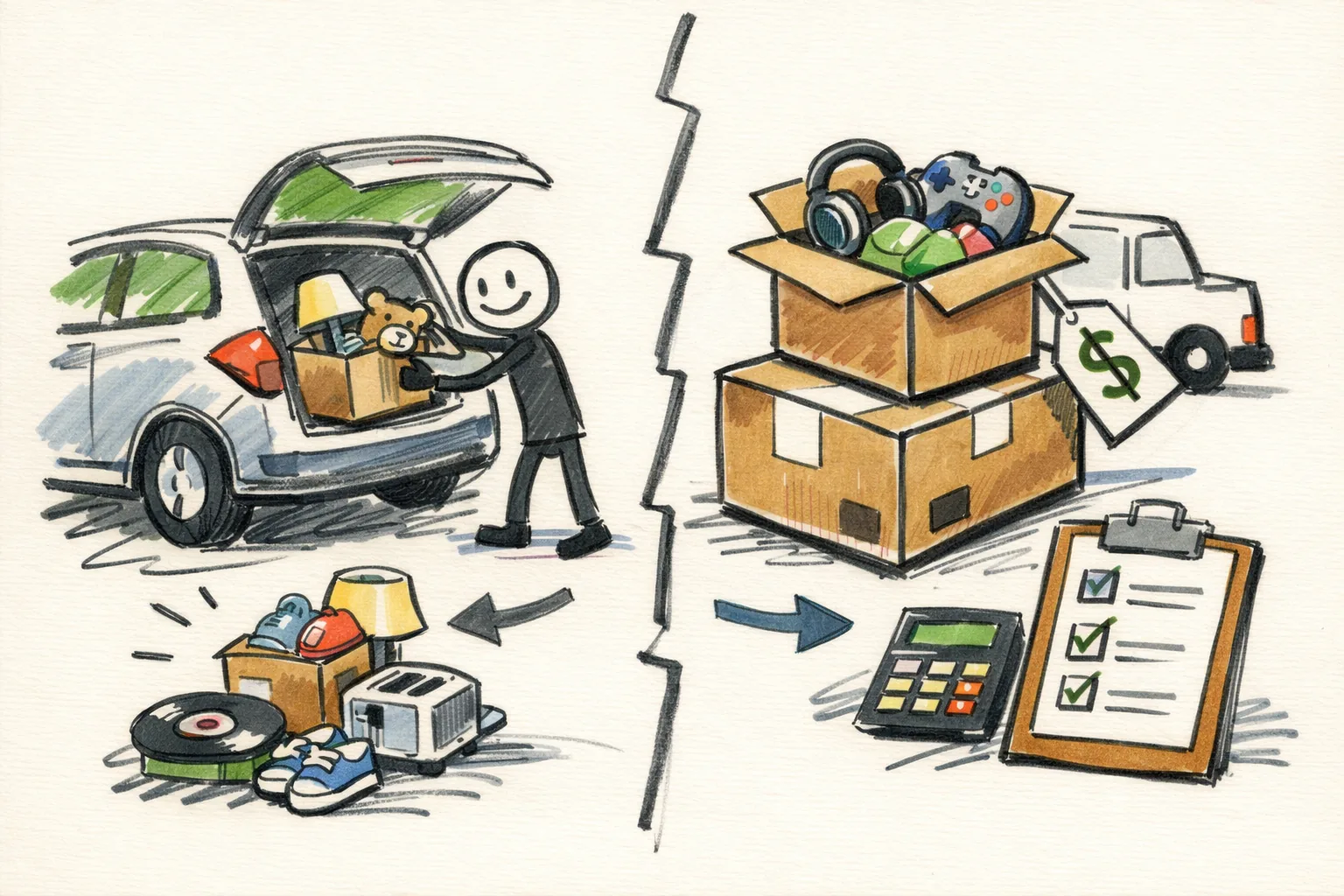
“Free pickup” usually means the buyer collects the item without paying a delivery charge, but the phrase can leave room for confusion. Say plainly whether the buyer must travel to your location and whether you will bring the item to a nearby meeting point. A sofa collected from your home is different from a sofa you agree to carry across town.
Discounted shipping needs the same precision. The lower charge might come from a platform promotion, a contribution from you, or a combination of both. Check the listing screen and the platform’s current terms before describing the discount. If you pay part of the shipping cost, make that clear.
Start with the actual terms. Write down who pays the carrier, who buys the box, and who pays if the buyer changes the delivery address. For example, if you cover part of the postage but the platform covers the rest, don’t call the entire shipment “seller-paid.” That wording could create a dispute when the checkout total differs from what the buyer expected.
Compare your net proceeds, not just the advertised price
The listing price is not the amount you keep. For free pickup, subtract any cost you agree to cover, such as carrying a bulky item to a meeting point. For discounted shipping, subtract your shipping contribution and the packing materials you must buy. The same item price can leave you with different proceeds under the two offers.
Use a simple calculation for each option:
Free pickup: item price minus any pickup-related cost you choose to pay.
Discounted shipping: item price minus your shipping contribution and packing costs.
Suppose you are selling a framed mirror. Its price may stay the same, but shipping could require a sturdy box, corner protection, and a carrier charge that exceeds your contribution. Pickup may require no packaging at all. Write each cost beside the relevant offer before deciding; otherwise, a discount that looks small in the listing can take a larger share of what you keep.
Keep the receipt. If you buy packing paper or a box for this sale, record the amount you actually paid rather than relying on memory. Do not count a cost twice: if the platform’s shipping charge already includes a label, don’t subtract that label again as a separate expense. The aim is to compare your own costs, not to make the two options look artificially equal.
Get a current shipping quote for this listing
A quote for a similar item is not enough. Measure and weigh the item after packing it, because the carrier may charge based on the parcel’s packed size rather than the object alone. A coat placed in a mailer, for instance, has different dimensions from the same coat folded into a box. Use your actual package details.
Check the likely destination range available through the platform or carrier, then note what the quote includes. Check whether tracking, pickup, insurance, or other services are included in the displayed charge. If the final destination is unknown, use the platform’s available estimate for the relevant delivery area rather than presenting a single unconfirmed figure as guaranteed.
Check the platform’s rates, discount eligibility, and the seller-paid portion immediately before you publish or revise the listing. A shipping estimate you saved for a different package may not apply after you add protective material or change the box. If the quote depends on a particular service or parcel size, save those details with it.
For safety, use the platform’s stated payment and shipping process, and check its instructions before agreeing to an unusual delivery request. The guide to shipping safety on classifieds can help you spot requests that don’t fit the normal transaction. A buyer asking you to pay a separate, unexplained fee is a reason to pause and verify the details before sending the item.
Set the minimum amount you’re willing to keep
Decide on your minimum net proceeds before you offer a discount. That amount is your floor: the least you are willing to keep after the costs you agreed to pay. Write it next to the listing price, not in a message thread where it may be forgotten during negotiation.
Then calculate the maximum contribution you can make toward shipping. Subtract your minimum net proceeds and any packing cost from the item price. What remains is the most you can put toward shipping without falling below your floor. If the calculation leaves no room for a contribution, discounted shipping would mean accepting less than your stated minimum.
For example, if a buyer asks for a larger shipping discount after you have already offered one, recalculate using the new amount. Don’t assume the carrier will reduce its charge to match the buyer’s request. If the revised offer takes your net below your floor, you can keep the original terms or offer pickup instead.
A practical way to decide how to choose between free pickup and discounted shipping for a used item is to compare the amount you keep under each option, using a current quote and the same minimum net proceeds. That gives you a clear limit before you discuss terms with a buyer. It also prevents the advertised discount from becoming an open-ended promise.
Decide whether the discount is worth making explicit
You can advertise discounted shipping upfront or leave the item price unchanged and discuss shipping with interested buyers. An upfront discount gives shoppers a specific offer to assess, but it also commits you to terms that should be checked against the current quote. If the parcel details or destination affect the cost, an unqualified shipping promise may be misleading.
Before choosing, confirm how the platform displays the offer. A discount might appear in the listing, at checkout, or only after you arrange the order. Don’t describe shipping as discounted in the listing if the buyer will see the full charge and you have not explained where your contribution applies.
If you prefer to discuss the cost first, keep the item price unchanged and say that shipping can be quoted for the buyer’s destination. That approach is useful when a large or fragile item needs custom packing, such as a lamp with a separate shade. It is less useful if buyers need a clear delivered total before they will contact you. For other precautions, read about avoiding shipping scams on classifieds before accepting a payment arrangement that departs from the platform’s normal process.
Write the two options so buyers can compare them
Put the costs in plain language, with no implied promises. For example: “Pickup is free from my listed area. Shipping is available; I’ll confirm the charge for your destination, and I can contribute up to the stated discount.” Replace “stated discount” with the actual amount only after checking the current offer and platform display.
If you already know the buyer’s shipping total, state the buyer’s final charge after your contribution and identify any conditions that could change it. If you don’t know the destination, don’t invent a flat rate. Ask for the details needed to get a quote, such as the destination postal code, and confirm the charge before payment.
Keep the pickup terms just as specific. Name the collection area, say whether the item must be collected from your address or a meeting point, and explain whether you can help load it. For a dining table, for example, a buyer may need to bring a suitable vehicle and another person to lift it. A short condition can prevent a wasted trip.
Avoid wording that makes the options sound identical when they are not. “Free pickup or cheap shipping” leaves the buyer guessing about the final shipping charge and your contribution. Separate the two choices in the listing or message, then state the amount due under each option as clearly as you can. Check the checkout total, including any platform fees, before sending the offer.
Recheck the offer before accepting payment
Before you accept payment, compare the final shipping charge with your current quote and recalculate your net proceeds. Check that the package dimensions and weight still match what you entered, especially if you changed the box to protect the item. A new parcel size can change the charge and leave your original discount out of date.
Confirm the buyer’s delivery details through the platform’s approved order flow. If the destination, service, or requested delivery method differs from what you quoted, pause and get a new total. Don’t send the item based on an old estimate while assuming the difference will be covered later.
If either the shipping charge or your contribution has changed, revise the terms before payment and get the buyer’s agreement to the updated amount. For pickup, confirm the collection time and location in writing. A final message that states the agreed price, pickup or shipping choice, and any conditions gives both sides a clear record before the item leaves your hands.