How to write a classified ad that actually sells
Most ads sit unsold because of the text, not the price. A practical guide to titles, ad descriptions, honest condition notes and pricing that gets you real replies.
On this page
- Decide what job the ad is doing
- The title does most of the work
- Words that earn their place
- Write the ad description like you're answering questions
- Price like you've done your homework
- Photos: the part people skip and shouldn't
- Mistakes that quietly kill good ads
- Before you publish: a two-minute check
- Pick the right place to list
A classified ad sells when it answers the buyer's questions before they have to ask. That's the whole trick. Most ads that sit for weeks aren't priced wrong — they're written like a filing-cabinet label: "iPhone 13. Good condition. Call." Nobody writes back, because there's nothing to write back about. Here's how to write an ad that gets replies, based on what actually moves items on a general classifieds board.
Decide what job the ad is doing
Before you write a word, be honest about the outcome you want. Fast money for a bulky item you need out of the flat by Sunday is a different ad from top price for a rare guitar you can sit on for two months. The first one leads with convenience and a round number. The second leads with proof, detail and history.
Category matters here too. A phone in electronics competes with fifty near-identical listings, so your differentiator is trust and detail. A jacket in fashion competes on fit and photos. A car needs specs above all, which is why it belongs on auto.admister.org with proper filters for make, year, mileage, fuel and gearbox — put it in the wrong place and the people who filter for exactly your car will never see it.
The title does most of the work
People scan a list. Your title is competing with a wall of other titles, and it gets maybe a second. A good one carries four things: what it is, the model or spec that identifies it, the condition or key selling point, and the location if that decides the deal.
Compare:
- Weak: Bike for sale, good price
- Better: Trek Marlin 5 mountain bike, size M, ridden one season
The second one filters out the wrong people, which is a feature. You want three serious messages, not thirty "is it available?" pokes. Skip ALL CAPS, skip strings of exclamation marks, skip "!!!URGENT!!!". They read as desperate, and desperation invites lowballs.
Words that earn their place
Use the term a buyer would actually type into search. Nobody searches "gently used footwear" — they search "Nike Pegasus 40 size 44". Model numbers, sizes, capacities, years. If your item has a name, use the name.
Write the ad description like you're answering questions
Imagine the five questions you'd get by message, and answer them in order, top to bottom. That's your ad description. It usually looks like this:
- What it is and what it's for — one or two lines, plain language.
- Condition, honestly — including the scratch on the corner. Say where it is and how big.
- Why you're selling — one line. "Upgraded to a bigger one" kills more suspicion than three paragraphs of praise.
- What's included — box, charger, cable, spare keys, receipt, remaining warranty.
- How the handover works — pickup area, times you're reachable, whether you can meet somewhere central.
Short paragraphs. Two to four sentences each. No wall of text, no "excellent item, best quality, don't miss out." Adjectives don't sell online; specifics do.
The counterintuitive part: naming a flaw makes the rest of the ad more believable. "Screen is flawless, back has a hairline scratch near the camera you can feel with a nail" tells a buyer you're not hiding anything. An ad with zero flaws listed reads as either new or dishonest, and they'll assume the second.
Price like you've done your homework
Open a few tabs and look at what comparable items are listed at, then at what's still listed two weeks later — those are the ones priced wrong. For anything with a retail equivalent, price comparison across shops gives you the new-item ceiling, and your used price has to sit clearly under it or people just buy new.
Then pick a lane:
| Goal | Price move | What to write |
|---|---|---|
| Sell fast | 10–15% under the cheapest comparable | "Fixed price, first to collect" |
| Best price | At market, room to move | "Sensible offers considered" |
| Just get rid of it | Free | List it in the free section and be clear about pickup |
Avoid "price negotiable" with no number. It signals you don't know what it's worth, and it invites an opening offer at half. If you'd take less, say the floor: "Asking 4,000, won't go below 3,600."
Photos: the part people skip and shouldn't
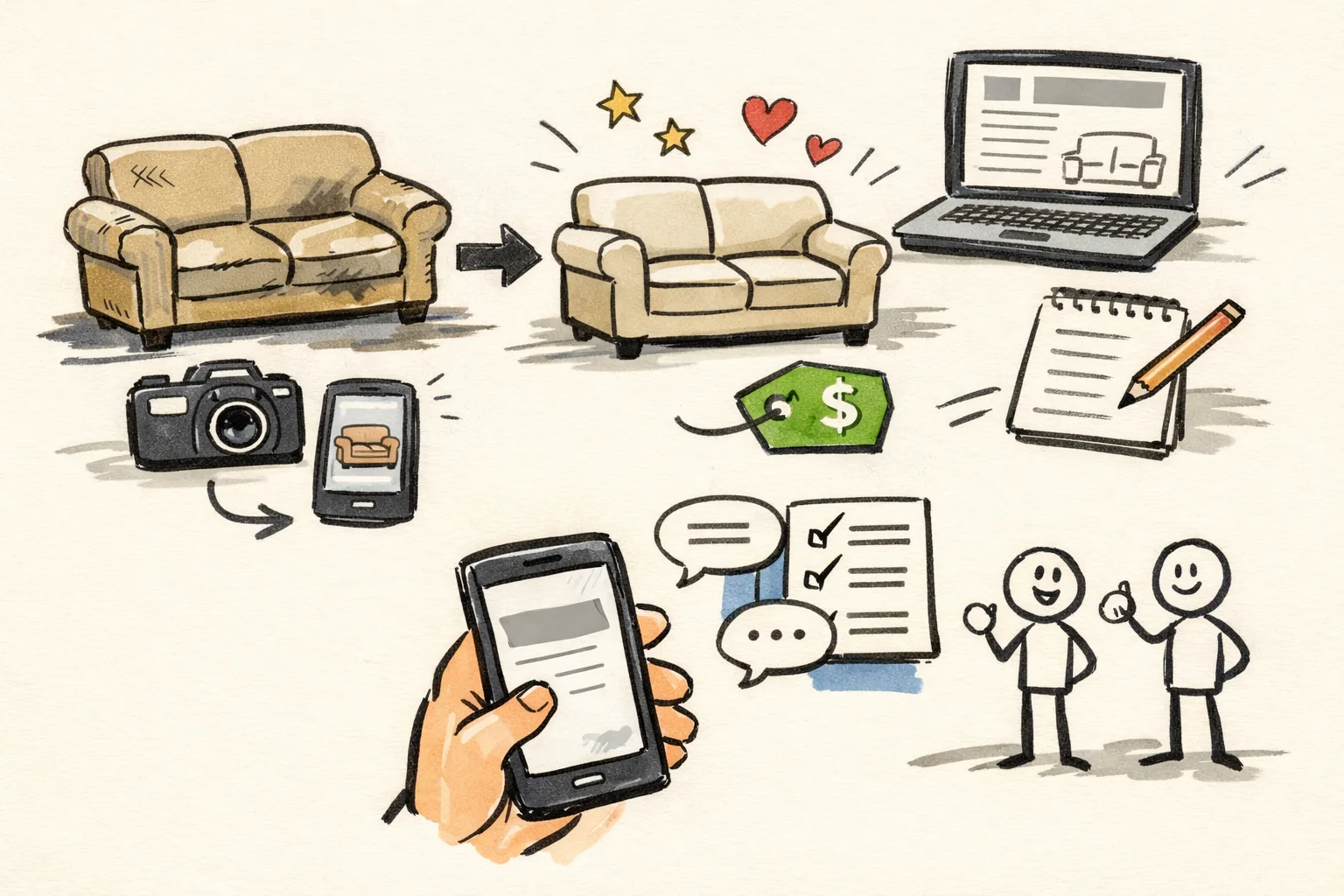
You can write beautifully and still lose to a worse item with better pictures. Daylight, near a window, no flash. Clean the item first. Shoot the whole thing, then the details: labels, serial plates, wear points, the flaw you mentioned. For clothes, one on a hanger and one worn. For furniture, one in the room so scale is obvious. Six honest photos beat one glamour shot every time.
Mistakes that quietly kill good ads
- Wrong category. A pram in kids, a treadmill in sport & hobby, a travel crate in pets. Buyers browse categories; if you're in the wrong one, you're invisible.
- Copy-pasted manufacturer blurb. The buyer can read the spec sheet themselves. They came to find out what your unit is like.
- No contact plan. "Call anytime" from someone who answers at 9pm on Thursdays only.
- Reposting instead of promoting. Deleting and re-listing loses your ad's history. Use VIP for 7 days or a bump to get back to the top instead.
- Hiding the deal-breaker. Third-floor walk-up, no lift, item weighs 60 kg — say it in the ad, not when they arrive with a small car.
Before you publish: a two-minute check
- Does the title say what it is, which model, and what condition?
- Is the price a number, not a mood?
- Have you named at least one flaw?
- Is every question a buyer would ask answered somewhere in the ad description?
- Are you in the right category — or the right service entirely?
- Read it out loud. Does it sound like a person or a robot?
That last one catches most of it.
Pick the right place to list
Posting is free on the board, and you only pay if you want visibility — VIP placement for seven days, or a bump back to the top of the list. Both work better on an ad that's already well written; promotion buys eyeballs, not persuasion.
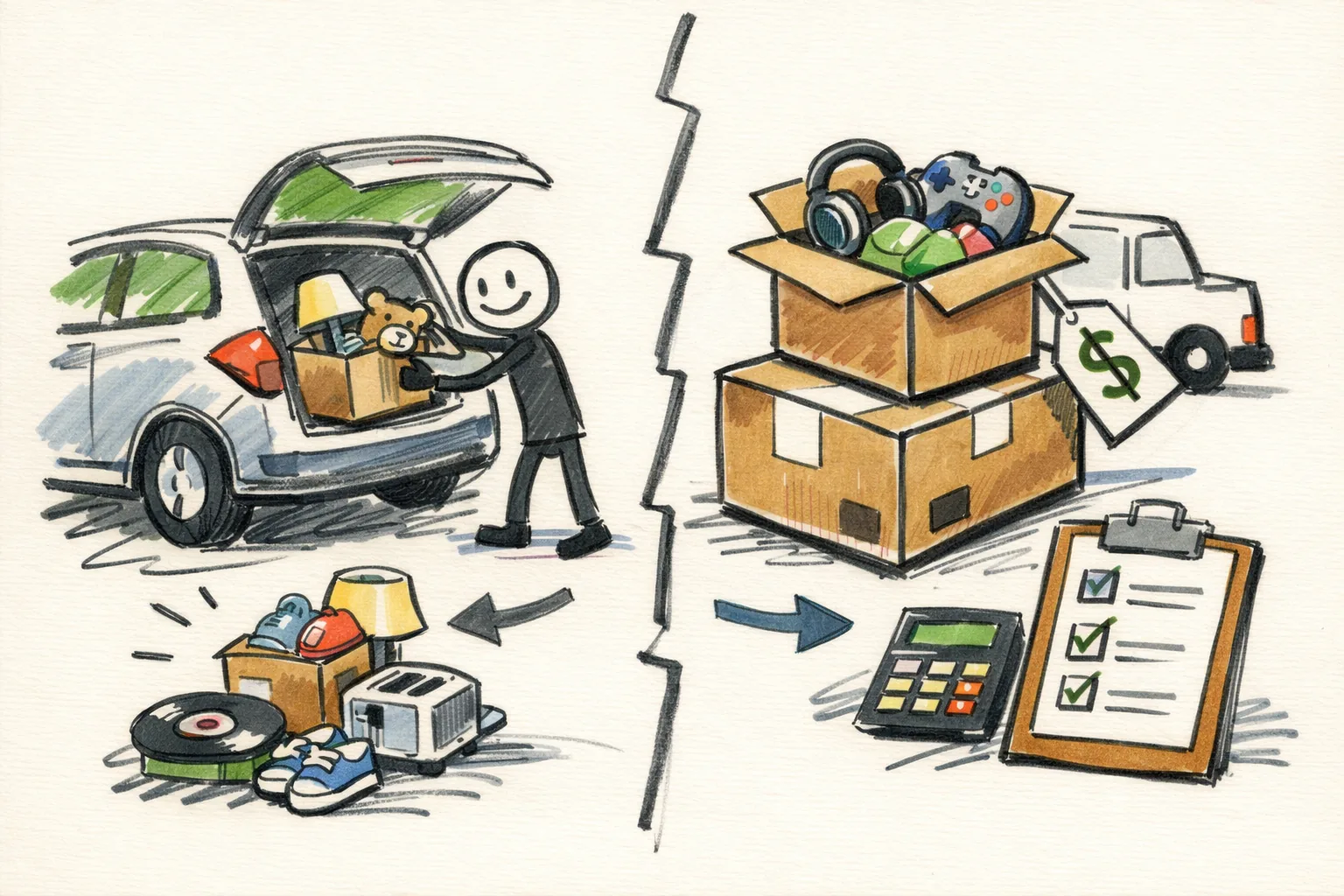
And check you're on the right service before you spend anything. A flat for rent belongs on the realty service, not here. If you're selling the same product repeatedly rather than one used item, market.admister.org is built for that, with a cart and orders. Software keys, gift cards and eSIM go to the digital service, where the key is delivered instantly after payment. Everything else — the one-off, the odd, the household clear-out — belongs in home & garden, other, or wherever it honestly fits.
When it's ready, post your ad. Then leave it alone for 48 hours before you start rewriting it. Give it time to be seen.