Used Item Safety Matters
Practical used item safety tips for checking, cleaning, and recalling secondhand goods before you buy or keep them.
On this page
- Why Used Item Safety Matters
- Before You Buy: Quick Safety Checks
- Category-by-Category Inspection Tips
- Cleaning and Sanitizing Used Items
- How to Check for Recalls and Safety Standards
- Red Flags That Mean You Should Walk Away
- Safer Buying Habits for Secondhand Purchases
- When to Replace a Used Item Instead of Reusing It
Why Used Item Safety Matters
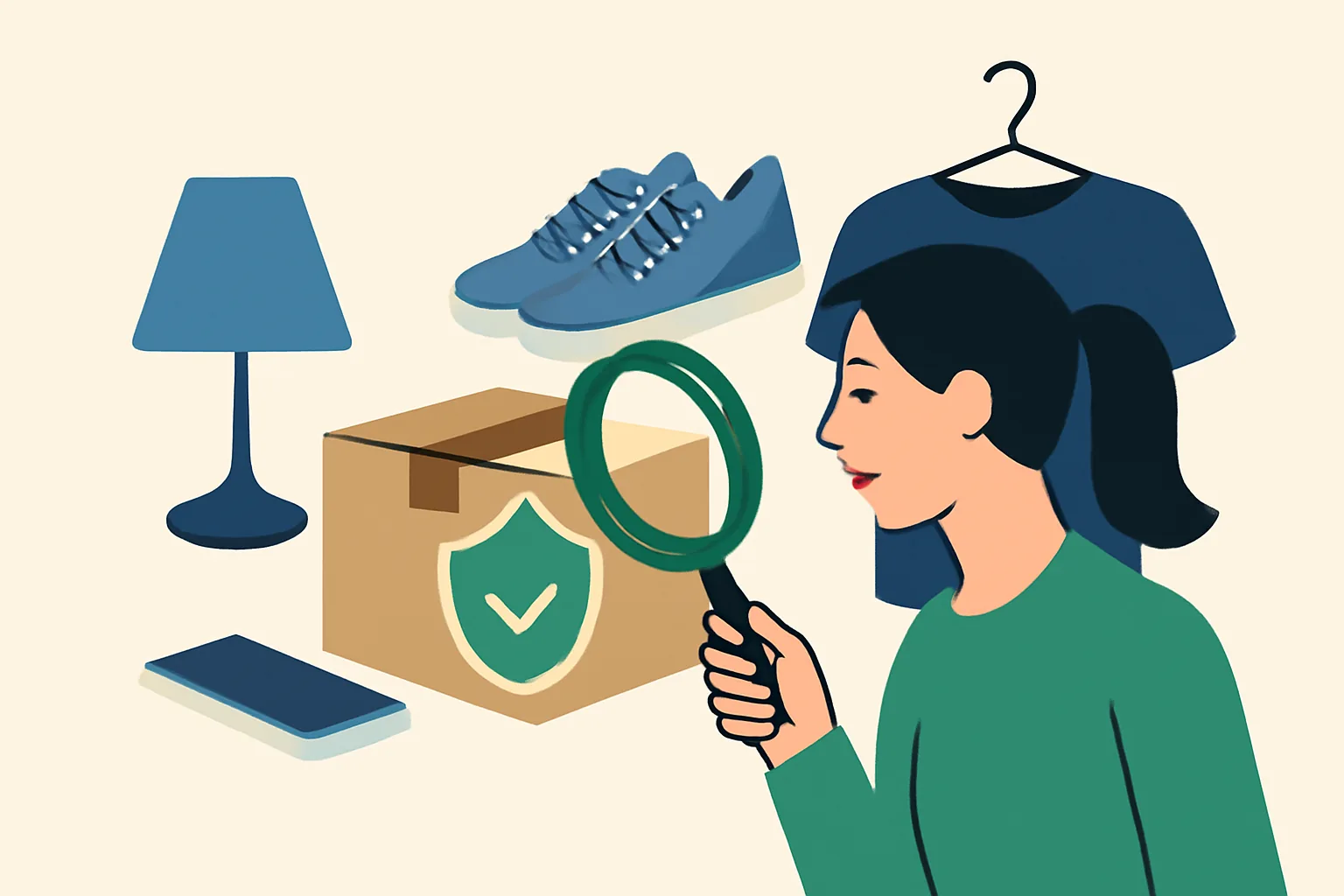
Used item safety matters because secondhand goods can hide problems that a quick glance will miss. A chair may look solid and still have a cracked joint. A toy may be clean on the outside and still fail a recall check.
The risks are not abstract. A lamp with a frayed cord can shock someone. A stroller with a worn latch can collapse once, and that one time is enough. Hidden damage, contamination, missing parts, and product recalls all show up more often in used item sales than people expect.
Used item safety tips are not about being suspicious of every bargain. They are about checking the item the way a cautious mechanic checks a car with 120,000 miles, because the price only tells part of the story. The rest sits in the seams, screws, labels, and smells.
Some items also change hands with no paperwork. That leaves you without a manual, a part list, or a model number. One missing bolt can matter more than the whole discount.
Before You Buy: Quick Safety Checks
Start with photos if you are shopping online. Look for cracks, stains, rust, scorch marks, loose stitching, and bent frames. If the seller only posts one blurry image, ask for three more. A serious seller usually can provide them.
In person, use your eyes first, then your hands. Wiggle handles, open drawers, press buttons, and inspect edges. If something feels sticky, powdery, or strangely oily, stop and ask why. Odors matter too; a sour or chemical smell can point to mold, spills, or failing plastic.
Ask direct questions. Has the item been repaired? Has it been stored in a garage, basement, or attic? Was it ever exposed to water? Those answers can be more useful than a polished description. One honest sentence can save 30 minutes of regret. If you are wondering how to check used items before buying, start with the basics: photos, questions, and a hands-on inspection.
Watch for signs of tampering. Scratched screws, replaced labels, or mismatched parts can mean the item was opened, altered, or repaired badly. A seller may call that "fixed." You may call it risky. Both words can be true.
Category-by-Category Inspection Tips
Different used items fail in different ways. A sofa does not age like a blender. A bicycle does not age like a baby gate. That sounds obvious, yet people inspect them as if one checklist fits all.
For furniture, check for wobble, broken springs, and hidden damage under cushions. Lift one end of a table. If the leg flexes more than it should, walk away. Fabric should not have active stains, damp spots, or insect signs. Wood should not feel soft or crumble near joints.
For toys, inspect for small loose parts, sharp edges, peeling paint, and missing battery covers. If a toy is meant for a child under 3, any detachable piece becomes a choking risk. Older toys can be fine, but only if all components are present and intact.
For electronics, look for burned ports, bulging batteries, cracked screens, and signs of liquid intrusion. A phone charger with twisted insulation is not "a little worn." It is suspect. A device that overheats within 5 minutes should not be bought or kept.
For appliances, ask whether the unit starts cleanly and runs through a full cycle. A secondhand microwave should not spark. A used toaster should not smell like melted plastic after 1 minute. If a motor stalls, rattles, or trips a breaker, the appliance has already told you enough.
For baby gear, be more strict. Car seats, crib parts, and high chairs need labels, intact straps, and all hardware. If the manufacture date or model number is missing, do not guess. In this category, guessing is expensive and dangerous.
For sports equipment, check impact points. Helmets, pads, and protective gear can look fine while losing strength after one bad fall. A bike helmet with a visible dent should be retired. A tennis racket with a cracked frame can fail mid-swing, which is annoying; a failed helmet is worse.
For clothing, inspect seams, zippers, stains, and odor. Not every shirt needs concern, but clothing worn close to the skin should be washed carefully before use. If the item has mold spots or persistent smoke smell, cleaning may not solve it.
Cleaning and Sanitizing Used Items
Cleaning is the next step, not the first excuse. Start with the material. Hard plastic can usually be washed with warm water and mild soap. Metal can often be wiped, dried, and checked for rust again. Fabric needs a different approach, and labels matter.
If an item can be machine washed, use the hottest safe setting listed on the label. If it cannot, spot-clean first and air-dry fully. Dampness left inside foam, wood, or padding can create mold within days, not months. That timeline is fast enough to matter. If you want to know how to clean secondhand items safely, begin by matching the method to the material and the care label.
Some items need more than soap. A high chair tray, a child’s feeding item, or a device used in the kitchen may need sanitizing after cleaning. Follow the product instructions. If there are no instructions, and the item came from an unknown environment, ask whether the item is worth the effort at all.
Avoid harsh chemicals on electronics, painted surfaces, and anything with glued joints. Strong solvents can ruin the finish or weaken materials. A harmless-looking wipe can fog a screen in 10 seconds. That kind of mistake is hard to reverse.
Professional service makes sense for some used items. A used dryer with lint buildup, for example, may need a technician before use. A vintage bicycle may need a shop to inspect brakes. If a service fee is close to the item’s price, the used item may no longer be a good deal.
Some problems never clean away. Mold inside foam, persistent smoke odor in upholstery, or residue inside a battery compartment can mean the item should not be kept. Cleaning is not magic. It is a filter.
How to Check for Recalls and Safety Standards
Every used item with a model number deserves a recall search. Find the label, write down the brand, and check the exact model. One digit matters. A "close enough" search can miss the actual recall.
Use the manufacturer site first, then the relevant government recall database for your country. If the item was sold in more than one region, check both. A stroller recalled in one market may still circulate in another. Borders do not erase defects.
Compare the item’s safety labels with current requirements. This is especially useful for baby gear, helmets, heaters, and electrical devices. A label that looks official but has no date or standard number may not prove anything. Missing labels are a warning, not a technicality.
If you need a general reference for how buying and service workflows work on the platform, see How Admister works — Admister. It helps to know where the paper trail should live before you hand over cash.
Keep screenshots or photos of the listing, the model label, and the recall result. If there is a problem later, those records can show what was advertised and what you actually bought. Three images beat one memory.
Red Flags That Mean You Should Walk Away
Some signs mean the answer is simply no. Structural damage is one. So is battery swelling. A swollen battery can rupture, leak, or ignite. That is not a repair project.
Strong chemical smells deserve attention. They can point to fuel, solvents, mold treatment, or overheating parts. If the smell is sharp enough to make your eyes water, leave. Your nose is doing part of the inspection.
Mold is another hard stop in many cases. A little surface discoloration on a washable item may be manageable. Mold inside foam, insulation, or sealed compartments is a different matter. You cannot scrub your way through hidden growth.
Electrical issues are a clear warning. Sparks, intermittent power, hot plugs, or buzzing from a device that should be quiet all suggest internal failure. If the cord is cracked or the plug blades are bent, do not bargain over it. The safest price is still zero.
Missing safety labels matter more than people think. A label may list weight limits, age ranges, or operating warnings. Without it, you cannot verify safe use. A product that lost its label may also have lost the proof you need.
Also watch for sellers who refuse basic questions. If a seller will not say whether the item was tested, cleaned, or repaired, that refusal is information. It may be the most honest part of the listing.
Safer Buying Habits for Secondhand Purchases
Buy from sellers who answer clearly and provide more than one photo. A good listing names the model, shows the serial label, and states the condition plainly. "Works great" is not a condition report. It is a shrug.
Ask the right questions before you pay. Has it been used in a smoke-free home? Has it been repaired? Are all parts included? Can you test it? Those four questions cover more ground than a long back-and-forth about color.
If possible, test the item before payment. Plug it in. Open it. Sit on it. Fold it. Push every button once. A 5-minute test can expose a week of seller optimism.
Keep receipts, screenshots, and message threads. If the platform has support pages, save the link now rather than later; Getting support — Admister is worth having handy if the item arrives with a problem. Documentation helps when a seller changes the story after pickup.
For online payments, compare the listing and the payment record carefully. A name mismatch, odd transfer request, or pressure to move off-platform can indicate trouble. If you want a broader guide to transaction safety, secure online transactions gives a useful baseline.
One more habit: ask for the purchase date if the seller remembers it. A used item that is 6 months old and one that is 6 years old are not the same. Age affects wear, recall risk, and the odds that replacement parts still exist.
When to Replace a Used Item Instead of Reusing It
Some used items are not worth saving. If repair requires specialized parts that are no longer available, replacement may be safer. That is especially true for electrical goods, child equipment, and items exposed to water or fire.
Discard any item with structural failure that affects safety. A cracked helmet shell, a broken chair leg, or a bent ladder rung should not be patched and hoped for. Hope is not a repair method.
Replace items with contamination you cannot remove. That includes severe mold, pest infestation, chemical saturation, or unknown fluids in foam, fabric, or insulation. Once an item has absorbed that kind of damage, the cost of cleanup can exceed the item's value by a wide margin.
For baby gear and safety equipment, replacement is often the right choice if the history is unclear. If you cannot confirm the age, the model, or the recall status, do not stretch the item’s life. Safety gear needs certainty, not sentiment.
Some goods are just too old to trust. Rubber dries out. Plastic gets brittle. Battery packs degrade. A used item that still looks fine can fail because time has done what damage did not.
Buyers sometimes keep a bad item because it was cheap. Cheap is not the same as safe. If the item has failed one of the checks above, the safest used item safety tips say to let it go, even if it only cost $10.
The last decision should be based on the item, not the price tag. If the item cannot pass inspection, cleaning, recall checks, and a basic test, the better move is replacement before use.