How to Safely Ship a Used Stroller Sold on a Classifieds Site
Learn how to safely ship a used stroller sold on a classifieds site with smart packing, measurements, and delivery insurance tips.
On this page
- How to Safely Ship a Used Stroller Sold on a Classifieds Site
- 1. Confirm the stroller is worth shipping
- 2. Measure, fold, and document the exact shipping shape
- 3. Choose the right packaging for a stroller
- 4. Build a shipment-safe package that protects moving parts
- 5. Set expectations with the buyer before shipping
- 6. Select delivery insurance and understand what it actually covers
- 7. Hand off the package and retain proof of shipment
- 8. Handle delivery problems without reopening the whole sale
How to Safely Ship a Used Stroller Sold on a Classifieds Site
Shipping a stroller is not the same as shipping a lamp or a pair of shoes. The frame folds, the wheels turn, and one loose clip can turn into a bent hinge by the time the box reaches the buyer. A local pickup can stay local. A shipped sale changes the risk. If you are deciding how to safely ship a used stroller sold on a classifieds site, the first question is simple: does this stroller make sense to move at all?
1. Confirm the stroller is worth shipping
Start with the stroller itself. A compact umbrella stroller with a clean fold and a small footprint is usually easier to ship than a wide jogging stroller with a fixed handlebar and large rear wheels. Condition matters too. If the brake sticks, the canopy is torn, or the frame already has a wobble, shipping adds one more layer of risk to a sale that is already borderline.
Ask one practical question: would you trust this stroller to survive 300 miles of handling? That number is not magic, but it forces a realistic answer. A stroller that folds flat, locks closed, and has no missing hardware is a better candidate. A bulky model that barely compresses may cost more to send than the buyer wants to pay, and the fee can erase the deal.
Sometimes the best shipping decision is no. Say no if the stroller is oversized, if the seller cannot test the fold, or if the buyer wants a quick ship on a model that needs assembly and special care. Short answer. Skip it.
If you want a quick refresher on the platform side of the sale, the basics of how admister works are worth checking before you commit to a shipped transaction.
2. Measure, fold, and document the exact shipping shape
Measure the stroller in the state the carrier will actually see. That means folded, locked if possible, and stripped of anything that sticks out. Record the folded length, width, and height. Do not rely on the dimensions from the product page, because a used stroller often folds differently after years of use. A buyer may agree to a shipping quote based on the wrong shape, and the carrier may bill the real one.
Remove every loose part you can safely remove: cup holders, snack trays, detachable canopies, infant inserts, and any accessory that is not fixed to the frame. Put each piece in a labeled bag. If there is an adapter for a car seat, say so clearly in the message thread and in the box. If the stroller must remain partially assembled to stay stable, note that before packing begins.
Take photos before the first wrap goes on. Four images are a good baseline: the stroller folded from the front, folded from the side, the wheels and brakes, and the existing wear on fabric or frame. A fifth image of the serial label helps if there is a claim later. These pictures do two jobs at once. They show what was shipped, and they show what was already true.
Keep the note simple. A buyer should be able to read it and know whether the seat reclines, whether the rain cover is included, and whether the stroller shipped with the parent cup holder. That level of detail prevents a lot of awkward messages later.
3. Choose the right packaging for a stroller
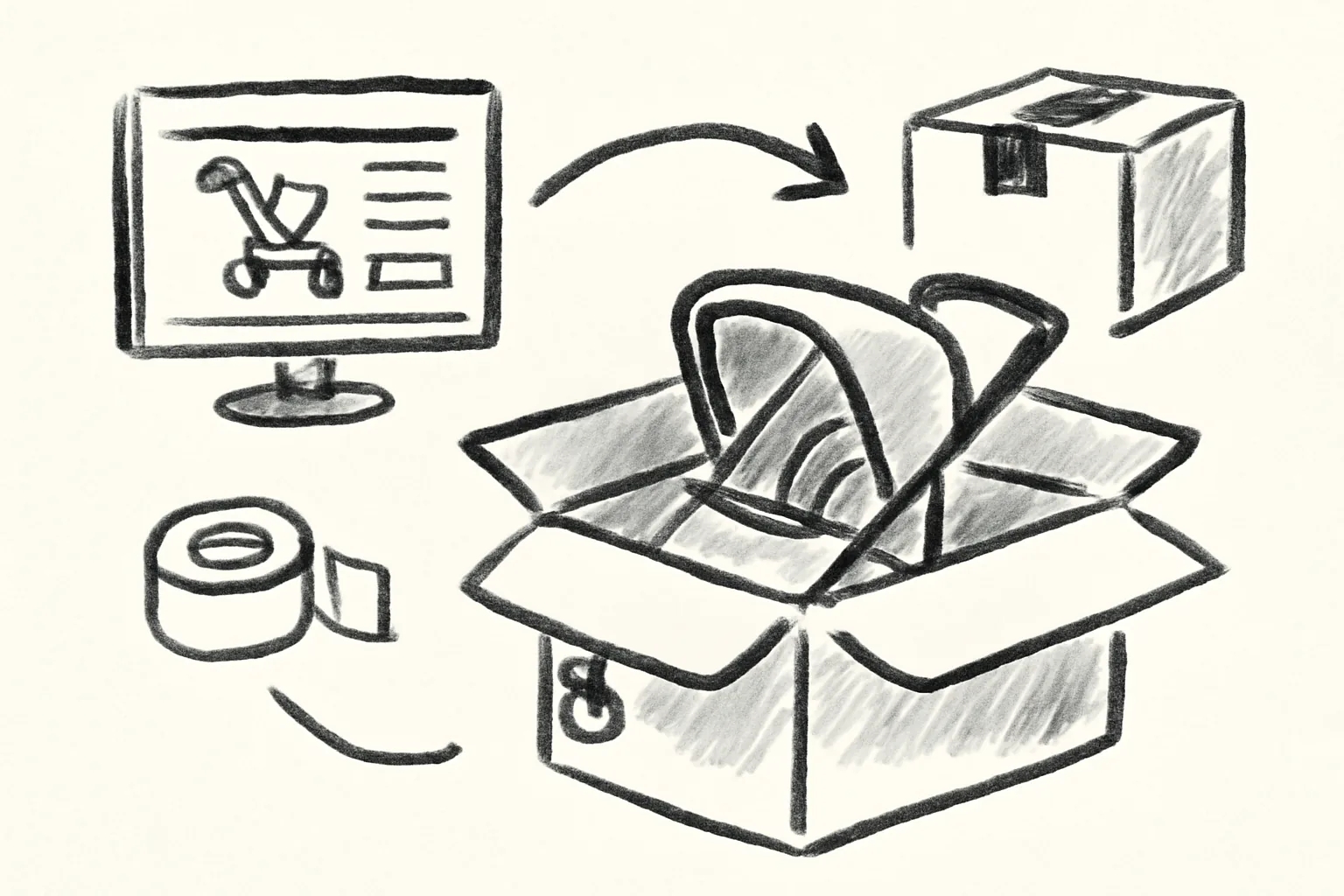
The packaging for a stroller depends on shape, not guesswork. A narrow stroller with smooth edges may do fine inside a box with padding around the frame. A larger model may need stretch wrap first, then an outer carton, because the frame alone will not stay closed in transit. Wheels need attention. Handles need attention. Fabric needs attention too, because crushed fabric can look like a defect even when the frame survives intact.
Use rigid protection around the parts most likely to get hit: the handles, wheel forks, brake levers, and folding joints. Wrap each wheel so the tread does not rub against the frame. Keep straps secured so they do not get caught under a hinge. If the stroller has a detachable tray, remove it and label it separately rather than letting it rattle against the frame for two days.
For many strollers, a box plus internal padding works better than wrap alone. Wrap by itself may keep dust off, but it does not stop pressure from a heavy package stacked on top. A carton gives the stroller a fixed outer shape. If the stroller is too large for a standard box, build a double layer: first immobilize the stroller, then add a second outer shell where the carrier can tape and label it without touching the frame directly.
Bag any loose accessories separately. A brake pin, axle clip, or fabric insert can disappear inside the main package if it is left free. One small pouch with a label can save an argument later.
4. Build a shipment-safe package that protects moving parts
Begin by locking the stroller closed. If the fold latch does not hold, use heavy tape or a strap to keep the frame from opening inside the package. That point matters more than it sounds. A stroller that opens halfway in transit can punch through cardboard from the inside, and then the damage is no longer a mystery.
Next, brace the stress points. Place padding around the joints where the frame folds, then fill empty space so the stroller cannot slide lengthwise. If one wheel sits lower than the others, pad that side until the load is even. The goal is not to make the stroller feel soft; the goal is to stop motion. A package that can shift 2 inches is already too loose.
Protect moisture-sensitive parts last. Fabric seats, mesh baskets, and padded inserts should be dry before packing. If the weather is wet, add a plastic layer under the outer wrap or inside the box. That extra step is boring, which is exactly why people skip it. Damp cardboard weakens fast, and a stroller with wet fabric arrives looking worse than it shipped.
Do not let metal parts press directly against the box wall. A brake arm or handle joint that touches the carton can tear through after one hard drop. Recheck the package after you seal it. Shake it gently. If you hear movement, reopen it and add more fill. Two minutes here can prevent a broken wheel later.
5. Set expectations with the buyer before shipping
Before you drop the package off, send one clear message that lists exactly what is included. State whether the stroller ships with wheels attached, whether the canopy is detached, and whether the buyer will need to snap anything into place after delivery. That message should also mention any condition limits, such as cosmetic scuffs on the handle or a faded seat fabric panel.
Be specific about packaging, because buyers often imagine the stroller arriving in a retail-style box. If you are using wrap plus an outer carton, say so. If the box is reused, say that too. A buyer who expects factory packaging may think the sale was handled badly when the real issue is only presentation.
Assembly questions belong here as well. If the stroller is folded and strapped, and the buyer must attach the wheels or insert the canopy, say it plainly. Do not leave that for delivery day. A two-message clarification now can prevent a long complaint later, especially if the buyer has a tight schedule or does not know the model.
If the conversation starts to drift into broader platform issues, the site’s staying safe as a buyer page can be a useful reference for both sides before money changes hands.
6. Select delivery insurance and understand what it actually covers
Delivery insurance can make sense for a stroller if the item is expensive, difficult to replace, or likely to be damaged by rough handling. It is not a cure-all. It is a financial backstop for specific losses, and the fine print matters. Some policies cover loss in transit and visible damage from a carrier mishap. Others exclude wear, preexisting flaws, or inadequate packaging.
Read the claim rules before shipping. Many carriers want proof of value, proof of shipment, and proof that the item was packed correctly. That means your packing photos matter. Your receipt matters. The tracking number matters. If the claim asks for a photo of the sealed box, you want that image already saved. No scrambling later.
Insurance is often worth buying when the stroller is bulky or the buyer is far away, because the odds of handling damage rise with each transfer point. It is also worth considering if the stroller has parts that are expensive to replace, such as a special wheel set or a discontinued frame. If the policy cost is low enough relative to the sale, the extra protection is easier to justify.
Still, read the exclusions. Some policies will not pay if the box looks underpacked. Some require a specific type of outer carton. Some need the seller to file the claim within a short window after delivery. The point is not to buy protection and hope. The point is to know exactly what the policy expects before the package leaves your hands.
7. Hand off the package and retain proof of shipment
At drop-off, get a receipt with the tracking number printed or scanned clearly. Do not accept a handwritten note if the carrier offers a proper receipt. If the package is picked up, ask for a pickup confirmation and save the email or text. One missing receipt can make a later dispute much harder to prove.
Keep three records together: the shipping receipt, the tracking details, and the photos of the packed stroller. Save them in one folder. If the buyer later says the stroller arrived with a bent frame, those records show whether the carton was damaged in transit or whether the package left your hands in good condition. That distinction matters.
Also keep the message thread. If the buyer agreed in writing that the stroller would ship without the cup holder, that note can settle the question fast. If you discussed an accessory separately, the receipt plus the written agreement often tell the whole story in less than 5 minutes.
For sellers who manage multiple orders, the guidance on withdrawing your earnings may be useful once the sale clears and the money becomes available.
8. Handle delivery problems without reopening the whole sale
If the stroller arrives damaged, start with the evidence, not the emotion. Compare the buyer’s photos with your packing photos. Look for crushed corners, torn wrap, punctures near the wheel area, or a frame that appears twisted in a way the pre-shipment pictures do not show. That comparison helps separate shipping damage from preexisting wear.
If the stroller arrives incomplete, check the labeled accessory bags and the original message thread. A missing canopy can be a packing error, but it can also be a misunderstanding about what was included. The fastest path is to compare the list you sent before shipping with the list the buyer received. One checklist beats a dozen opinions.
If the package is late, stay focused on tracking. Delays do not always mean loss, and carrier scans can show whether the box is still moving. Use the delivery insurance rules if the package is actually missing. Use the carrier’s claim steps if the box was damaged in a way that the policy might cover. Keep the discussion centered on the shipment itself, not on reopening every part of the classifieds sale.
And if you need help with the account side of the process, admister is the place to start. A claim, a receipt, and a clear photo set solve more cases than a long argument ever will.