How Do I Sell a Used Stroller Locally Without Getting Scammed?
Learn how do I sell a used stroller locally without getting scammed with safe pricing, honest photos, buyer screening, and secure meetups.
On this page
- How Do I Sell a Used Stroller Locally Without Getting Scammed?
- Set a realistic local price
- Write a clear, honest listing
- Choose safe local selling channels
- Screen buyers before meeting
- Arrange a safe meetup and payment
- Complete the handoff and keep records
- Know the red flags and what to do if something seems wrong
How Do I Sell a Used Stroller Locally Without Getting Scammed?
Selling a used stroller locally should be simple. It often is, if you stay picky. The trick is to treat it like a small sale, not a casual handoff. If you have ever searched “how do I sell a used stroller locally without getting scammed”, you already know the worry: fake payment, strange pickup requests, and buyers who vanish after three messages.
Start with the stroller itself. Before you post anything, open and close it 5 or 6 times, test the brakes, check the wheels, and look for tears, missing caps, bent frames, or sticky straps. A buyer will notice those details anyway, and you want the first surprise to be a good one. Clean the stroller fully, then let it dry before taking photos.
Take at least 8 clear photos. Get the front, back, sides, seat, undercarriage, fold mechanism, wheels, and any label with the brand or model number. If there is a safety sticker, photograph that too. Keep the original purchase receipt if you still have it, but do not worry if you do not. A model tag and a few honest photos usually do more work than a vague promise.
One small aside: if the stroller came from a recall-prone brand or has a visible safety notice, say so plainly. Buyers with older children may not care about every feature, but a parent buying for an infant will care very much. If you can verify the model on the manufacturer site, mention that you checked it. That saves time later.
Set a realistic local price
Price is where many local sales go sideways. Search 5 to 10 similar stroller listings in your area, then compare age, brand, condition, and accessories like cup holders, rain covers, infant inserts, or car-seat adapters. A stroller that folds with one hand and includes 2 extra parts can justify a higher price than a bare frame with sun-faded fabric. Do not guess.
Be careful with prices that look clever but invite trouble. Odd-number pricing, fake urgency, or a “firm for today only” tone can attract people who want to haggle hard or push you into a rushed decision. A fair price is usually boring. That is good.
Think in terms of use, not retail memory. A stroller used for 18 months and kept indoors is different from one used for 4 years in rain and mud. Brand matters, but condition matters more. A premium label with damaged brakes is still a damaged stroller.
If you are unsure, start a little above your minimum and leave some room. Buyers often expect a small negotiation, usually 10 to 15 percent, but that does not mean you should anchor the listing absurdly high. A price that is too high can also attract scam messages from people pretending to “help” you sell it faster.
Write a clear, honest listing
A good stroller listing should sound calm and specific. Use the model name, color, condition, and one or two real details: “folds easily,” “rear left wheel has a small scrape,” “includes rain cover,” or “seat reclines to lie-flat.” If the stroller has defects, mention them upfront. A small crack near the handle is not a reason to hide it. Hiding it causes disputes.
Write for a buyer standing in a parking lot with 30 seconds to decide. That means short facts, not fluff. Include the age if you know it, whether it came from a smoke-free or pet-free home only if that is true, and whether it has been stored indoors. Leave out claims you cannot prove. If you do not know the exact year, say “purchased used in 2022” or similar.
Do not post your home address in the listing. A city, neighborhood, or meeting area is enough. Use a phone number only if the platform requires it; otherwise keep contact through the platform chat. If you are learning more about the platform tools first, the how admister works page and the frequently asked questions page can help you understand the basics before you publish anything.
Misleading wording causes more trouble than bad photos. “Like new” is risky if the fabric is faded. “Barely used” is risky if there are 14 months of wear on the wheels. A stroller listing should be accurate enough that the buyer feels nothing was hidden. That matters more than sounding polished.
Choose safe local selling channels
Local channels are not equal. A neighborhood group with visible profiles and active moderation is usually better than a random postboard where anyone can message you and disappear. Trusted marketplaces with message history and profile information are easier to manage. That said, the platform only helps if you use it correctly and do not move the conversation away too soon.
Post in places where buyers expect local pickup and used baby gear. Community groups, neighborhood apps, local marketplace listings, and parent groups can work well. Read the group rules first. Some groups ban commercial language, some require a price in the post, and some will remove listings that invite off-platform contact.
Weak buyer protections are a problem. If a site offers almost no reporting tools, no message archive, and no visible seller history, think twice before using it. One extra minute of caution can save an afternoon of back-and-forth with a fake buyer. If you need a broader sense of platform structure before choosing, the page on the 7 admister services shows how the main support pieces fit together.
A small local community group can still be better than a giant marketplace if the group is active and the members are known to each other. A weak platform and a strong group are not the same thing. The group with 2 moderators and real comments often beats the site with 20 confusing buttons.
Screen buyers before meeting
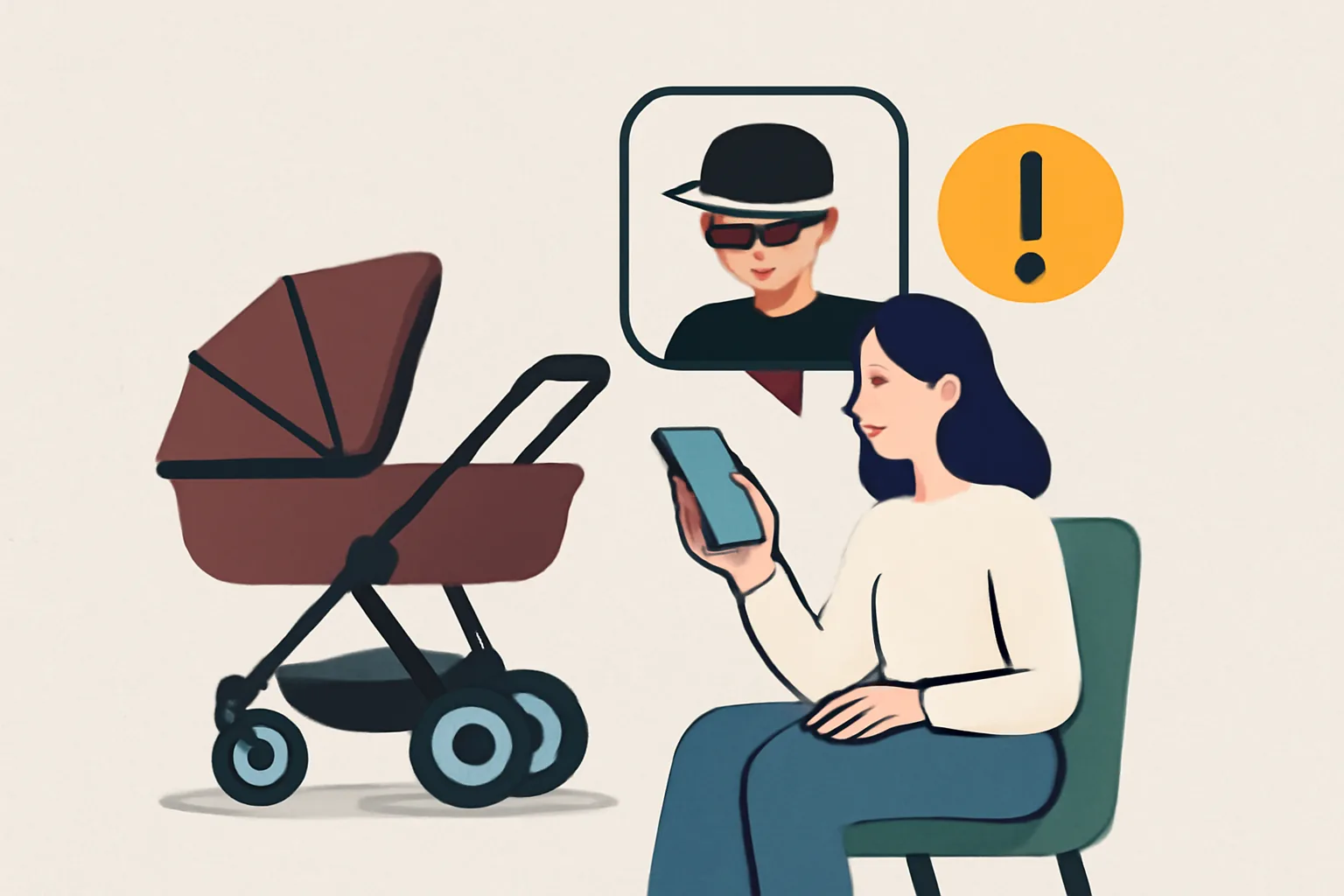
Start screening the moment the first message arrives. A real buyer usually asks about condition, pickup location, size, or whether the stroller fits in a small car. A scammer often leads with urgency, an odd payment request, or a story that is too dramatic. “I’m sending my driver” is one of the lines that should make you pause.
Ask 2 simple qualifying questions: “When would you like to pick it up?” and “Do you want the stroller as listed, or do you have a specific question?” The point is not to interrogate people. It is to see whether they answer like a normal local buyer. Short, relevant replies are good. Copy-pasted scripts are not.
Keep messages on the platform when possible. That gives you a record if the buyer changes the story later. Do not click strange links sent in chat, and do not move to a third-party app just because someone says it is easier. If someone pushes for a text-only deal after one message, that is a warning sign.
Decline conversations that feel off. You do not owe a stroller to the first person who messages you, and you do not need to explain yourself for ending a chat after 3 suspicious questions. If a buyer becomes rude, ignore the bait. Rudeness before pickup often becomes trouble at pickup.
Arrange a safe meetup and payment
Meet in a public place with daylight and people around. A shopping center parking lot, a café seating area near the entrance, or a police station lobby where local rules allow public exchanges can be reasonable choices. Bring another adult if you can. A stroller is bulky, which makes the meetup awkward anyway, so there is no reason to do it alone in a quiet street at dusk.
Choose a spot with enough room to test the stroller without blocking traffic. If the buyer wants to inspect the brakes, let them do it. If they want to fold it once, let them. Keep the stroller in your control until payment is confirmed. A handshake is not payment.
Accept secure payment methods that complete immediately and show in your account before you hand over the stroller. Avoid personal checks, postdated checks, and any “I’ll pay extra, then you can refund the difference” story. Overpayment scams are common because they sound polite at first. If someone says a courier will collect the stroller after you “confirm” a deposit, stop there.
Cash can work if you count it carefully in daylight and do not feel rushed. Electronic payment can work too, but only if you can confirm that the transfer has fully arrived. Do not rely on a screenshot. Screenshots are easy to fake. A buyer who insists on using a method you cannot verify should be treated as a likely problem, not a promising sale.
Complete the handoff and keep records
Only release the stroller after payment is confirmed. That sounds obvious, yet people still hand it over too early because the buyer seems friendly or the exchange feels awkward. Friendly is not final. Once the stroller leaves your hands, your leverage is gone. Keep control until the money is real.
If the buyer wants a receipt, write a short one by hand or send a message that says the stroller, the date, the agreed price, and both names if you choose to include them. No need for a legal essay. Just enough detail to show what changed hands. Save the chat thread, payment confirmation, and your original listing. Those 3 records can help if a dispute appears later.
Take one final photo at the handoff if the situation allows it, especially if the stroller had a visible defect or included extra parts. That photo can show the condition at the moment of sale. It is a small step, but it helps if someone later claims a missing cup holder was “promised.”
If you sold through an account that also manages other activity, keep your account secure afterward. Changing a password and reviewing login alerts takes 2 minutes, and it protects the next sale as well. If you ever need help with account-related issues, the page for keeping your account secure and the support page for admister are worth a look.
Know the red flags and what to do if something seems wrong
Some scams repeat with annoying consistency. A buyer may offer more than your asking price, ask you to send a code, request a “shipping agent,” or say their cousin will pick up the stroller after you deposit a fake check. Another common move is pressure: “I’m leaving in 10 minutes, so send your address now.” That kind of rush is the scam.
End the conversation if the buyer asks for anything that does not fit a normal local sale. Real local buyers do not need your bank login, your verification code, or a strange third-party escrow service. Real local buyers can meet in daylight, bring cash or an immediately confirmed payment, and answer a few direct questions. Anything else deserves caution.
If you think a message is fraudulent, report it through the platform right away and stop replying. Do not argue. Do not try to “catch” the scammer by playing along unless the platform or local authorities specifically advise that path. Your job is to protect the stroller sale, not to run an investigation.
If the deal falls through, relist the stroller with the same honest photos and one updated line explaining that it is still available. If one buyer wasted your time, the next one does not need the drama. Keep the post simple, keep the same price unless the market changed, and stay alert for the same red flags the second time around.