Secure Escrow Payment - Ensuring Safe Online Transactions
Learn how secure escrow payment protects buyers and sellers, reduces fraud, and makes online transactions safer and clearer.
On this page
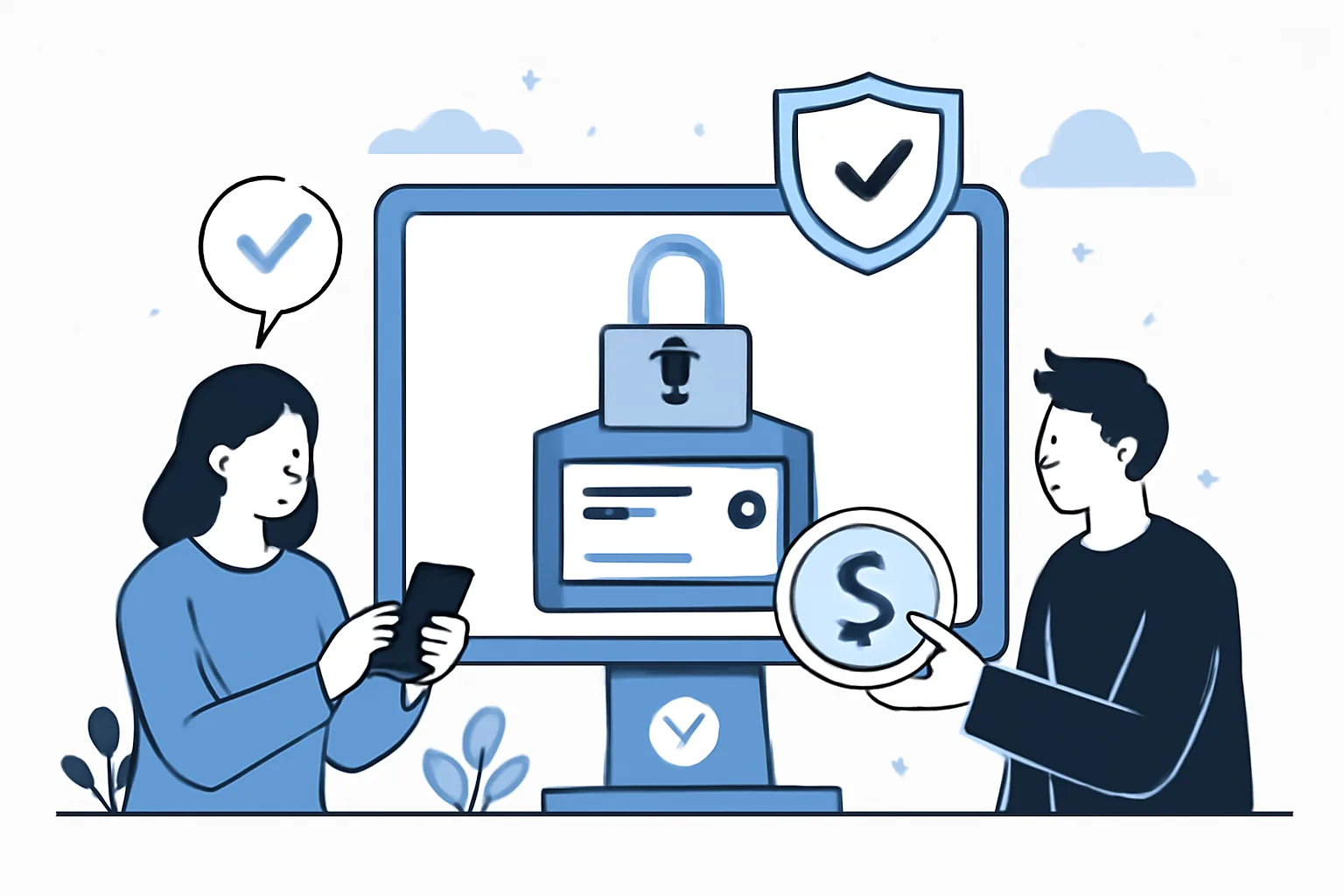
Secure Escrow Payment - Ensuring Safe Online Transactions
Buying and selling online has never been easier, which is exactly why it can feel a little uneasy, and you click, you pay, you wait, and then you hope the other side holds up their end. That uneasy middle ground is where secure escrow payment earns its place. Instead of sending money straight to a seller you have never met, escrow keeps the payment in a protected holding stage until both sides have done what they promised.
For simple purchases, that may sound like a small difference. In practice, it changes the tone of the whole transaction. A buyer is less worried about being ignored after payment, and a seller has more confidence that the buyer is serious. And when expectations are set clearly, online trades tend to feel less like a gamble and more like a process.
Understanding Escrow Works
Escrow is a financial arrangement built around trust, but not blind trust. A third party holds the money until a set of conditions is met. Those conditions might be as straightforward as “the item is delivered” or as specific as “the service is completed and approved.” Only then is the payment released, which is the core idea behind how escrow works.
The appeal is obvious. The buyer does not have to send funds directly to the seller with nothing in reserve, and the seller does not have to ship goods or begin work with no guarantee of payment, and escrow sits between them, keeping the transaction balanced.
In a typical online sale, this can apply to physical products, digital services, freelance work, or even higher-value private deals. The idea is always the same: money should not move freely until the promised value has also moved. That is what makes escrow payment systems so effective for safer online transactions.
The Role of Escrow in Facilitating Trust
Trust online is fragile. A polished listing, a friendly message, and a professional-looking profile can still hide a problem, and escrow helps because it shifts the conversation away from “please trust me” and toward a process both parties can follow.
For buyers, that means less fear of paying and being left waiting. For sellers, it means less concern about delivering something valuable only to hear, “I never received it,” with no way to prove otherwise. When a neutral service controls the release of funds, the transaction becomes less personal in a useful way. It is not about liking the other person; it is about following agreed rules.
This is especially helpful in marketplaces where strangers meet for the first time. If you have ever hesitated over a classified ad, a freelance offer, or a private equipment sale, you already understand the problem. A good escrow setup does not eliminate risk entirely, but it does reduce the emotional guesswork that often causes bad decisions. For more context on avoiding misleading listings, see how to spot a fake listing.
Secure Escrow Payment Processes
Although providers differ, the basic secure escrow payment process usually follows a familiar pattern:
- The buyer and seller agree on the transaction terms, including price, delivery method, timing, and acceptance conditions.
- The buyer sends payment into the escrow account instead of directly to the seller.
- The escrow service confirms that funds are available and held securely.
- The seller ships the item, delivers the digital work, or begins the agreed service.
- The buyer inspects the goods or reviews the work against the original terms.
- If everything matches, the buyer approves the release of funds.
- If there is a problem, the transaction can move into a dispute review process.
That structure matters because it makes each step visible, and there is less room for vague promises and more room for accountability. In many cases, the best transactions are the boring ones: clear terms, clear timelines, clear proof of delivery. Escrow supports that kind of order.
A small practical note: both sides should keep records of messages, receipts, tracking numbers, screenshots, and any written agreement. If something goes wrong, those details can make the difference between a quick resolution and a long argument.
Key Benefits of Using Escrow Services
There are several reasons people choose escrow services, and they are not limited to large transactions, and even modest purchases can benefit from the extra layer of structure.
- Protection against fraud: payment is not handed over until the agreed conditions are met.
- Reduced risk of non-delivery: sellers are motivated to complete the deal because funds are already committed.
- Better handling of disputes: if there is a disagreement, the escrow provider can help review the issue.
- Clearer expectations: written terms force both sides to agree on what “done” actually means.
- More confidence for new trading partners: strangers can transact without relying on reputation alone.
- Improved discipline in the process: deadlines, tracking, and confirmation steps become part of the sale.
One of the less obvious benefits is psychological. People often behave better when a structured process is in place. A seller is less likely to disappear. A buyer is less likely to delay approval indefinitely, and in other words, escrow does not just protect money; it often improves behavior.
That said, escrow is not magic. It does not make a poor product good, and it cannot rescue a transaction where the terms were sloppy from the start. A secure process still depends on clear communication and honest documentation.
How Safe Online Buying Can Be Improved with Escrow
Safe online buying can be strengthened in a few practical ways, and start by treating every purchase as a mini-contract. Before paying, confirm exactly what is being sold, what condition it should arrive in, and what happens if it does not match the description. If the item is second-hand, note any visible wear, missing accessories, or known faults in writing.
Escrow works best when the buyer is careful before the transaction begins. Read the listing closely. Ask questions. Request additional photos or proof of ownership if the item is valuable, and if the seller is reluctant to provide basic information, that is usually a warning sign, escrow or no escrow.
It also helps to choose the payment route that matches the deal. For a one-off purchase from someone you do not know, secure escrow payment is often smarter than direct transfer. For larger items or custom work, ask whether the provider supports milestone releases, partial approvals, or staged delivery, and those options can make complex purchases much safer.
Buyers should also verify that the communication channel is genuine. Scammers sometimes push users away from the protected platform into messaging apps or direct bank transfers. If the deal starts inside an escrow environment, keep it there until the transaction is complete, and leaving the system early usually weakens your protections.
If you need a broader overview of the platform’s tools and processes, the How Admister works guide is a good place to begin.
Selecting a trustworthy escrow provider is almost as important as choosing the product itself. A reliable service should be transparent about how funds are held, when they are released, and what happens if a dispute arises. If those answers are buried in vague language, proceed carefully.
Look for a provider that makes the process easy to understand. Clear instructions matter. So do visible terms, accessible support, and a dispute resolution path that feels practical rather than decorative, and a good provider does not need to overpromise; it needs to explain the rules plainly and apply them consistently.
It is also worth checking whether the service is appropriate for the type of transaction you plan to make. Some providers are better for physical goods, while others are built around freelance or service-based work. A mismatch can create avoidable friction later.
Support is another useful test. If you cannot find a reliable way to ask questions before paying, that is not a great sign, and a dependable platform should make it easy to get help when terms are unclear or a transaction becomes complicated. If support matters to your transaction, Getting support explains how assistance is handled.
For buyers who want to understand the basics before making a choice, a short checklist helps:
- Are the fees and release rules clearly described?
- Is there a documented dispute process?
- Can you confirm the identity or legitimacy of the other party?
- Does the provider explain what records you should keep?
- Is customer support reachable when needed?
Reliable providers make the process feel controlled. Unreliable ones make you do the heavy lifting yourself, which defeats the point.
Examples help make the concept less abstract. Imagine a buyer purchasing a used camera from a private seller, and the seller says the lens works well, but the buyer wants proof before releasing payment. With escrow in place, the buyer deposits the money, the seller ships the camera, and the buyer tests it on arrival. If the condition matches the listing, the payment is released. If the lens is not as described, the dispute can be reviewed before the seller is paid.
Now consider a freelance designer creating a logo for a small business, and the client wants several revisions, and the designer wants assurance that the work will be paid for once approved. Escrow gives both sides a fair structure. The client funds the project, the designer submits drafts, and payment is released when the final file is accepted. No awkward chasing, no sudden silence, no “I’ll pay next week” excuses.
A more complex example could involve a custom-made item, such as furniture or a tailored software tool, and in those cases, milestone-based escrow can be especially useful. The buyer might approve an initial design before funds move to the next stage, then confirm the final delivery before the balance is released. That approach keeps the project moving while still protecting both parties.
These examples show why escrow is not just about avoiding theft, and it also helps manage ordinary human uncertainty. People miss deadlines, misread instructions, and sometimes remember details differently. A secure transaction process gives everyone something objective to point to.
There are still limits, of course. Escrow cannot fix a description that was misleading from the beginning, and it cannot turn a poor negotiator into an efficient one, and but when the terms are clear and the provider is dependable, it can turn a risky exchange into a manageable one.
For readers who want more general guidance on platform features and common questions, the Frequently asked questions page is useful. If you are mainly concerned with identity and contact checks before any payment is made, the Checking a phone number guide may also help reduce risk before a deal begins.
Closing Thoughts
Secure escrow payment is not a flashy concept, but that is part of its strength. It works in the background, quietly reducing risk and giving online transactions a structure they often lack. When buyers know their money is protected and sellers know payment is reserved for a completed deal, everyone can focus on the actual exchange instead of the fear around it.
The best results come from combining escrow with careful habits: verify the other party, document the terms, keep communication on the platform, and understand the provider’s rules before committing funds, and done well, escrow does not just protect a transaction. It improves the way people trade online.