How to Spot and Avoid Scams on Classifieds
Every classifieds scam tries to get you to pay before anything real has happened. Here are the red flags on both sides of a deal, and the checks that take a minute.
On this page
- The pattern behind almost every scam
- When you're buying
- The price that doesn't make sense
- "I'm out of town, we'll do it through a courier"
- Rental deposits
- Digital goods and codes
- Safe selling online: the traps aimed at sellers
- Overpayment
- The payment screenshot
- The verification link
- The too-easy buyer
- A 60-second check before you commit
- What Admister does — and what it deliberately doesn't
- If it already happened
Almost every classifieds scam comes down to one move: getting you to send money, goods, or a code before the other side has done anything real. Learn to spot that moment and the rest is noise. This is a practical guide to classifieds scams — what they look like on a listing page, what they sound like in chat, and the checks that take a minute and save you a month.
The pattern behind almost every scam
Scammers are not creative. They reuse three moves, usually in this order.
- Bait. A price that beats the market by a wide margin, or a rental that is somehow cheaper than anything in the same district.
- Pressure. "Two other people are asking, I need a deposit today." Urgency exists to stop you from checking.
- A one-way step. A transfer, a gift-card code, a "shipping deposit", a screenshot of a payment that never happened. Something that can't be reversed.
If a conversation contains all three, it doesn't matter how polite the person is. Walk away. Nothing you lose by walking away from a real seller compares to what you lose by going ahead with a fake one.
When you're buying
The price that doesn't make sense
Before you message anyone, find out what the thing actually costs. For consumer goods, the fastest way is to pull up the same model on price comparison across shops and see the real spread. A phone listed 60% below every shop is not a bargain; it's either stolen, broken, or nonexistent. A car listed far under its year and mileage band in the auto section usually has a salvage history, an odometer story, or no car at all.
"I'm out of town, we'll do it through a courier"
This is the single most common classifieds fraud script. The seller can never meet. There's always a reason — deployment, a work trip, a sick relative — and always a "safe" third-party service they suggest, with a website you've never heard of that will email you a very official-looking confirmation. The service is theirs. The confirmation is a template.
Rule that costs you nothing: for local goods, meet locally. If distance is genuinely unavoidable, treat it as a real risk and price it in, or find another listing.
Rental deposits
On rentals and property listings, the classic is a flat priced 30-40% under the district, photos that look like a staging catalogue, and an owner who's abroad and will "send the keys" after a deposit. Reverse-image the photos. Ask for a video walkthrough where they open a window and show the street. A real landlord will do it; a scammer gets offended, which is itself the answer.
Digital goods and codes
Keys and licences attract fraudsters because a code looks valid until you try to use it, and by then the chat is deleted. Buy them where delivery is automatic and tied to payment, not where a stranger DMs you a string. On digital goods, the key is issued instantly by the system after payment clears — there's no window in which someone takes your money and goes quiet.
Safe selling online: the traps aimed at sellers
Sellers assume they're safe because they're the one holding the item. That's exactly what the scripts exploit.
Overpayment
The buyer "accidentally" sends more than the price and asks you to refund the difference. Their payment is fraudulent or reversible; your refund isn't. Never refund an overpayment in parts. Reverse the whole thing and let them re-send the right amount.
The payment screenshot
You get an image showing the transfer went through, sometimes with a "funds held, ship first to release them" line. Screenshots take a minute to fake. Only your own balance or your own bank app is evidence. If you didn't watch the money arrive in an account you control, the money did not arrive.
The verification link
"To receive the payment, confirm your card on this page." No legitimate flow ever asks a seller to enter card or wallet details in order to receive money. That page is phishing. Same with codes: anyone asking you to read out an SMS code "to confirm you're a real seller" is taking over an account, usually yours.
The too-easy buyer
Full asking price, no questions, wants it shipped immediately, uses awkward phrasing and pushes to an outside messenger in the first two lines. Real buyers haggle and ask about the scratch on the corner.
A 60-second check before you commit
- Read the whole listing, not the price. Vague description, no serial or model, stock photos with a cropped watermark, text that reads as if pasted from a shop page — all cheap to produce, and that's the point.
- Search the exact photo and the exact description text. If the same words appear on ten listings in three cities, you have your answer.
- Ask one specific question. "Send a photo of the label with today's date written on paper next to it." Ten seconds for an owner. Impossible for someone who doesn't have the item.
- Keep the conversation on the platform. The first push to move to a private messenger is a signal, not a convenience.
- Choose the meeting place yourself. Daylight, indoors, cameras — a mall, a bank lobby, a service centre. Never a courtyard picked by the other side.
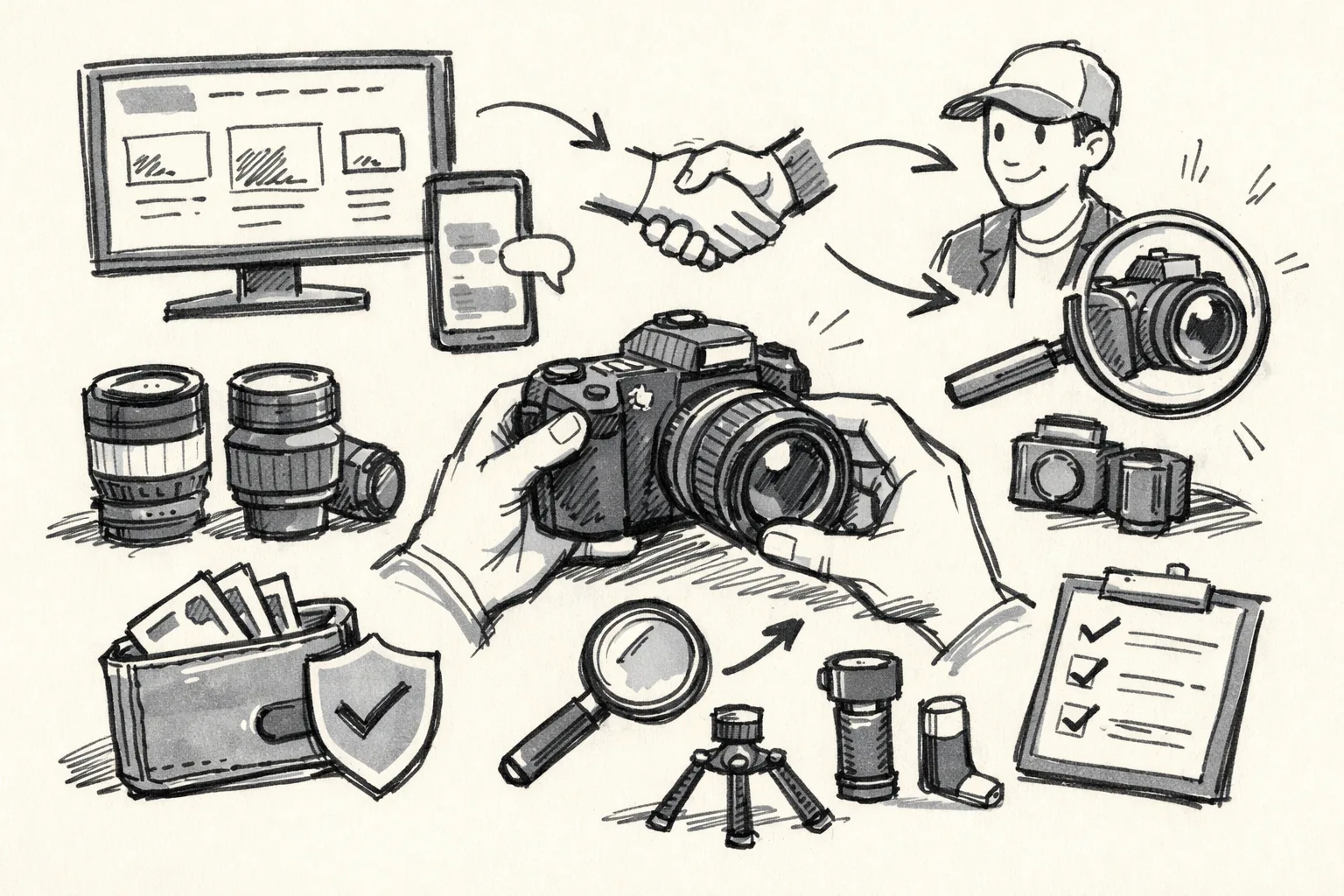
- Bring the item's own test. For electronics, power it on and check the IMEI or serial. For a car, pay for an independent inspection, not "my friend looked at it". For anything with a battery, run it for five minutes.
What Admister does — and what it deliberately doesn't
An honest map is more useful than a reassuring badge. Posting on the board is free, and free posting means anyone can post, including bad actors. So:
| Situation | Who carries the risk |
|---|---|
| A plain listing — electronics, furniture, a bike | You and the other person. The platform introduces you; the deal is yours. Meet, inspect, pay on the spot. |
| Marketplace order | Payment runs through your account balance and an order record, so there's a trail — but read the seller's terms before you order. |
| Digital key | Issued automatically once payment clears. No human in the middle who can disappear. |
There is no escrow on Admister, no platform-run delivery, no ratings to hide behind, and balance top-ups are crypto through our Payora gateway rather than card. That means one thing for you: the inspection is your job, and it is the whole game. Paid promotion — VIP placement for seven days, or bumping a listing — buys visibility and nothing else. A VIP badge is not a trust badge, and anyone who tells you otherwise is selling something.
If it already happened
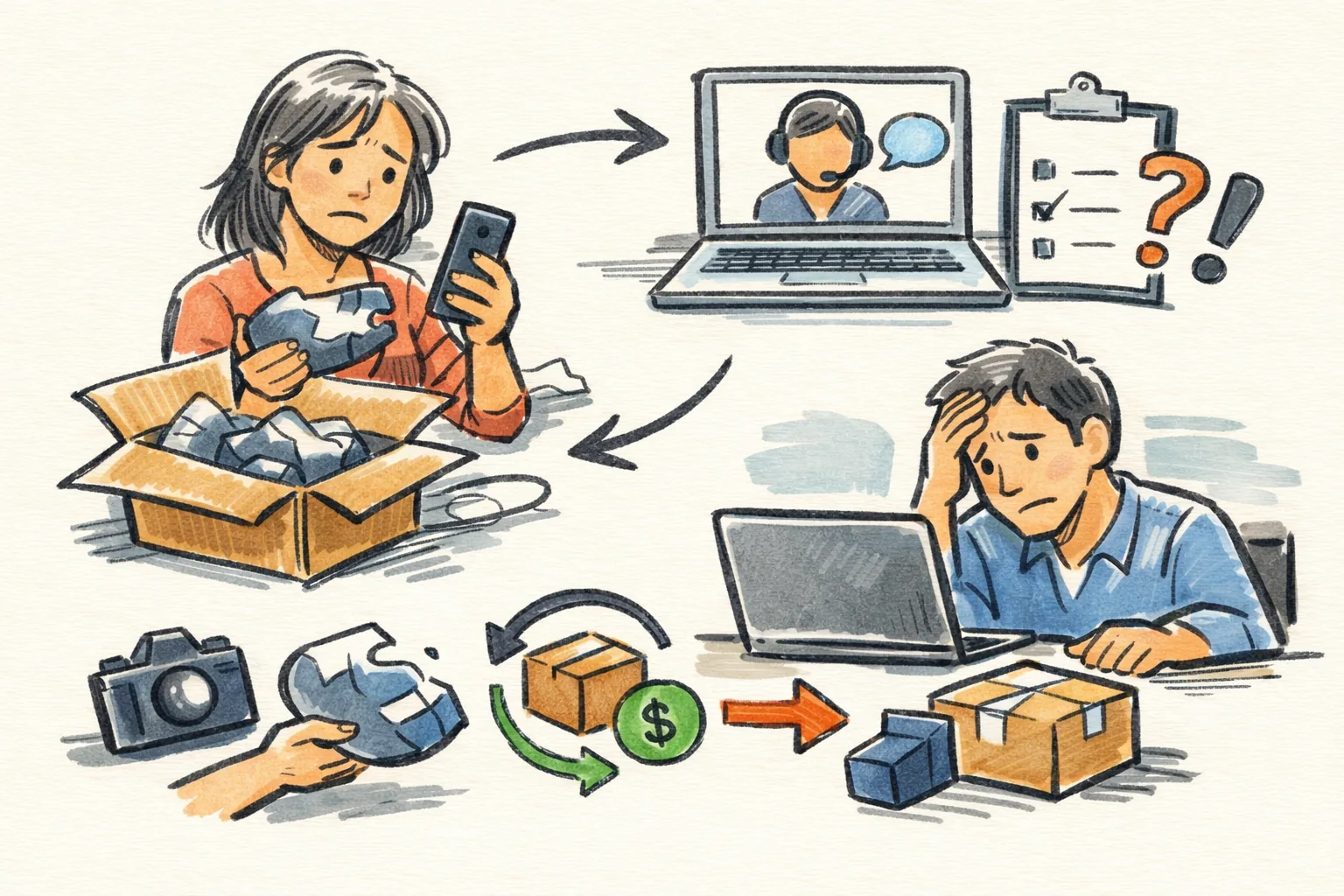
Stop paying first. Scammers often come back with a "release fee" or a "customs charge" to finish off the first loss, and people pay it. Screenshot everything before the chat disappears: the listing, the profile, the phone number, the wallet address. Report the listing so it doesn't work on the next person. Then file with the police — one phone number or wallet address repeating across dozens of victims is exactly what a case is built from.
None of this makes classifieds dangerous. It makes them normal. People who avoid fraud aren't luckier; they just refuse the one-way step until they've seen the thing. Do that consistently and you can buy and sell for years without a single bad deal. Ready to sell something of your own? Post an ad, describe it honestly, and meet your buyer in daylight.