What Personal Data Should Be Removed from a Classifieds Ad Before Publishing?
Learn what personal data should be removed from a classifieds ad before publishing, including contact details, location clues, and photo metadata.
On this page
- Start with the ad’s visible fields, not the account settings
- Remove direct contact details that can be harvested or reused
- Strip out location clues that identify your home or routine
- Check photos and files for hidden personal data
- Remove identity markers from item descriptions
- Redact financial and transaction history
- Watch for accidental disclosure in the ad’s formatting and attachments
- Use a final “public-read” check before posting
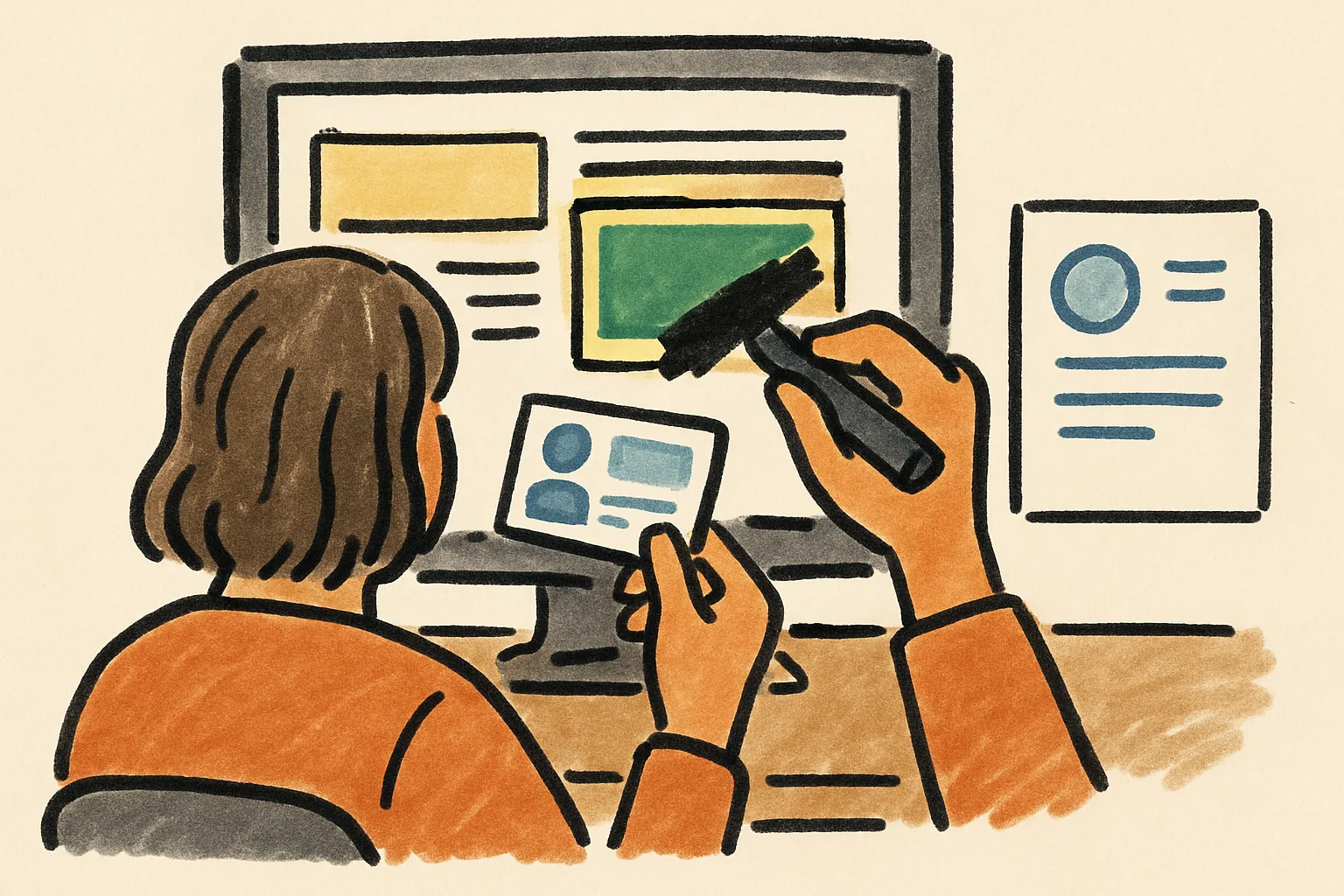
Start with the ad’s visible fields, not the account settings
The safest place to begin is the listing itself. Title, description, photos, and any contact field are the parts strangers can see in seconds, so they deserve the first review before you think about profile settings or account privacy pages.
A seller who spends ten minutes polishing a profile and skips the listing text still leaves the real risk in view. Public fields are copied, scraped, screenshotted, and forwarded quickly. One sloppy line can outlive the ad.
Read the listing as if you are the buyer. If a stranger can learn your surname, your street, or your usual pickup time from the text alone, the ad is too open. The question is simple: what personal data should be removed from a classifieds ad before publishing?
Start by cutting anything that is not needed for the sale. A model name, condition, and a clear price are enough for most ads. A life story is not.
Remove direct contact details that can be harvested or reused
Phone numbers are the easiest target. One number in a public ad can be copied into spam lists, used in robocalls, or pasted into fake WhatsApp messages within hours. The same goes for personal email addresses, even when they look harmless.
Messenger handles deserve the same treatment. A Telegram username, Instagram name, Facebook profile link, or other direct handle gives strangers a path to your wider online life, and the ad becomes a doorway instead of a transaction notice.
Do not add a secondary contact point “just in case.” That extra line often gets indexed by search engines and reposted by bots. If the site offers an internal chat, use that first and keep the ad itself clean.
Some sellers think an email address inside the description feels friendly. It usually reads as a signal for spam. Keep contact inside the platform’s built-in system unless the site clearly asks for something else.
For sellers who also ship, the contact issue is even sharper. Read वर्गीकृत विज्ञापनों पर बेचते समय शिपिंग before you paste a number or address into a public post. A public ad and a shipping conversation are not the same thing.
Strip out location clues that identify your home or routine
Location clues often hide in plain sight. “Near Central Station” sounds harmless until it narrows your area to a few blocks. “Pickup after 7 p.m.” says something about your routine, and “behind the old post office” can point straight to your building.
An address does not need to be complete to be useful. A district name, a bus stop, a gym, or a landmark can be enough when combined with other details. One clue is mild; three clues are enough to map a pattern.
Be careful with commute language too. Phrases like “I pass by Downtown every morning” or “I work near the university” reveal where you go and when. That is more personal than most people expect from a simple ad.
If the item is for collection, give only the broadest practical area. A city name is usually enough. A floor number, back gate, or side entrance is not.
One seller once wrote that the item could be collected “next to the blue bakery by my apartment.” That single sentence turned a public listing into a route map. The ad should never help a stranger find your door.
Check photos and files for hidden personal data
Photos carry more than the item. A mirror can show your face. A glossy table can reflect a laptop screen. A picture taken in a car can show a license plate, parking permit, or dashboard details that identify the owner.
Receipts are a common problem. They can reveal names, partial addresses, last four digits, store locations, and timestamps. A receipt in the frame looks minor; a receipt in the picture can be a privacy leak.
Look for document corners, badges, utility bills, school papers, delivery slips, and house keys. One image may contain three separate identifiers. Zoom in before you post, because the phone screen that looked clean at arm’s length often is not clean at all.
Hidden data can sit inside the file too. Photo metadata may include time and device model, and sometimes location data. If the platform strips metadata, good; if not, remove it yourself before upload.
This is not paranoia. It is basic cleanup. A public ad should show the chair, bike, camera, or lamp for sale, not the seller’s life in the background.
Remove identity markers from item descriptions
Descriptions often contain more identity markers than photos. Names, initials, signatures, company stamps, membership IDs, and order numbers can all tie an item back to one person or one account.
That matters even for ordinary secondhand goods. A warranty card with a full name, a branded certificate, or a service label can reveal the previous owner. If the item was a gift, a dedication message or engraved note can do the same.
Do not paste the original product history line by line. “Bought by Rajesh in 2023 from Store X” adds no value to the sale, but it does create a paper trail. If the sale works without it, remove it.
Serial numbers need judgment. Some buyers want to verify authenticity, yet a full serial number can also expose registration records or support history. Share only what the platform or the buyer truly needs, and blur the rest if possible.
For branded items, a single close-up may be enough. The rest of the paperwork belongs away from the public page.
Redact financial and transaction history
Financial details should never sit in a public classifieds ad. Bank account numbers, card fragments, UPI IDs, payment app usernames, and QR codes can all be copied faster than most sellers expect.
Invoice screenshots cause the same trouble. They often show the buyer’s name, billing address, payment method, order reference, and sometimes shipping route. A public ad does not need any of that to prove value.
Shipping labels are especially risky because they bundle multiple data points into one image. Name, address, postal code, and tracking numbers may all be visible. Even a partial label can be enough for someone to connect the ad to a person or a household.
If you mention a refund, keep the story short. “Original packaging included” is enough. “Refunded last month after a card dispute” is not.
The same caution applies to screenshots of transfer confirmations. A balance, account name, or transaction timestamp can reveal more than the seller intended. Payment history belongs in private messages, not in a listing photo.
Watch for accidental disclosure in the ad’s formatting and attachments
Copy-and-paste errors are common. People reuse text from emails, old listings, or chat messages, and one stray signature line survives the edit. A sentence like “Best regards, Anita” at the bottom of an ad is not a style choice; it is a clue.
Autofill can betray you too. Some keyboards insert a saved phone number, address, or email without much warning. If the text box suddenly fills itself, stop and inspect every line before posting.
Attachments deserve the same review as photos. A PDF may contain headers, footers, tracked revisions, or embedded comments. Document metadata can also preserve names and editing history, even if the visible page looks clean.
One practical habit helps here: open each file once, save a fresh copy, and check what remains. That extra minute can catch a lot. It can also prevent the embarrassing moment when a hidden footer gives away your office name.
If you are sharing the ad from a phone, rotate the device and inspect it again. Different screen sizes hide different things.
Use a final “public-read” check before posting
Before you publish, read the ad like a stranger with no context. Ask whether the title, text, image, and attachment together reveal a name, a location, a routine, or a payment trail. If the answer is yes, trim again.
Use a short checklist with five steps: remove contact details, remove location clues, review photos, remove identity markers, and remove financial traces. That sequence is simple, and it works because it follows the parts most often copied into public view.
Then do one last screen check. Open the draft on the same device a buyer might use. A detail hidden on a large monitor may appear obvious on a phone, where one photo and two lines of text can expose more than you intended.
If the item is valuable, ask a second person to read the listing once. A fresh pair of eyes notices the obvious things: a street name, a mailbox reflection, or a phone number buried in the second paragraph.
Keep the rule strict. If a detail helps sell the item but also helps identify you, remove it unless the platform specifically requires it. A classifieds ad should answer one question only: what is being sold?
That standard works for a bicycle, a sofa, a camera, or a laptop. It also works when the ad is posted in a hurry, which is usually when mistakes happen.
One clean listing is enough. The rest belongs in private chat, where you can decide what to share and when.