How to Withdraw Money from Online Marketplace Escrow
Learn how to withdraw money from online marketplace escrow by checking eligibility, following the payout steps, and understanding timing.
On this page
How Marketplace Escrow Works
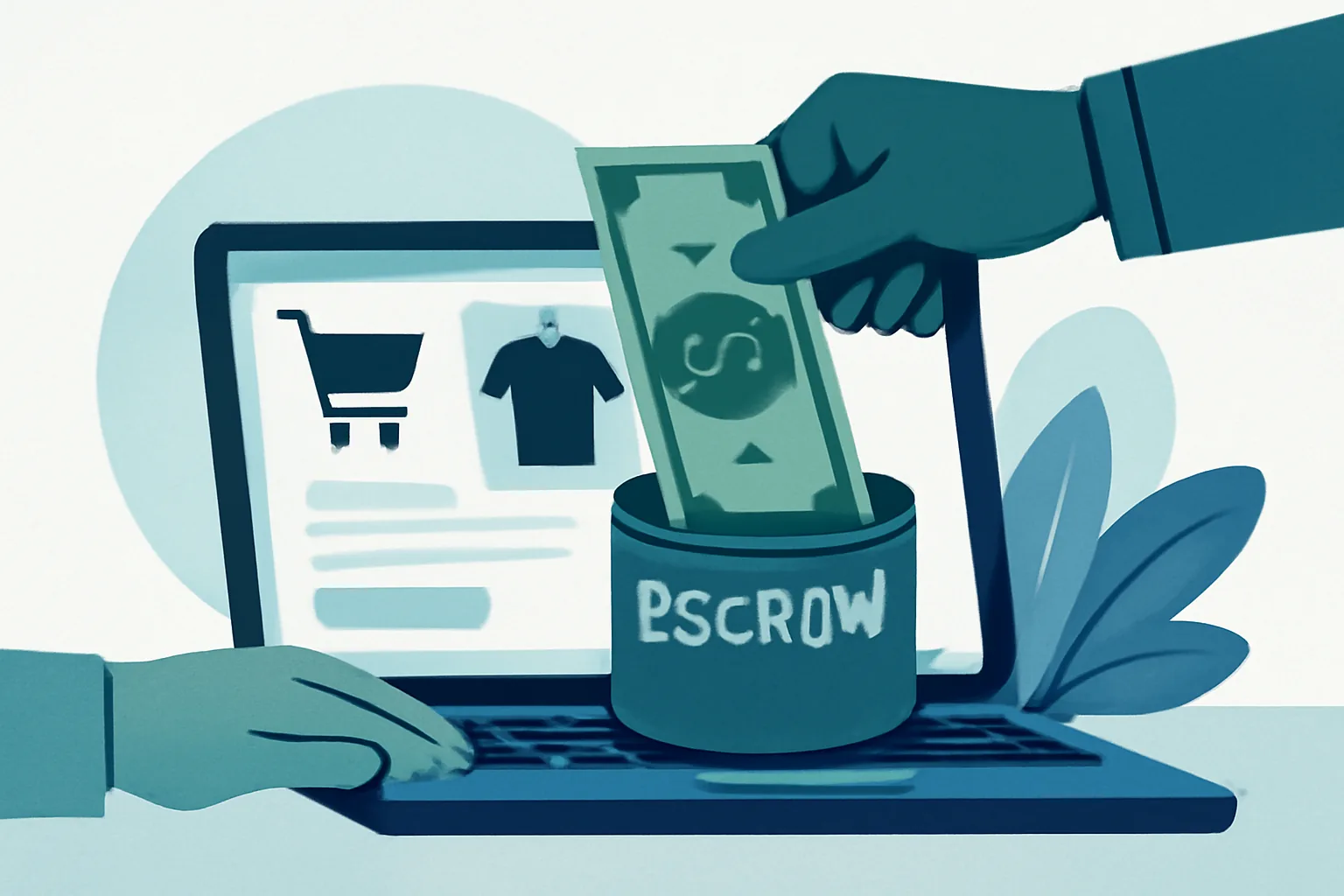
If you sell on an online marketplace, “escrow” is the system that keeps the buyer’s money in a holding state until certain conditions are met. In plain terms, the platform acts as a middle layer: the buyer pays, the funds are not immediately handed over to the seller, and the money is released only after the transaction is considered complete. That may happen when the buyer confirms delivery, when the tracking shows the order has arrived, or after a waiting period set by the marketplace.
It helps to know the difference between three terms that are often used interchangeably but are not quite the same. An escrow balance usually refers to money that is still being held by the marketplace and cannot yet be withdrawn. A pending balance is money that has cleared the order stage but is still waiting for processing, verification, or a payout schedule. An available balance is the amount you can actually move to your bank account or wallet. On some platforms these labels are very precise; on others, the terminology is looser and the numbers appear in one earnings dashboard. If you are unsure, it is worth checking the marketplace’s own help pages or reading a practical guide like How Admister works for a general explanation of balance states and account flow.
There is one more wrinkle: platform-specific rules can change everything. Some marketplaces release funds immediately for established sellers, while others keep a reserve, especially if an account is new, sales volumes are suddenly higher, or there has been a dispute. In other words, “escrow” is not just a payment term; it is also a risk-control system. That is why two sellers on the same platform can have very different withdrawal experiences, especially when learning how to withdraw money from online marketplace escrow.
Check Eligibility Before Starting the Withdrawal
Before you tap the withdrawal button, make sure the funds are actually eligible to leave escrow. That sounds obvious, but many failed payouts happen because a seller assumes the money is ready when it is still inside a platform rule cycle. Common requirements include order completion, buyer confirmation, the end of the buyer dispute window, and identity verification. Some marketplaces also require a minimum payout threshold, so even a fully released balance may not be withdrawable until it reaches a specific amount.
Identity checks deserve special attention. If the marketplace asks you to verify your name, address, phone number, or banking details, finish that step first. A mismatch between your account name and the payout account name is one of the most common causes of rejection. The same goes for business accounts: if the platform expects a legal entity and you entered a personal bank account, the transfer may stall.
It is also wise to look at order status rather than only the balance number. A payment can look “available” in your dashboard and still be blocked because another part of the transaction is unresolved. For example, a buyer may have opened a claim, the delivery proof may still be under review, or the system may be waiting for the return period to end. If you want to be cautious, check the marketplace’s FAQ before taking action; the Frequently asked questions page is a good place to look when a platform’s own rules are unclear.
Follow the Escrow Withdrawal Process Step by Step
Although the screens look different from one marketplace to another, the withdrawal process usually follows the same basic path. If you are doing it for the first time, do not rush. A slow click is better than an incorrect payout destination.
- Log in to your seller or merchant account.
- Open the earnings, balance, or wallet section.
- Check which amount is available for withdrawal and which amount is still pending.
- Select “withdraw,” “cash out,” or “transfer.”
- Choose the payout method you have already linked, or add a new one if the marketplace allows it.
- Confirm the destination details carefully, including account number, card, wallet address, or bank routing information.
- Review any fees, limits, or estimated processing times shown on the screen.
- Submit the request and save the confirmation receipt or transaction ID.
That last step matters more than many sellers realize. If something goes wrong later, the transaction ID is often the fastest way to trace the payment with support. Think of it as the paper trail in digital form.
On some platforms, the withdrawal action may be called “transfer to bank,” “move to wallet,” or “release funds” rather than “withdraw.” If the wording is unfamiliar, pause and check the description before confirming. A few seconds of review can prevent a headache that lasts days, especially if you are still learning how to withdraw money from online marketplace escrow.
Review Marketplace Payout Timing and Release Schedules
Marketplace payout timing varies widely. Some platforms offer instant releases, where the transfer begins as soon as you confirm the withdrawal. Others process payouts daily, weekly, or on a delayed schedule that batches requests together. Even when a marketplace says “instant,” the money may still pass through banking rails or payment processors that add extra time before it reaches your account.
Processing time can depend on several factors. Payment method is one of them: bank transfers usually take longer than digital wallets, while debit card payouts may land sooner on certain systems but not on others. Region matters too, because local banking networks, holidays, and compliance checks can slow things down. Account status is also important. A verified account with a clean history often moves more smoothly than a new account still under review.
There are also platform-specific release schedules that happen behind the scenes. Some marketplaces wait a fixed number of days after delivery before the balance becomes withdrawable. Others release in stages, especially for high-value orders or new sellers. If you are managing cash flow for a small business, these timing rules are not a minor detail; they can shape inventory orders, supplier payments, and your week-to-week planning. For a broader overview of platform systems, the The 7 Admister services page can help you understand how account support is organized around different user needs.
Choose the Right Payout Method
The best payout method is the one that fits your account setup, your region, and how quickly you need the money. Most marketplaces support one or more of the following: bank transfer, debit card payout, digital wallet, or another local transfer option. Each comes with trade-offs.
Bank transfer is usually the most familiar choice. It can be reliable, but it often takes longer than faster methods and may involve intermediary banks, especially across borders. Debit card payouts can feel convenient because the money goes to a card-linked account, but not every card supports incoming marketplace transfers, and some issuers reject them without much explanation. Digital wallets may process quickly, though they can come with their own limits, regional restrictions, or service fees.
Fees deserve a close look. Some platforms charge a flat withdrawal fee, others take a percentage, and some let the payment provider set the cost. Even when the marketplace advertises “free” withdrawals, your bank or wallet provider may still apply a receiving charge. It is one of those details people only notice after the transfer completes, which is not ideal.
Name matching is another common stumbling block. The payout account should usually match the seller name or the registered business name on the marketplace profile. If the names do not align, the transfer may be rejected or held for review. Simple setup errors can cause the same result: incorrect routing numbers, expired cards, outdated wallet addresses, or a bank account that has been closed and forgotten. Before submitting, read the screen slowly and compare every field with the source document.
Troubleshoot Delays, Holds, and Failed Withdrawals
Not every withdrawal fails for dramatic reasons. Often the issue is a routine hold triggered by the platform’s risk controls. Pending verification is a common example. If the marketplace asks you to upload an ID document, confirm a phone number, or re-enter banking details, the balance may stay locked until the check is complete.
Disputes and chargebacks can also freeze a payout. If a buyer challenges the order, the platform may delay release until the case is resolved. That is frustrating, but it is also standard practice in many escrow systems. Account restrictions can create the same outcome. A sudden change in selling behavior, a policy violation, or suspicious login activity may prompt an automatic hold while the system investigates.
Incorrect banking details are another obvious but frequent cause. One wrong digit can bounce the transfer. If you suspect this happened, update the information only after you confirm the exact error message, because repeated edits can sometimes restart the review process.
So when should you contact support? Usually after you have checked the balance status, reviewed the payout method, confirmed identity verification, and waited at least the stated processing time. If the marketplace offers live support, use it. If not, send a concise message with the amount, date, withdrawal method, and transaction ID. Clear facts get better results than a long story.
If you need help navigating support channels, the guide on Getting support is a useful reference point for organizing your request before you contact a platform team.
Protect Yourself and Keep Records
Once the withdrawal is submitted, do not treat the job as finished. Confirm the status in your account history and keep a copy of the receipt, confirmation number, or transaction ID. If the money arrives in stages, save each stage. A screenshot may feel unnecessary in the moment, but it can be invaluable if the payout goes missing in transit or shows up under a different reference name.
It is also smart to monitor balances regularly. Check the escrow balance, pending balance, and available balance after each sale so you can spot unusual shifts early. A sudden change may indicate a dispute, a refund, or a platform hold. The sooner you notice it, the easier it is to respond.
Just as important: watch for scams that target sellers waiting for funds. Fraudsters sometimes send fake emails or messages claiming that your money is “ready to release” if you first pay a processing fee, tax, or verification charge. That is a classic pressure tactic. Legitimate marketplaces generally do not ask you to send money to unlock your own balance. If you receive a message like that, stop and verify it through the official platform dashboard rather than replying to the message itself.
A practical habit is to keep a simple payout log: date of sale, date funds became available, withdrawal request date, method used, and final receipt date. You do not need special software for this; a spreadsheet is enough. Over time, the log reveals patterns. Maybe bank transfers always take longer on weekends, or one particular wallet processes faster than the others. Those are the kinds of observations that help you make better choices, especially if you sell regularly.
Finally, if a platform’s rules change, update your process too. Escrow systems are designed to balance buyer protection and seller access, and that balance shifts as marketplaces tighten fraud controls or expand payment options. The safest approach is not to memorize a single withdrawal routine, but to check the latest rules before every payout. If the marketplace offers an FAQ or help center, use it. If you are unsure about a policy detail, read the official wording twice and proceed only when the release conditions are clear.
Withdrawals should not feel mysterious. Once you understand how the escrow balance moves into pending and then into available funds, the rest becomes a matter of careful checks and good records. The process may vary by platform, but the logic stays the same: confirm eligibility, choose the correct payout method, submit accurate details, and keep proof of what happened. That quiet discipline is what keeps your earnings moving without unnecessary delays.