Buying Used Kids’ Items Can Be Smart
Learn buying used kids' items safely with tips on checking wear, recalls, parts, and hygiene before you choose secondhand gear.
On this page
- Why Buying Used Kids’ Items Can Be Smart
- What to Check Before You Buy Anything
- Used Baby Gear Checklist
- How to Inspect a Stroller Before Buying
- Items Worth Buying Used vs. Items to Buy New
- Cleaning, Sanitizing, and Setting Up Used Items
- Where to Buy and How to Avoid Risky Sellers
- Final Safety Check Before Using the Item
Why Buying Used Kids’ Items Can Be Smart
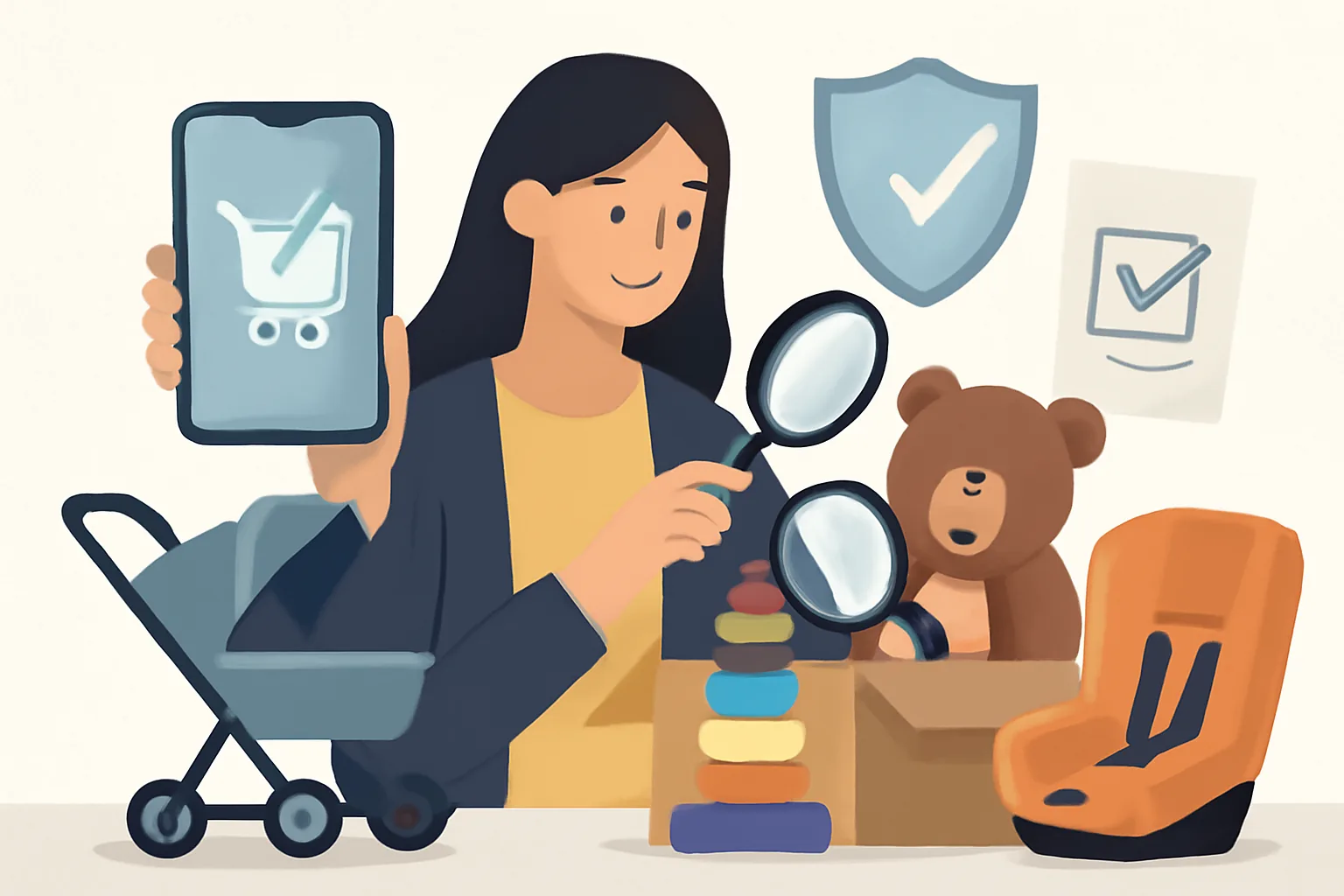
Parents quickly learn that children grow at a pace that makes even well-made things feel temporary. A jacket may fit for one season, a high chair for a handful of months, a stroller for a stretch of neighborhood walks and then not much more. That is one reason buying used kids’ items can make so much sense, especially for buying used kids' items safely. You often pay less for products that still have plenty of life left in them, especially when the original owner bought a quality brand and used it lightly.
There is also the practical appeal of getting more for your money. A sturdy crib, a name-brand stroller, or a snow suit bought secondhand can free up budget for things that do need to be new, like diapers, shoes, or a proper car seat. For many families, the savings are the point. For others, it is about access: better gear becomes available at a price that feels realistic.
Then there is the waste factor. Children’s items often have short lives in one home, but that does not mean they are finished. Passing them along keeps useful products in circulation instead of sending them straight to storage or the bin. If something still works, there is no reason to treat it like trash.
Secondhand shopping can also open the door to higher-end brands that would be difficult to justify at full price. A family may never buy a premium stroller new, but find it manageable used. That said, the lower price should never blur the real question: is it safe, complete, and appropriate for your child? If the answer is uncertain, it is not a bargain. It is a problem waiting to happen.
What to Check Before You Buy Anything
Before you look at a specific item, build the habit of checking a few basics. Start with age. Some children’s products have a clear lifespan, not because they look old but because materials fatigue, mechanisms loosen, or safety expectations change. If the seller cannot tell you when the item was purchased, that does not automatically make it unsafe, but it does mean you need to inspect it more carefully.
Next, look at wear. Normal use is one thing; structural damage is another. Light fabric fading, for example, is not the issue. Cracks, bent frames, frayed straps, missing screws, and loose joints are. The difference matters. A toy with scuffed plastic may be fine, while a chair with a wobbling base is not.
Ask whether anything is missing. Used children’s products are often sold in pieces, and one absent part can change the whole equation. A toy without the battery cover, a stroller without the original adapter, or a high chair with an improvised strap should raise concern immediately. If you have to “make it work,” that is usually a sign to skip it.
Hygiene matters too. A product can look tidy and still hold odors, stains, mold, or residue in seams and creases. Soft goods deserve special attention, especially anything that came into contact with spit-up, food, diapers, or outdoor dirt. If the seller seems defensive when you ask about cleaning history, that is useful information in itself.
Seller credibility counts more than people sometimes admit. A clear listing with several photos, model information, and a straightforward description is far better than a vague post that says only “good condition” and nothing else. If the seller cannot answer basic questions, refuses additional photos, or rushes you to decide, step back. A patient seller is usually a better sign than a persuasive one.
And know when to walk away. If an item has visible damage near a load-bearing point, smells strongly of mildew, shows signs of amateur repair, or has a history that cannot be explained, do not try to rescue it. Some things are simply not worth the risk, no matter how low the price.
Used Baby Gear Checklist
Baby gear deserves a slower, more exact inspection than ordinary household items. It is meant to hold, restrain, or support a child, so the details matter. Before you buy, make sure you can check the model number and compare it with the manufacturer’s information. If you are unsure how to verify product details, resources like How Admister works may help you understand how to navigate a service platform more confidently, especially if you are handling a purchase through a marketplace.
For any larger item, ask whether there has been a recall. That is not a box to tick casually. If a product has a known safety issue, the rest of the inspection becomes secondary. The seller may not know, so it is up to you to check.
Here is a practical checklist for used baby gear:
- Confirm the exact model name and model number.
- Check recall status before agreeing to buy.
- Make sure all original parts are present, including hardware, pads, covers, and adapters.
- Inspect straps, buckles, clips, and latches for fraying, cracking, or weak tension.
- Look for missing labels or instructions, especially on items that fold, lock, or assemble in stages.
- Ask how the item was cleaned and stored.
- Look for signs of moisture damage, mold, or insect exposure.
- Test any moving parts several times, not just once.
Cribs deserve special caution. Even when they look solid, design details can make an old model unsuitable. Carriers, slings, and wraps need close inspection of seams and support points. High chairs should have secure restraint systems and stable legs. Swings and bouncers should move smoothly without strange noises, jerks, or signs that the motor is straining. Toys are a mixed category: hard plastic toys can often be cleaned and reused, but any item with small detachable parts, deep cracks, or questionable battery compartments should be set aside.
In baby gear, “mostly complete” is not complete enough. If the item needs an accessory to function properly and that accessory is missing, you should assume you will have trouble replacing it. The saved money can disappear quickly in parts hunting.
How to Inspect a Stroller Before Buying
A stroller may look sturdy from across the room, but the real test begins when you use your hands. Start with the frame. Open and close it if possible. The stroller should feel stable, not twisted or loose. If the frame creaks loudly, shifts side to side, or appears bent, that is a warning sign. Small cosmetic scratches are one thing; structural weakness is another.
Wheel condition matters more than many buyers expect. Look at tread wear, alignment, and the way each wheel spins. Uneven wear can suggest the stroller was dragged, overloaded, or stored badly. Check that the wheels are attached securely and that they do not wobble excessively. If one wheel sticks or grinds, the stroller may have hidden damage.
Test the brakes. They should engage cleanly and hold the stroller in place. If the brakes feel soft, inconsistent, or only work on one side, pass. Brake reliability is not a minor feature; it is central to safe use.
Next, try the folding mechanism. It should move predictably and lock properly when open. If folding requires force in odd places, or if the stroller seems to unlock by accident, do not assume it will “settle in” with use. That is often wishful thinking. Look for any signs of unsafe modifications as well, such as homemade straps, drilled holes, mismatched parts, or tape used as a repair.
Inspect the harness carefully. The buckle should click securely and release without sticking. Straps should be free of fraying, twisting, or stretched stitching. If the harness does not fit smoothly through its adjustment points, the stroller may be too worn to trust.
Seat fabric and canopy deserve a slow visual check. Stains are not automatically a problem, but tears, thinning fabric, exposed foam, or a lingering odor are. The canopy should open and close without snagging, and any zipper or snap should function cleanly. If the stroller came with accessories, such as an infant insert, cup holder, rain cover, or car seat adapter, confirm that they fit the specific model. Compatibility is not universal, even when sellers claim it is.
Any rust, cracked plastic, or bent connection points should push you toward a firm no. A stroller that has been repaired in a backyard manner, or one that depends on an improvised fix, is not a bargain. It is a liability.
Items Worth Buying Used vs. Items to Buy New
Some kids’ products are naturally better candidates for secondhand buying than others. In general, sturdy items with simple construction and visible wear patterns are easier to assess. Think of things like outerwear, books, large plastic toys, some nursery storage, and certain strollers. These are items where you can usually see what you are getting, test how they work, and decide whether the condition matches the price.
By contrast, some products are better bought new. Car seats are the clearest example. The same caution applies to other items where internal integrity matters more than outward appearance. If you cannot confidently confirm how the item has been used, that uncertainty is enough reason to move on.
Mattresses and sleep-related products deserve similar restraint. Even if a product looks spotless, hidden wear can undermine comfort or hygiene. Anything that has absorbed moisture, pressure, or repeated use in a way that is not easy to inspect should be approached carefully. When in doubt, new is often the safer choice.
For many families, a useful rule is simple: buy used when the item is easy to inspect, easy to clean, and easy to replace if needed. Buy new when safety depends on hidden history, sealed materials, or precise performance. That is less glamorous than “getting a deal,” but it is much more reliable.
Cleaning, Sanitizing, and Setting Up Used Items
Once you bring something home, cleaning should be thoughtful rather than aggressive. Start with the manufacturer’s care instructions if they are available. Some fabrics can be removed and washed; others should only be spot cleaned. If a seller does not provide a manual, check the model online before using heat, bleach, or strong cleaners that might damage the material.
Hard surfaces can usually be wiped down with mild soap and water first, then sanitized if the material allows it. Avoid soaking joints, hinges, or electrical parts. For small crevices, use a soft brush or cloth wrap around a narrow tool to lift out grime rather than forcing liquid into places it should not go.
Fabrics need a gentler approach. Remove loose debris with a vacuum or lint roller, then wash according to the care label if possible. Sunlight can help with odors, though it is not a cure-all. If a fabric still smells musty after cleaning, especially around seams or padding, there may be mold or trapped moisture. That is a good reason to stop using the item.
Odors are worth taking seriously. A faint used smell is normal; a strong sour, damp, or chemical odor is not. The same applies to visible mold, even in a small spot. Once mold has spread into foam, padding, or hidden layers, cleaning may not be enough.
When reassembling items, follow the original sequence exactly. It is easy to leave a clip off by mistake or route a strap incorrectly when you are eager to use the product. Lay out each part before you begin and compare the finished item to the product photo or manual. If the item includes a locking mechanism, test it three or four times after reassembly. A single successful click is not proof of correct setup.
If you need general guidance on support, account issues, or platform help while managing a purchase, Getting support can be a useful place to start. It is always better to resolve a concern before you meet a seller or hand over money.
Where to Buy and How to Avoid Risky Sellers
Good used kids’ items can be found in several places: neighborhood resale shops, local marketplace listings, parent groups, charity shops, and community sales. Each option has strengths. Resale shops may offer more consistency and some basic sorting. Community groups may have better prices and a more personal exchange. Marketplaces offer variety, but also require more caution.
When evaluating a seller, look for clarity. A good listing includes several photos from different angles, a clean description of condition, and the exact model if relevant. Sellers who hide details often have a reason. If the description is vague, ask direct questions: How old is the item? Has it been repaired? Has it ever been recalled? Does it include every original part? Was it stored indoors? The answers should be straightforward.
Red flags are usually obvious once you decide to notice them. Be wary of listings with only one blurry photo, evasive replies, no brand name, or a refusal to show the item assembled. A seller who will not confirm whether all parts are included may be trying to avoid admitting that something is missing. Another warning sign is a rush to close the deal, especially if the seller discourages inspection or refuses to meet in a safe, public place.
Community groups can be especially useful when you are buying from other parents, but familiarity should not replace caution. A friendly tone does not guarantee a safe item. The product still needs the same checks.
If the transaction involves a platform with built-in support or payment guidance, it helps to understand the process before committing. Even for ordinary resale purchases, looking at resources such as Frequently asked questions — Admister can reduce confusion and help you spot terms or steps you might otherwise overlook.
Final Safety Check Before Using the Item
Before a used kids’ item enters daily life, do one last review. This is the point where you slow down and ask, one final time, whether the item is truly ready. Check stability. Check fit. Check function. Check cleanliness. If anything seems off, even slightly, pause.
Use this final checklist:
- Does the item stand, fold, latch, or fasten the way it should?
- Are all parts present and correctly assembled?
- Are straps, buckles, zippers, wheels, or hinges functioning smoothly?
- Is there any sign of rust, cracking, mold, or strange odor?
- Is the item appropriate for your child’s current age and size?
There is a simple rule worth remembering: if you have to talk yourself into an item, pass on it. A used product should feel reassuring after inspection, not merely affordable. The best secondhand finds are the ones that make you nod and think, yes, this is still in solid shape. The rest can stay with the seller.
Buying used kids' items safely is less about bargain hunting and more about clear judgment. Choose carefully, clean properly, and do not let a low price lower your standards. Your child does not need every item to be new. They do need the ones they use to be safe, complete, and worth trusting.