How to Handle a Buyer Who Wants to Pay Before Pickup on Classifieds
Learn how to handle a buyer who wants to pay before pickup on classifieds with clear terms, deposits, and safe pickup plans.
On this page
- How to Handle a Buyer Who Wants to Pay Before Pickup on Classifieds
- Decide whether your listing can safely support early payment
- Set a clear policy for deposits, full prepayment, or no advance payment
- Write a response that keeps the sale professional and firm
- Confirm the pickup plan before you accept any money
- Use a simple record-keeping routine for advance payment deals
- Know when to decline the offer and move on
- Prepare a backup plan if the buyer pays but cannot collect
How to Handle a Buyer Who Wants to Pay Before Pickup on Classifieds
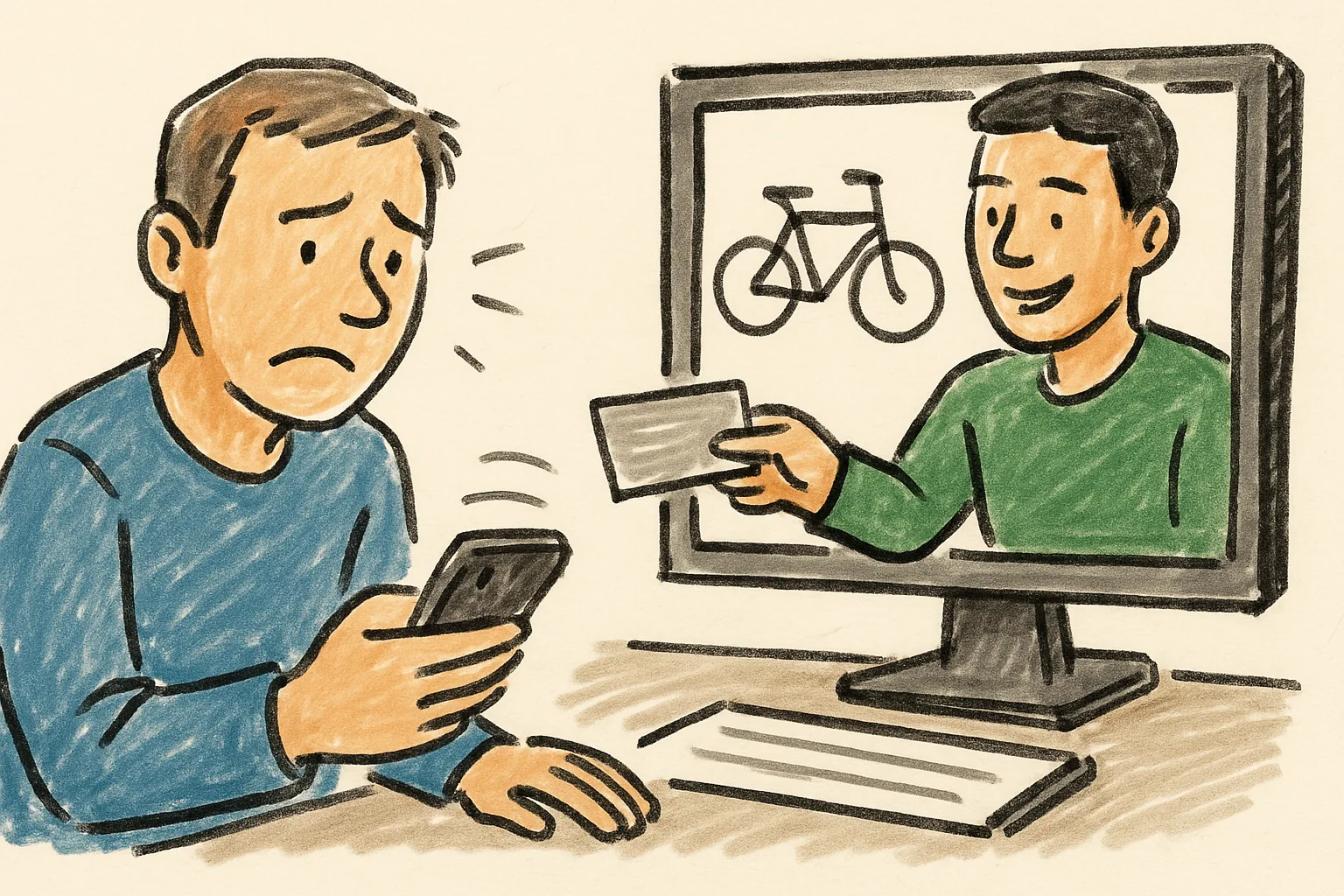
A buyer who says, “I’ll pay now, pick up later,” is not always trying to complicate things. Sometimes the message is simple: the buyer wants to reserve the item, avoid losing it to someone else, or move the deal forward before their schedule opens up. Read that as a negotiation cue, not as a demand you must accept.
The practical question is not whether the buyer is “serious.” It is whether your sale can survive a delay. If the item is a bike, a used iPhone, or a dining table that gets attention fast, the answer may be different from a slow-moving lamp listed for 3 weeks. Context changes everything.
Decide whether your listing can safely support early payment
Start with 4 facts: demand, holding time, your tolerance for a no-show, and the item’s resale difficulty. A seller who can relist in 10 minutes has more room to say yes than someone who would lose a weekend of messages and drop-offs. That difference matters.
Ask yourself one direct question: if the buyer disappears after paying, can you still live with the outcome? Some sellers can. Others hate the uncertainty enough that even a small delay feels like a burden. Neither answer is wrong.
The item itself matters too. A common item with a deep market, such as a used chair or a spare monitor, may be easy to move again. A rare part, a custom piece, or an item that is hard to explain to the next buyer often deserves stricter terms. In those cases, a missed pickup can cost more than a sale price.
If you want to think through the shipping angle as a separate decision, this guide on वर्गीकृत विज्ञापनों पर बेचते समय शिपिंग is useful background, especially when a buyer tries to mix pickup and payment in one message.
Set a clear policy for deposits, full prepayment, or no advance payment
Choose a policy before the next message arrives. Three basic options cover most cases: no advance payment, a small non-refundable deposit, or full prepayment only under specific conditions.
No advance payment is the simplest rule. The buyer pays at pickup, and the item stays available until then. That keeps the process clean, but it can also invite the classic “Can you hold it until Friday?” message. If you do not want that conversation, say so once and keep it short.
A deposit works better when you are willing to reserve the item but not fully lock yourself in. A buyer who sends a small deposit shows intent. You still keep some protection if they vanish. Just make the deposit terms plain: how much, whether it is refundable, and how long the hold lasts. Vagueness causes disputes.
Full prepayment before pickup can work, but only when you control the terms tightly. Maybe the buyer is coming from another town. Maybe the pickup window is narrow. Maybe you know the item will be hard to replace. Even then, your rules should be specific enough that both sides can point to the same agreement later.
One clean policy is better than 5 improvised exceptions. If you change the rule for every buyer, you end up negotiating the same deal again and again.
Write a response that keeps the sale professional and firm
Your reply should be short, calm, and clear. Do not over-explain. A message such as, “I can hold it for pickup on Saturday at 4 p.m.; payment at pickup only,” tells the buyer what happens next and what does not happen. That is usually enough.
If you do accept advance payment, say the terms in one sentence. For example: “I can accept a deposit today to reserve it, and the balance is due at pickup.” The important part is that you do not leave room for a buyer to later claim they understood something else. Words matter here.
A defensive tone can create the very argument you are trying to avoid. The goal is not to prove you are right; it is to keep the deal workable. Calm language does that better than a long explanation about previous bad experiences.
Here is one message you can adapt: “Thanks for the offer. I can do pickup on Thursday between 5 and 6 p.m. I take payment at pickup unless we agree in writing on a deposit first.” Short. Direct. Hard to misread.
Confirm the pickup plan before you accept any money
Before any payment lands in your account, lock down the basics: exact pickup window, location, contact method, and what happens if the buyer is late or changes plans. Those 4 points remove most of the friction later.
Do not accept “I’ll come by sometime after work.” That is not a plan. It is a hope. If the buyer cannot name a day and a time range, the agreement is still loose.
Pick a location you can actually use. If the handoff is at your apartment building lobby, say so. If it is at a store parking lot, name the store. If you only answer messages by phone and not by app, say that too. Details reduce confusion.
Timing deserves a limit. If the buyer is 30 minutes late, do you wait? If they miss the slot entirely, do you move on? Decide before you are standing there with the item in hand. A policy decided in advance is much easier to enforce.
If you are also worried about scams around delivery or payment transfers, keep a separate reference handy. The article on वर्गीकृत विज्ञापनों पर बेचते समय शिपिंग covers patterns that often show up when a buyer wants to control both the money and the timing.
Use a simple record-keeping routine for advance payment deals
Save the chat thread. Save the payment confirmation. Save the item description, the agreed price, and the pickup terms. That is the minimum record set for a deal that involves money before pickup.
A screenshot is better than memory, and a timestamp is better than “we talked about it.” If the buyer later says the pickup was supposed to happen on Sunday, you want the message that says Tuesday at 6 p.m. Clear records cut down the argument quickly.
Keep the item description exact. If the listing says “black leather chair, minor scratch on left arm,” do not let the record drift into “office chair in good condition.” Tiny wording changes become big problems when someone arrives and says the item is not what they expected.
For payment records, save whatever confirms the transfer in a way you can open later without guessing. If the platform or method shows a reference number, keep it. If the buyer paid through a system with notes, capture those notes too. A deal that leaves no trail is harder to defend.
One useful habit: after agreeing, send a one-line recap. “Confirming: deposit received, pickup Friday 5–6 p.m. at the front entrance, remaining balance due on arrival.” That message becomes your shared reference.
Know when to decline the offer and move on
Some offers should be declined immediately. If the buyer pushes for payment before pickup but will not accept written terms, that is reason enough to stop. A deal that cannot be stated clearly rarely becomes clearer after money changes hands.
Watch for pressure tactics. “I can only pay now.” “I need you to hold it for 2 weeks.” “Can you just trust me?” Each one shifts risk onto you while giving you little in return. Trust is not a plan.
Unusual payment requests also deserve caution. A buyer who wants a method you do not use, or who insists on changing the deal after it is agreed, may be creating extra risk. If the request feels off, it probably is. Leave the sale.
Vague pickup language is another warning sign. If the buyer cannot say where, when, and how they will collect the item, prepayment makes little sense. You are not being difficult by insisting on basics. You are asking for a complete deal.
If you want a practical comparison with pickup versus shipping, you may find the article on वर्गीकृत विज्ञापनों पर बेचते समय शिपिंग helpful. It can sharpen your sense of where payment risk usually sits.
Prepare a backup plan if the buyer pays but cannot collect
Decide in advance how long you will hold the item after payment. A 24-hour hold, a 48-hour hold, or a specific pickup deadline gives both sides a finish line. Without a limit, the item can sit indefinitely while you wait for a buyer who keeps apologizing.
Set the rule before the transfer. If the buyer misses pickup, what happens next? Do you refund the money, keep a deposit, or relist the item after a certain period? The answer should appear in the chat before you accept funds, not after the buyer is already late.
Write that rule plainly. Example: “If pickup is missed by more than 24 hours without a new agreement, I will relist the item and treat the deposit as forfeited.” This is not about being harsh. It is about ending uncertainty at a known point.
If the buyer needs a change, ask for it in writing. One message can extend the pickup by a day; two messages can create a record; three messages can prevent a dispute. That paper trail is your protection.
Be ready to relist quickly if the deal fails. The faster you move, the less time you spend arguing with someone who paid but did not collect. Keep the listing text ready, keep the photos, and keep your next response short: “The item is back on the market.”
A buyer who wants to pay before pickup is not automatically a problem. The deal becomes a problem only when the terms are loose, the pickup plan is vague, or the seller accepts risk without naming it first.