How to Avoid Shipping Scams When Selling on Classifieds
Learn how to avoid shipping scams when selling on classifieds with safer listings, buyer checks, and verified payment steps.
On this page
- How to Avoid Shipping Scams When Selling on Classifieds
- 1. Recognize the Most Common Shipping Scam Tactics
- Fake payment confirmations
- Overpayment tricks
- Urgent courier requests
- Pressure to move off-platform
- 2. Set Up a Safe Listing Before You Post
- Use real photos and write plainly
- Avoid oversharing personal details
- Choose the right category and price
- 3. Vet Buyers Before You Agree to Ship
- Check profile age and activity
- Read the message pattern, not just the words
- Look for location consistency
- 4. Use Secure Payment Methods and Wait for Funds to Clear
- Prefer methods that give clear confirmation
- Do not trust screenshots or “pending” emails
- Confirm cleared funds before shipping
- 5. Package, Document, and Track the Shipment Properly
- Photograph the item before packing
- Use tracked shipping and keep receipts
- Save the conversation
- 6. Know When to Refuse a Deal
- Common reasons to stop
- How to end the conversation safely
- 7. What to Do If You Suspect or Fall for a Shipping Scam
- Step 1: Stop sending the item
- Step 2: Preserve evidence
- Step 3: Contact the platform and payment provider
- Step 4: Report the scam
- Step 5: Document the follow-up
- 8. Sell Items Online Safely: A Final Checklist for Classifieds Sellers
How to Avoid Shipping Scams When Selling on Classifieds
Selling on classifieds can be straightforward: you list an item, answer a few messages, agree on a price, and ship it once payment clears. But shipping scams are built to exploit exactly that trust. A convincing message, a polished email receipt, a sense of urgency — and suddenly the seller is the one out of pocket.
The good news is that most shipping scams follow familiar patterns. Once you know what to look for, they become much easier to spot. The goal is not to turn every conversation into an interrogation. It is to keep the deal on solid ground: clear listing, verified payment, documented shipment, and no shortcuts that create room for fraud. If you are still getting familiar with the platform itself, it can help to review How Admister works before posting.
1. Recognize the Most Common Shipping Scam Tactics
Most shipping scams rely on pressure and confusion. The buyer wants the seller to act quickly, skip a normal step, or trust a piece of “proof” that does not actually prove anything.
Fake payment confirmations
This is one of the oldest tricks. A buyer sends a screenshot, an edited email, or a message that looks like a payment confirmation. Sometimes the page is designed to resemble a bank or app interface. The point is to make you ship before the money has actually arrived.
A screenshot is not a payment. A “transaction pending” notice is not a payment. An email that says funds are “on hold” or “awaiting verification” is not a payment either. If the money is not visible in your own account as cleared and spendable, do not ship.
Overpayment tricks
Another classic move is the overpayment scam. The buyer claims to have sent too much and asks you to refund the difference. In some versions, the original transfer later fails, gets reversed, or turns out to be fraudulent — while the refund you sent is real and gone.
Be careful any time a buyer volunteers to pay more than the asking price, especially if they explain it away with a rushed story: “My assistant paid the wrong amount,” “the courier fee is included,” or “please send the extra to my friend.” If the explanation feels messy, that is the point.
Urgent courier requests
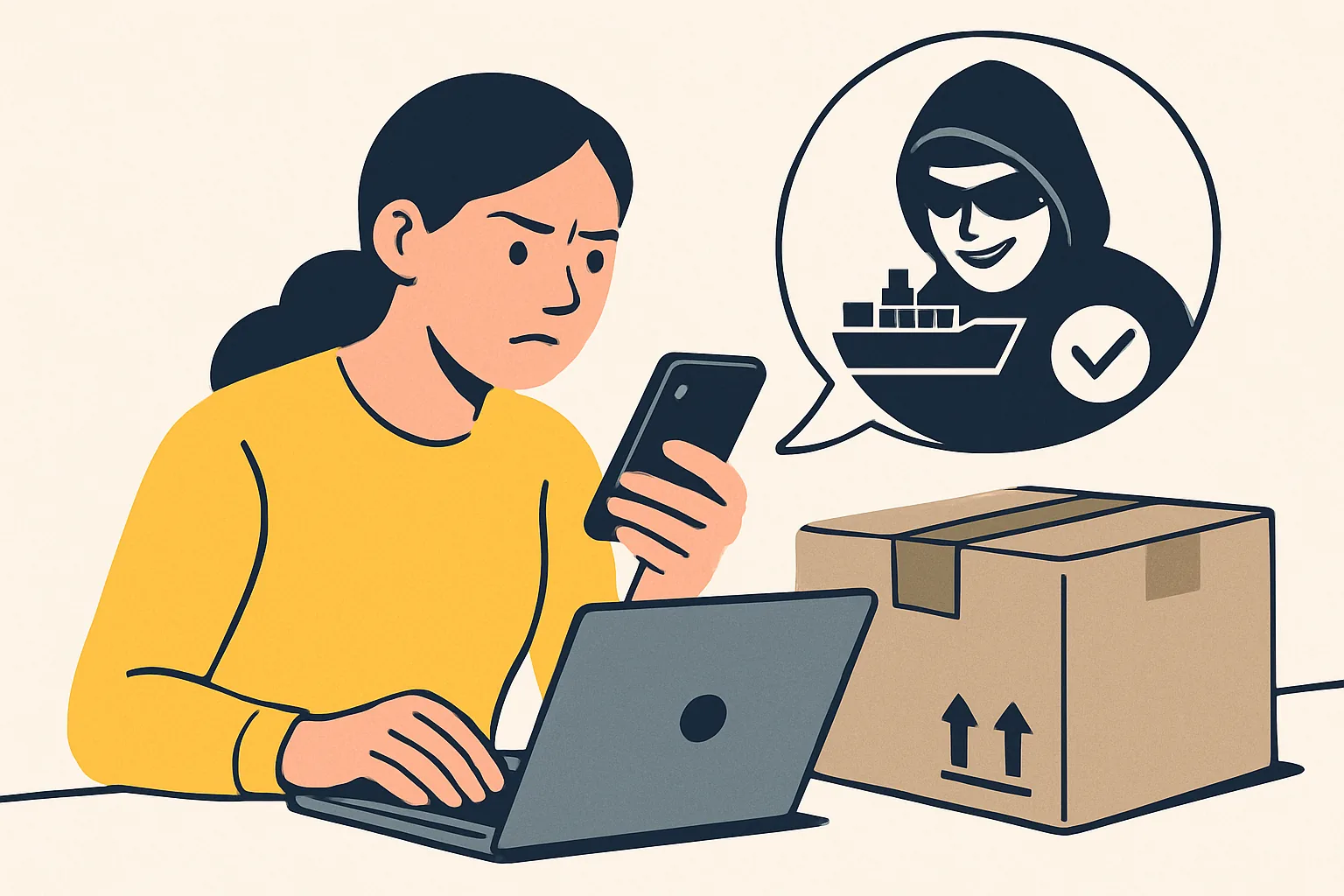
Shipping scams often include a courier, driver, or “pickup agent” who is supposedly waiting. The buyer may say they are travelling, in the military, working offshore, or unable to arrange shipping themselves. They ask you to print a label, click a link, or hand the package to a third party who will “handle the rest.”
Sometimes the courier part is only there to create urgency. Sometimes it is used to move you to an off-platform payment page. And sometimes the “courier” is just a name attached to a fake logistics story. If the process becomes unusually complicated for a simple sale, pause.
Pressure to move off-platform
Fraudsters like private channels because there is less visibility and less moderation. They may ask to continue on a personal email, messaging app, or another marketplace. The conversation can then be shaped away from the protections and reporting tools that the platform provides.
If a buyer is eager to avoid the normal route, ask yourself why. A legitimate buyer usually wants the same thing you do: a clean, documented transaction. A scammer wants speed, distance, and a smaller paper trail.
2. Set Up a Safe Listing Before You Post
A safer sale begins before the first message arrives. A clear, honest listing filters out a lot of nonsense and makes it harder for scammers to build a story around your item.
Use real photos and write plainly
Take your own photos in good light. Show the item from several angles, including any wear, chips, scratches, or missing accessories. If the item has a serial number, record it privately and decide whether to blur part of it in public images if that makes sense for the product type.
Write a description that says what the item is, what condition it is in, and what is included. If something does not work, say so. Honest listings attract fewer suspicious buyers than listings that sound too polished to be true. A person looking for a bargain is one thing; a person looking for an easy scam is another.
Avoid oversharing personal details
Keep your home address, daily schedule, workplace, and family details out of the listing. Even small bits of information can be stitched together later. Use the platform’s messaging system first, and only share shipping details when the deal is ready and the payment has been verified.
This is especially important with higher-value items, electronics, collectibles, and anything that can be resold quickly. The less personal information a listing reveals, the fewer angles a scammer has to work with.
Choose the right category and price
Items that are priced far below market value tend to draw a flood of “too eager” messages. That does not mean you should inflate your price. It means you should price realistically and choose the most accurate category so the listing looks ordinary, not bait-like.
Simple, accurate categorization helps honest buyers find you and makes the listing less attractive to people hunting for confusion. If the item is rare or hard to price, be specific about why. That can reduce the number of low-effort offers and the pressure to negotiate in strange ways.
3. Vet Buyers Before You Agree to Ship
Before you agree to ship anything, spend a moment reading the buyer’s profile and message history. It is not about distrust for its own sake. It is about noticing patterns that do not add up.
Check profile age and activity
Newly created profiles are not automatically bad, but they deserve more scrutiny. Look at whether the buyer has completed previous transactions, whether the profile has a consistent name and photo, and whether the activity looks like a normal user or a rushed account assembled for one purchase.
If the platform offers account verification or phone checks, use the tools available. A quick review of Checking a phone number can also help you understand why some accounts feel more credible than others.
Read the message pattern, not just the words
Scammers often message in ways that are oddly generic. They may not mention the item specifically, or they may ask the same questions in a copy-paste style: “Is this still available?” “Kindly confirm your PayPal.” “I will pay immediately.” The wording can be polished while the content stays thin.
Ask one or two direct questions before accepting the sale. For example: What part of the item interested you? Where do you want it shipped? When are you planning to receive it? A real buyer answers naturally. A scammer often keeps pushing toward the payment step.
Look for location consistency
If a buyer says they are local but their shipping address or time zone says otherwise, that mismatch deserves attention. So does a story that changes halfway through the conversation. A buyer who first wanted home delivery and later says the item should go to a warehouse, hotel, or friend is adding risk for no good reason.
When in doubt, keep the conversation focused on the item, the shipping destination, and the payment method. The more direct the exchange, the less room there is for confusion.
4. Use Secure Payment Methods and Wait for Funds to Clear
Payment is the hinge point. Until the money has actually cleared, the deal is not done. That sounds obvious, but scams often work because they make sellers feel awkward about saying no.
Prefer methods that give clear confirmation
For classifieds, safer payment methods are the ones that show a real, completed transfer in your own account. The best method depends on your country and platform, but the principle stays the same: use a payment channel that lets you verify the incoming funds directly.
Be especially careful with methods that can be reversed, disputed, or easily faked through a screenshot. If the buyer insists on a method you cannot reliably verify, treat that as a warning sign rather than a convenience.
Do not trust screenshots or “pending” emails
People can edit screenshots. They can forward fake emails. They can show a transaction page that only looks official. None of those prove that you have been paid.
Even if the buyer seems friendly, do not let politeness override process. Wait until the funds are visible in your own account and the status is final. If you are unsure what counts as a safe step on the platform, the Frequently asked questions page is a sensible place to check general rules and common payment issues.
Confirm cleared funds before shipping
Do not package, print labels, or hand over the item until you know the money is yours. If a buyer says they are in a hurry and asks you to “just trust the email,” the answer should still be no. A hurried buyer can wait. A seller who ships before confirmation may never get the item back.
5. Package, Document, and Track the Shipment Properly
Once payment has cleared, treat the shipment like a record you may need later. That means documenting the item, the packaging, and the delivery trail.
Photograph the item before packing
Take clear photos of the item’s condition before it goes into the box. Include close-ups of any scratches, wear, or existing damage. If the item has serial numbers, model numbers, or unique markings, record them privately.
Then photograph the packed parcel. Show the item inside the box if that is practical, along with the padding and final seal. These images can be useful if the buyer later claims the wrong item arrived or that the item was damaged before shipment.
Use tracked shipping and keep receipts
Tracked shipping is not just for the buyer’s peace of mind. It protects you as well. Keep the receipt, tracking number, and proof of postage in one place. If the shipping service offers signature confirmation or delivery confirmation, consider whether that is appropriate for the item’s value.
For items that matter more than a casual cleanout — electronics, branded goods, collectibles, or anything with a secondary market — the paper trail matters. It makes disputes easier to answer and harder to invent.
Save the conversation
Do not delete the chat after shipping. Keep the messages, payment confirmations, and shipping details together. If a dispute comes up later, you want the full sequence: what was agreed, what was paid, what was sent, and when.
6. Know When to Refuse a Deal
One of the hardest skills in online selling is walking away when something feels off. But refusing a bad deal is cheaper than chasing a bad outcome.
Common reasons to stop
- The buyer wants you to rush the shipment before funds clear.
- The buyer asks for a third-party pickup with vague instructions.
- The buyer wants a partial refund before the package is delivered.
- The buyer changes the shipping address after payment.
- The buyer sends unusual payment instructions or asks you to use a different account.
- The buyer pushes you to move the discussion off-platform immediately.
Any one of these issues may be innocent in isolation. Together, they usually are not.
How to end the conversation safely
Keep it brief and polite. You do not need to accuse anyone or argue the case. A simple “I’m not comfortable continuing with this transaction” is enough. If needed, state that you only ship after cleared payment and documented shipping details.
Do not be drawn into long explanations. Scammers use conversation to wear you down. A calm refusal is often the best protection.
7. What to Do If You Suspect or Fall for a Shipping Scam
If you suspect a scam, move quickly, but stay organized. The worst thing you can do is panic-delete evidence or keep arguing in the chat while the situation grows messier.
Step 1: Stop sending the item
If you have not shipped yet, stop immediately. If you already shipped, hold onto every record you have and avoid making any promises that could complicate the case. Do not issue refunds, do not send extra goods, and do not agree to off-platform resolutions without checking the facts.
Step 2: Preserve evidence
Save screenshots of messages, payment pages, usernames, phone numbers, shipping addresses, and any files or emails the buyer sent. Keep timestamps if possible. If there was a payment screenshot or suspicious email, save that too. Even fake proof can be useful evidence once it is in context.
Step 3: Contact the platform and payment provider
Report the buyer through the marketplace tools and contact the payment provider if funds were reversed, disputed, or never arrived as claimed. Use the platform’s support channels rather than trying to solve it only through chat. If you need help finding the right route, see Getting support.
Step 4: Report the scam
Report the incident to the platform, and if needed to local authorities or consumer protection bodies. The right path depends on where you live and how the payment was made. Be factual, concise, and complete. Include dates, item details, usernames, and the payment method used.
Step 5: Document the follow-up
Keep a written note of what happened and who you contacted. If the case drags on, those notes save time. They also help you spot patterns if the same buyer account or tactic appears again.
8. Sell Items Online Safely: A Final Checklist for Classifieds Sellers
Before you complete a sale, run through this short checklist. It is simple, but it catches many of the mistakes that shipping scams depend on.
- My listing is honest, clear, and based on real photos.
- I did not share private details such as my address or routine.
- The buyer profile and messages make basic sense.
- I am satisfied that the buyer is consistent about the item and shipping address.
- The payment has cleared in my own account, not just in a screenshot or email.
- I have photographed the item and noted any serial numbers or condition issues.
- The package will be tracked, and I will keep the receipt and tracking number.
- I will not rush, refund, relabel, or move off-platform without a good reason.
- If anything changes, I am willing to stop the deal.
Selling online safely is mostly a matter of slowing down at the right moments. The honest buyer will usually not mind. The scammer will. That difference tells you a great deal.
If you want a broader overview of the platform’s tools and services, the The 7 Admister services page is a useful companion. And if a deal ever starts to feel confusing or pressured, trust that instinct. In classifieds, a clean sale is rarely the one that asks you to ignore your own questions.