How to Safely Sell a Used Car on a Classifieds Marketplace
Learn how to safely sell a used car on a classifieds marketplace, from honest listings and secure viewings to payment and transfer paperwork.
On this page
- How to Safely Sell a Used Car on a Classifieds Marketplace
- 1. Set Up a Sale That Fits Your Situation
- 2. Prepare the Car and Build a Used Car Sale Checklist
- 3. Price and Describe the Car Accurately
- 4. Screen Enquiries and Arrange Test Drives
- 5. Handle the Viewing, Inspection, and Negotiation
- 6. Complete the Private Car Sale Paperwork
- 7. Confirm Cleared Payment and Hand Over the Car
- 8. Close Out the Sale and Protect Your Records
How to Safely Sell a Used Car on a Classifieds Marketplace
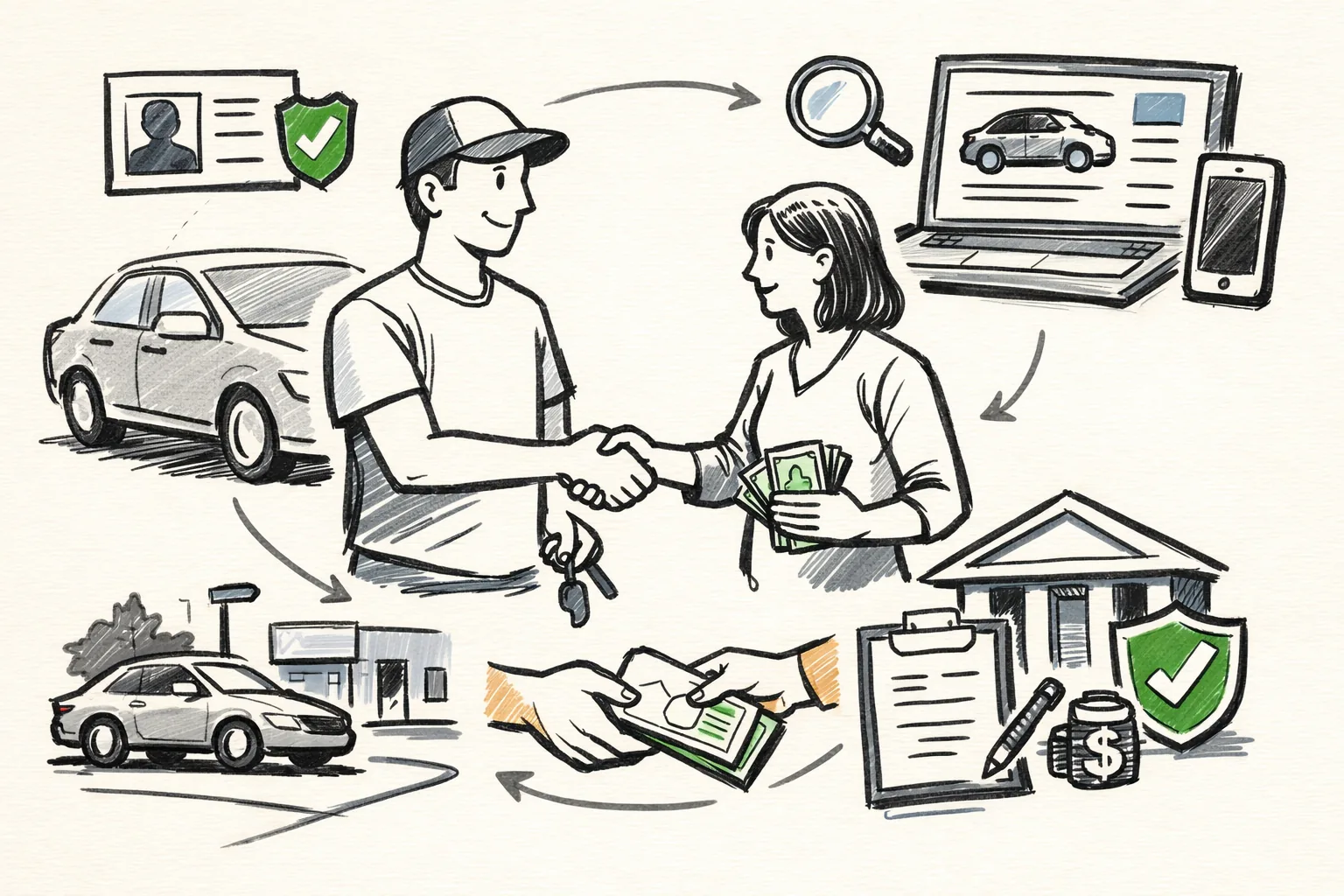
A private car sale has more moving parts than passing over the keys. The seller must describe the car honestly, screen enquiries, arrange a safe inspection and complete the transfer correctly. If you are asking how to safely sell a used car on a classifieds marketplace, start by checking the rules where the car is registered: paperwork, deadlines and seller responsibilities vary by jurisdiction.
1. Set Up a Sale That Fits Your Situation
First, confirm that you are legally allowed to sell the car. The registered owner should usually handle the sale, or give the person managing it clear authority. If another name appears on the ownership document, resolve that before accepting a deposit or arranging a viewing.
Check the car’s financial status, too. A lender may hold the title or require a specific payoff process if the car is financed; a leased car generally cannot be sold as though you own it outright. Contact the lender or leasing company directly and ask what steps are required. Don’t rely on a buyer’s suggestion about how to clear a loan.
Consider whether a private sale suits your circumstances. It can mean more control over the price, but you will also manage calls, viewings and documents. If you cannot safely host a viewing or cannot complete the transfer yourself, a dealer or another approved sale route may be more practical.
2. Prepare the Car and Build a Used Car Sale Checklist
A used car sale checklist helps you catch details before a buyer asks. Collect the ownership documents, service records, inspection or emissions certificates where applicable, spare-key information and receipts for significant repairs. Keep originals safe until the sale is complete; you can show records at a viewing and agree which items transfer with the car.
- Write down known faults, including intermittent problems and warning lights.
- List recent maintenance, with dates or mileage if you have records.
- Remove personal data from navigation, phone-pairing and connected-car systems. Delete saved home addresses and unlink accounts where the manufacturer’s instructions allow it.
- Take out personal belongings, toll tags and removable parking permits.
- Clean the cabin and exterior so buyers can inspect them properly.
- Photograph the car in daylight, including each side, the interior, odometer and any existing damage.
Keep the photos with their dates and don’t edit out a scratch or dent. A clear picture of a scuffed bumper can prevent a dispute later; a close-up of the odometer gives you a record of what the listing showed. If a warning light appears, note it rather than clearing it just for the photographs.
3. Price and Describe the Car Accurately
Compare similar local listings, not just the highest asking prices. Match the model year, trim, mileage, condition and equipment as closely as possible, then account for differences such as a documented repair or worn tyres. Asking prices are not proof of final sale values, so be prepared to explain how you arrived at yours.
Write the description from what you can verify. Include the make, model, year, mileage, transmission, ownership history where known, recent work and items included in the sale. Describe damage plainly: “scratch on the left rear door” is more useful than “minor cosmetic wear.” If a warning light is on, say which one if you know; don’t diagnose the cause unless a qualified inspection supports it.
Disclose modifications such as a changed suspension, non-standard wheels or an aftermarket audio system. State whether the original parts are included. Avoid claims like “perfect condition” or “never had a problem” if you cannot support them with records. A precise listing may attract fewer casual messages, but it gives a serious buyer a fair basis for deciding whether to view the car.
4. Screen Enquiries and Arrange Test Drives
Ask a prospective buyer when they can view the car, whether they have read the listing and whether they plan to bring someone with them. You can ask if they have a current driving licence and, where relevant, insurance that covers a test drive. Check applicable rules with your insurer before letting anyone drive.
Share only the information needed to arrange the appointment. You do not need to send a photograph of your identity document or give out financial details to answer a basic enquiry. Keep messages on the marketplace where practical, and be cautious if a stranger quickly asks you to move to an unfamiliar payment or messaging service.
Set the test-drive conditions in advance. Agree who will drive, bring another adult if possible, and take a route you know. Check the buyer’s licence before handing over the keys, and do not leave your documents or belongings in the car. If your insurer does not cover the proposed driver, don’t proceed with the drive.
Some buyers may propose a courier or shipping arrangement instead of a local viewing. Treat payment and collection as separate things to verify; a message or screenshot is not evidence that funds have cleared. For more on that risk, read shipping when selling through classifieds.
5. Handle the Viewing, Inspection, and Negotiation
Arrange the viewing in daylight, at a place where you feel comfortable and where the car can be inspected without blocking traffic. A buyer should be able to examine the exterior, cabin and accessible records. If they want a mechanic to inspect the car, agree on a reasonable time and location, and confirm who will pay for the inspection before booking it.
An independent inspection can reveal issues neither person noticed during a quick viewing. Don’t pressure the buyer to skip it, and don’t agree to repairs based only on a vague claim. Ask for the inspection findings in writing, then decide whether you want to adjust the price, arrange a repair or keep your original terms.
Keep negotiation factual. If you agree to a lower price because of a specific defect, record that reason in a message or sale document. Walk away if someone demands that you accept a strange payment method, return part of an overpayment or sign blank forms. A genuine deadline is no reason to skip checking the money or paperwork.
6. Complete the Private Car Sale Paperwork
Before the handover, prepare the private car sale paperwork required where the vehicle is registered. This may include a bill of sale or purchase agreement, title or ownership transfer, an odometer disclosure, a lien release if there is a loan, and a sale or transfer notification to the relevant authority. The exact forms, deadlines and responsibilities vary by jurisdiction. Check with the registration authority or an official government source rather than relying on an old form found online.
The written agreement should identify the car and both parties, state the agreed price and sale date, and record any terms you have agreed, such as included keys or accessories. Include known defects that were discussed. Both parties should review the document and keep a signed copy. Do not sign a form with blank sections that someone else could fill in later.
Record the odometer reading accurately and use the required disclosure form if one applies. If a lender has a claim on the car, follow its instructions for payoff and release; a buyer should not have to guess whether the title can be transferred. Ask the authority what notification you must submit and when.
7. Confirm Cleared Payment and Hand Over the Car
Choose a payment method you can verify. For an electronic transfer, contact your own financial institution through its official app or published phone number and confirm that the funds are available and cleared; do not treat a screenshot, email receipt or buyer’s banking screen as proof. If the payment is a cashier’s check or similar instrument, ask your bank how it verifies that instrument before handing over the car.
Complete the signed documents only when the payment arrangement is confirmed. Then hand over the keys and the agreed records, such as service history and manuals. Follow local rules on plates or tags: they may stay with the car or need to be removed, depending on the jurisdiction. Keep copies or clear scans of the signed agreement, transfer form and any payment confirmation you are entitled to retain.
Make a brief handover record with the date, time, odometer reading, number of keys and any documents transferred. Both parties can sign it. That small step can help if there is later a disagreement about when the buyer took possession or what came with the car.
8. Close Out the Sale and Protect Your Records
Submit any required sale or transfer notification promptly and keep proof of submission, such as a confirmation number or dated receipt. Contact your insurer to cancel or adjust the policy once the sale is complete, following its instructions so coverage does not end before the transfer date. If the car has a toll tag, connected service or parking account, remove it from the vehicle and cancel or transfer the service.
Store the listing, dated photos, messages, inspection notes and signed paperwork together. If a buyer later disputes the car’s condition, respond calmly with the records and refer to the specific disclosure or agreement rather than debating from memory. Keep the records for the period required by local rules.