How to Spot a Fake Escrow Payment: A Step-by-Step Guide
Learn how to spot a fake escrow payment with simple checks, warning signs, and safe verification steps before you ship or release goods.
On this page
- How to Spot a Fake Escrow Payment: A Step-by-Step Guide
- What Escrow Is and How Legitimate Payments Work
- Common Signs of a Fake Escrow Payment
- Step-by-Step: How to Verify an Escrow Payment Before You Ship or Release Goods
- Escrow Scam Tactics to Watch For
- Safe Online Marketplace Payment Practices
- What to Do If You Suspect Fraud
- Real-World Checks Before You Trust an Escrow Confirmation
How to Spot a Fake Escrow Payment: A Step-by-Step Guide
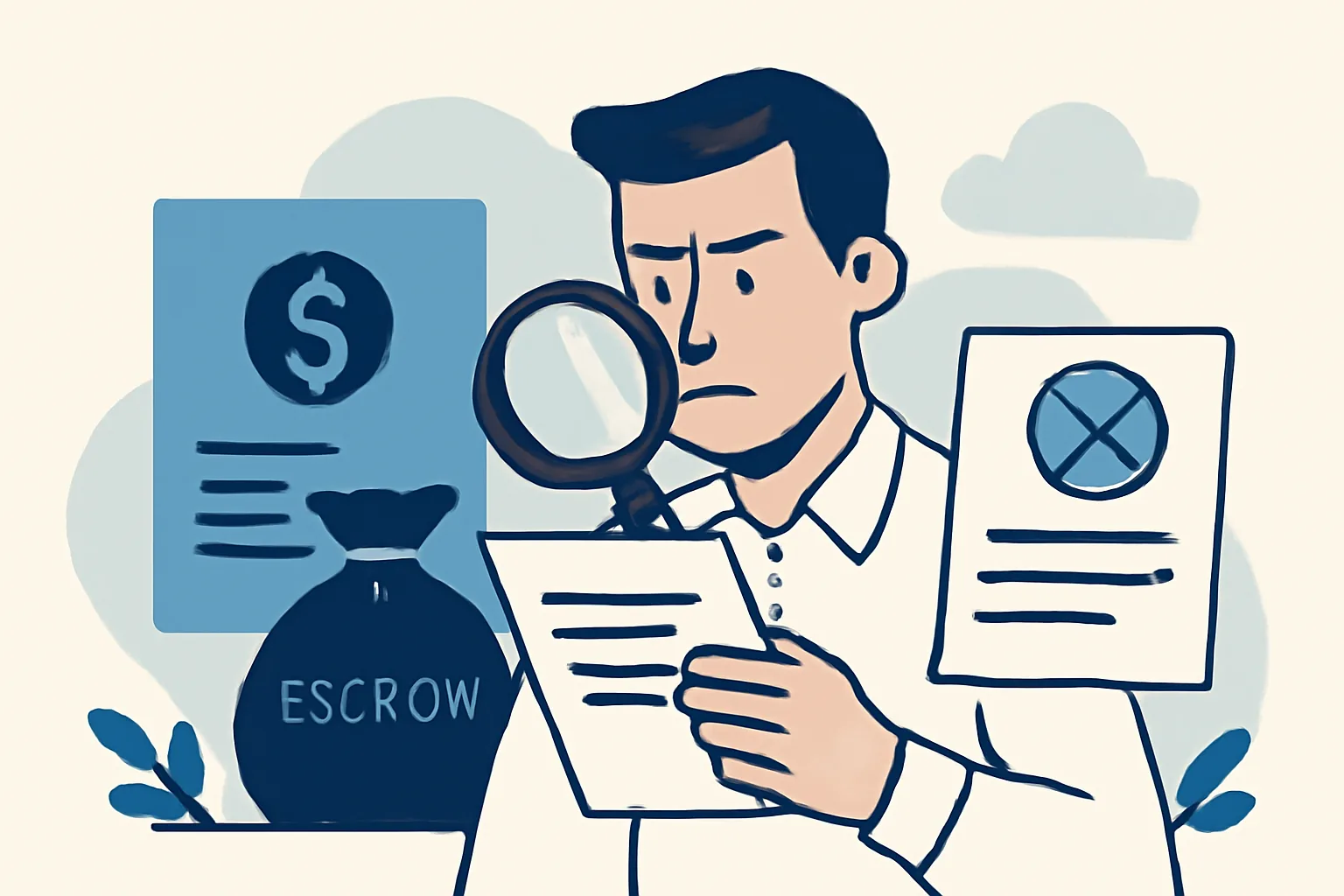
Escrow is one of those ideas that sounds simple once it is working properly: the buyer pays, the money is held somewhere neutral, and the seller ships only after the payment is confirmed, and in practice, that neat flow is exactly why scammers like to imitate it. A fake escrow payment can look convincing at a glance, especially when you are busy, the buyer seems friendly, or the item has already attracted a lot of attention.
The safest approach is to slow the process down just enough to verify what is happening. If you sell on a marketplace, handle services online, or trade goods privately, it helps to know what a real secure payment looks like before you compare it to a fake one. And if you are unsure how a platform is supposed to behave, a quick look at How Admister works or the 7 Admister services can be an useful starting point.
What Escrow Is and How Legitimate Payments Work
In a legitimate escrow arrangement, the buyer does not send money directly to the seller. Instead, the funds are held by the platform or by a third party until the agreed conditions are met. Those conditions are usually simple: the item is delivered, the service is completed, or both parties confirm the deal.
A real payment flow usually has a few common features, and first, the transaction is visible inside the platform itself. Second, the status changes in a structured way, such as pending, held in escrow, released, or completed. Third, neither side is asked to “trust the screenshot” alone. The system should show the truth where the system lives: in the official app, dashboard, or account.
That last point matters. Scammers often try to move the conversation into email, chat apps, or unofficial websites because those are easier to fake than a real marketplace record. A legitimate escrow payment should be confirmable from inside the service, not only through a message someone copied and pasted.
Common Signs of a Fake Escrow Payment
Fake escrow payments often reveal themselves in small details, and one sign alone may not prove fraud, but several together should make you stop.
- Pressure to act quickly. The buyer says the payment is “already sent” and pushes you to ship now.
- Unusual payment instructions. You are told to send money to get the escrow, pay a fee by gift card, or move the deal off-platform.
- Mismatched sender details. The email, name, domain, or account name does not match the platform you are using.
- Broken or awkward links. The page looks similar to the real one, but the URL is slightly off, the buttons behave strangely, or the page has spelling mistakes.
- Requests to bypass the platform. The other party insists that “this is faster” if you confirm outside the marketplace.
- Payment proof that comes only as a screenshot. A screenshot can be edited in seconds. A real confirmation should be visible in the official account.
Another warning sign is emotional pressure. Scammers may act impatient, offended, or overly helpful. They may say the item is urgent, the buyer is traveling, or the seller needs to “trust the process.” The emotional tone is part of the trick. If someone is trying to speed you up while also asking you to ignore the normal payment flow, that is a bad combination.
Step-by-Step: How to Verify an Escrow Payment Before You Ship or Release Goods
If you want a practical method, use the same verification routine every time. Consistency helps more than suspicion alone.
Confirm the platform and account. Open the marketplace or escrow service yourself, and do not click a link from a message unless you have already verified that the sender and domain are correct. If the deal is supposed to be on a known platform, start there directly from your saved bookmark or app.
Inspect the payment status inside the official app or website. Look for the actual transaction record, not a forwarded email or screenshot. A real escrow payment should appear in your account history or order details.
Match the transaction details. Check the buyer name, order number, item description, amount, and timestamps. Small mismatches matter. A fake confirmation often gets one detail right and another one wrong.
Contact support through official channels if anything looks odd, and use the platform’s own support page or in-app help, not a phone number or address pasted into a message. If you need guidance, the Getting support page is a good model for how to find the right path on a service you trust.
Wait for confirmed release before shipping or transferring ownership. Do not treat “payment initiated” as the same thing as “funds secured.” In escrow, the whole point is to wait until the release condition is met inside the system.
If the platform has a phone verification or account verification step, use it carefully and only through the official process. For marketplace sellers, even something as routine as checking a contact number can help identify whether the profile you are dealing with is tied to a real account. A service like Checking a phone number may be relevant when you are trying to validate whether a contact detail is being used consistently.
Escrow Scam Tactics to Watch For
Escrow scams tend to recycle the same tactics because they work on busy people, and the details change, but the structure stays familiar.
One common approach is the spoofed email. You receive a message that looks like it came from your marketplace or payment provider. The branding may be close enough to seem real, but the sender address or link reveals the trick. The message claims that the payment is waiting, but the only way to see it is to open a fake dashboard.
Another tactic is the fake dashboard itself. The page is designed to imitate the real platform, with familiar colors, labels, and buttons, and it may even show a pending balance or a reassuring status like “held in escrow.” The goal is to get you to release goods or send a fee. If you are ever unsure whether a page is genuine, check the domain carefully and compare it to the official site you already know.
Scammers also use fake “proof of payment.” Sometimes they send a screenshot of a transfer, an edited PDF receipt, or a message claiming that the transfer is complete but “pending review.” None of those are enough on their own. If the money is truly in escrow, the platform should show it in your account.
A more subtle tactic is a chargeback or reversal tied to a separate payment path. The buyer may say they paid, ask for immediate shipment, and then later dispute the transaction or reverse it through another method. In some cases, the scam depends on confusing escrow with a separate direct transfer, so the seller believes the deal is protected when it is not. The details depend on the service and the payment method, so treat this as a pattern to watch rather than a fixed rule.
Impersonation of marketplace staff is another classic move. A scammer may claim to be “support,” “security,” or even an account manager and ask for login details, verification codes, or a manual release of funds, and real staff should not need your password to help you, and they should not ask you to ignore the platform’s own process.
Safe Online Marketplace Payment Practices
Good habits are often the easiest way to avoid a fake escrow payment in the first place. The safest online marketplace payment method is usually the one that keeps the transaction inside the platform, with records, rules, and support all in the same place.
That means staying on-platform for communication and payment. If the buyer suggests moving to email or a private messenger, ask yourself why. Marketplaces build buyer and seller protections precisely so people do not need to rely on someone’s personal promise, and when a deal stays inside the platform, there is a trail to follow if something goes wrong.
It also helps to use the protections the marketplace already offers. Some services have held payments, dispute tools, shipping confirmations, or identity checks. Those features exist for a reason. Learn them before you need them, not after a dispute begins.
Avoid off-platform transfers, especially if the other party frames them as a shortcut. “Just send it directly and I’ll reimburse you” is a phrase that should make anyone pause, and so is “the escrow platform is down, but we can continue here.” If the process changes mid-deal, the safest response is to stop and verify.
Keep communication and payments in one place. That way, if you ever need to review the transaction, you have the full story in a single thread. For buyers and sellers who want a clearer sense of how the service structure works, Frequently asked questions often answer the basic operational questions better than scattered messages do.
What to Do If You Suspect Fraud
If something feels wrong, treat it as a live risk rather than an inconvenience. Fraud rarely improves when you give it another minute and a second chance.
First, stop the transaction. Do not ship the item, do not release the goods, and do not send a “verification” payment, and if you are in the middle of a chat, you can simply say that you need to confirm the status before continuing. You do not need to explain more than that.
Second, preserve screenshots and messages. Save the email headers if you received suspicious mail. Keep the full conversation, the payment page, the user profile, and any receipt or URL involved. If the scam escalates, those records matter.
Third, report the issue to the marketplace using the official support route. The goal is not just to complain; it is to create a record and, if possible, prevent the same account from targeting others, and if you need a reminder of the right channel, use the platform’s help pages instead of replying to the suspicious message.
Fourth, contact your bank or payment provider if any real money moved. If you entered card details, sent a transfer, or approved a payment request, act quickly and ask what protections may be available. The sooner you call, the better your odds of limiting the damage.
Finally, do not send additional information or funds to “fix” the problem, and scammers often claim that a small extra fee, a refund delay, or a security hold will solve everything. It will not. If the deal has already turned suspicious, more money usually only deepens the loss.
Real-World Checks Before You Trust an Escrow Confirmation
There is no single magic test for spotting a fake escrow payment, so it helps to build a habit of final checks. Think of them as your last line of defense before the package leaves your hands.
Start with the domain name. Even a tiny change in the address can reveal a fake site, and a missing letter, a strange subdomain, or an extra word can turn a real platform into a convincing copy. If the page was opened through a link in a message, verify it against the official site you know.
Review the account history. Real users usually have some history, while scam accounts may be new, sparse, or strangely inconsistent. That does not prove fraud on its own, but it is useful context. Check timestamps too. A payment that appears instantly in a screenshot, but not inside the account, should make you pause.
Use official support to confirm whether a payment is truly held in escrow, and this is especially important when the transaction is large, unusual, or emotionally rushed. If the support response and the dashboard disagree, trust the official account record and the support path you contacted through the platform itself.
One last habit: never let a polished message replace a basic verification step. A scammer can borrow a logo, mimic a tone, and copy a payment email. What they cannot easily fake is the actual record inside the real service, and that is the record you should trust, every time.
Escrow can protect both sides of a deal when it is used properly. But the same structure that creates safety also creates a perfect target for impersonation. If you stay on-platform, verify the details, and wait for confirmed release, you cut off most of the scammer’s options before they even begin.