How to Safely Meet a Buyer in Person for a Local Sale
Learn how to safely meet a buyer in person for a local sale with screening tips, safe spots, and payment safety advice.
On this page
- How to Safely Meet a Buyer in Person for a Local Sale
- Before You Agree to Meet: Screening the Buyer
- Safe Meeting Spots for Classifieds — Where to Choose and Why
- In-Person Selling Safety Tips: Preparing Before You Leave Home
- Step-by-Step: The Numbered How-To Process
- Handling Payment Safely During the Exchange
- Red Flags and When to Walk Away
- What to Do If Something Feels Wrong
- Quick Recap Checklist
- Final Thoughts
How to Safely Meet a Buyer in Person for a Local Sale
Selling something locally is usually straightforward — someone messages you, you agree on a price, you meet up, cash changes hands. Most transactions go exactly this smoothly. But because the whole process depends on meeting a stranger, it's worth treating each sale with a little more caution than you'd give, say, an online checkout. A few small habits can make the difference between a quick, uneventful exchange and a genuinely uncomfortable situation.
Before You Agree to Meet: Screening the Buyer
Not every message deserves a meeting. Before you even think about a location, pay attention to how the buyer communicates. Vague messages like "is this still available, what's your lowest," sent with no real interest in the item's condition or details, are often just mass outreach — sometimes from bots, sometimes from people testing dozens of listings at once. A genuinely interested buyer usually asks something specific: a question about the item, a preferred pickup time, maybe a negotiation with actual reasoning behind it.
It's reasonable to ask for a phone number before confirming a meeting spot. This isn't about being difficult; a working number gives you a way to reach the person if plans change, and scammers are often reluctant to hand one over. If someone refuses to share any contact method beyond a marketplace chat, that's worth noting — not necessarily a dealbreaker, but a small flag to weigh against everything else.
Also ask yourself honestly whether the item is worth an in-person meeting at all. For low-value items, shipping or a simpler handoff might make more sense. For anything higher value — electronics, jewelry, furniture worth a real sum — the extra scrutiny pays off. If you're selling electronics specifically, it's worth reviewing how to safely handle a used electronics transaction before agreeing to anything, since these listings tend to attract more scam attempts than average.
Safe Meeting Spots for Classifieds — Where to Choose and Why
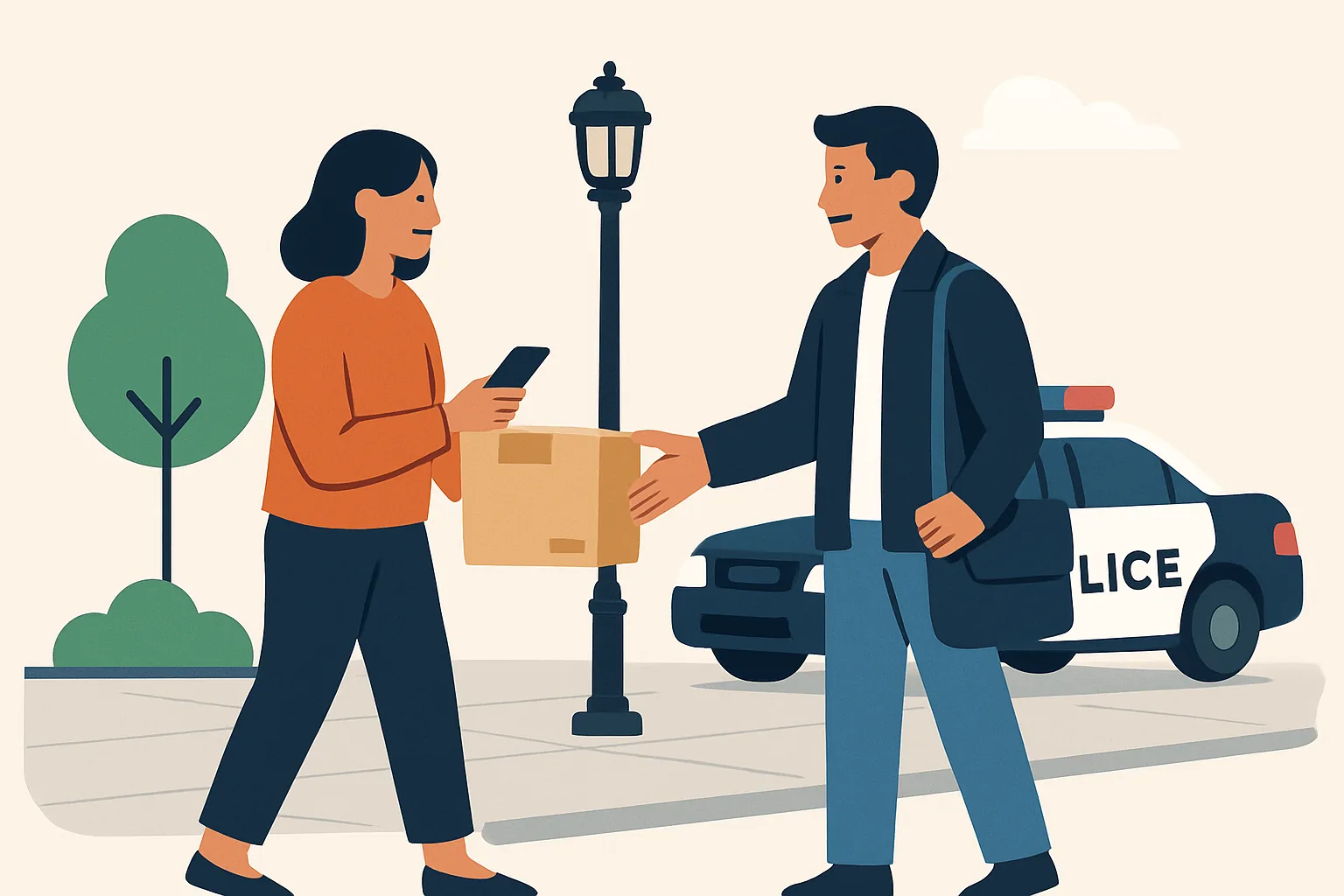
Where you meet matters as much as who you meet. Private addresses — yours or theirs — should generally be off the table for a first meeting with a stranger. Public, well-lit, monitored locations are the standard for a reason: they discourage bad behavior simply by being visible.
Good options include:
- Police station parking lots or lobbies — often covered by security cameras around the clock.
- Bank parking lots during business hours, which combine surveillance cameras with steady foot traffic.
- Busy retail centers, shopping mall entrances, or grocery store parking lots — anywhere with consistent activity and easy visibility from multiple directions.
What you want to avoid: empty lots, residential dead ends, wooded park areas, or anywhere you'd struggle to leave quickly if needed.
Suggesting a public spot doesn't need to feel awkward or accusatory. Framing it as your standard practice — "I always meet at the [local police station] lot, it's easy to find and well-lit" — makes it about routine, not suspicion of that particular buyer. Most reasonable people won't blink at this; anyone who pushes hard against it is telling you something.
In-Person Selling Safety Tips: Preparing Before You Leave Home
A little preparation before you even walk out the door goes a long way. Tell a friend or family member where you're going, who you're meeting, and roughly when you expect to be back. It sounds like overkill for a $30 lamp, but the habit costs nothing and matters enormously the one time it counts.
If your phone supports it, share your live location with that person for the duration of the meeting. Make sure your phone is actually charged before you leave — it's an easy detail to forget, and it's the one thing you don't want to discover mid-exchange.
Daylight hours are safer than evening meetings, all else being equal. If the buyer pushes for a late-night handoff with no good reason, it's fair to suggest an alternative time. And for higher-value items, or if something about the exchange feels slightly off, bringing a companion is a completely normal choice — there's safety in numbers, and most legitimate buyers won't think twice about it.
Step-by-Step: The Numbered How-To Process
- Vet the buyer's communication. Look for specific, relevant questions and a willingness to share a phone number.
- Propose a public meeting spot. Suggest a police lot, bank, or busy retail area as your default practice.
- Confirm details day-of. A quick message the morning of or an hour before helps catch last-minute red flags before you're already en route.
- Tell someone your plan. Share the meeting location, buyer's name or username, and expected return time.
- Meet, verify item and payment. Check the payment is real and complete before handing over the item; let the buyer inspect it as well.
- Complete the exchange and leave promptly. No need to linger for small talk once the transaction is done.
Handling Payment Safely During the Exchange
Cash remains the simplest and most reliable payment method for local sales — no processing delays, no chargebacks, no ambiguity. If a buyer prefers a payment app, stick to verified, well-known platforms and confirm the funds have actually landed in your account before parting with the item. A screenshot of a "sent" payment is not the same as money that's actually cleared.
Avoid accepting personal checks from strangers altogether; they can bounce days after the buyer has already walked off with your item. Count cash on the spot, in front of the buyer — it's not rude, it's just due diligence, and any reasonable buyer expects it.
Watch for overpayment tricks too: a buyer who "accidentally" sends more than the agreed amount and asks you to refund the difference is running a classic scam. The original payment often turns out to be fraudulent or reversible, and you're left having sent real money back for nothing. If a deal suddenly involves refunds, extra funds, or a third party sending payment on the buyer's behalf, treat it as a serious warning sign rather than an inconvenience to work around.
Red Flags and When to Walk Away
Certain behaviors deserve extra attention. A buyer who insists on changing the meeting location at the last minute — especially away from the public spot you agreed on — is one of the more common warning signs. So is someone who refuses, without a good reason, to meet anywhere public at all.
Aggressive or pushy negotiation tactics once you've already arrived — lowballing hard, claiming they "only" brought less cash than agreed, or trying to rush you through the exchange — are also worth noticing. None of these guarantee bad intent on their own, but together they add up.
You're allowed to cancel a meeting at any point, for any reason, without needing to justify it. If something feels wrong before you've even left the house, it's fine to say the deal's off. A canceled sale costs you nothing but a little time; a bad meeting can cost far more.
What to Do If Something Feels Wrong
Trust your instincts over politeness. If a meeting feels off once you're there — the buyer seems evasive, brings unexpected people along, or the location doesn't match what was agreed — it's fine to leave immediately, even mid-conversation.
Before you go, it helps to have noted a few basic details: the buyer's username or profile, their phone number, and if they drive to the meeting, their license plate. You likely won't need this information, but having it costs nothing and gives you something concrete to reference if you ever need to involve the police.
Always have a simple exit plan — park facing the exit, keep your phone accessible, and don't let anyone block your path to your car. If something genuinely alarming happens, don't hesitate to contact local authorities rather than trying to resolve it yourself.
Quick Recap Checklist
- Screen buyer messages for specificity and get a phone number before confirming plans
- Choose a public, monitored location — police lots, banks, busy retail centers
- Meet during daylight hours when possible
- Tell a friend or family member your plan and share live location
- Bring a charged phone and, for higher-value items, a companion
- Prefer cash or verified payments; count cash on the spot
- Watch for overpayment scams and refund requests
- Walk away from last-minute location changes or pressure tactics
- Note buyer details (username, phone, plate) as a precaution
- Trust your instincts and leave immediately if something feels off
If anything feels inconsistent, keep the conversation brief, reschedule, or decline the sale entirely. A safe meetup is one where you stay in control from the first message to the final handoff.
Final Thoughts
Meeting a buyer in person can be simple and low-stress when you plan ahead, stay public, and avoid pressure. A few cautious steps can protect both your item and your safety, making local selling far easier to manage.