How to Compare Bottle Warmer Prices
Use this bottle warmer price comparison guide to compare product types, model details, accessories, condition, and total cost for your needs.
On this page
- Bottle Warmer Price Comparison: Definition and Buying Context
- When People Search for a Bottle Warmer Price Comparison
- Compare Like With Like: Identify the Warmer Type First
- A Caregiver’s Scenario: Night Feeds or Travel
- What to Check in Product Listings
- Examples of Search and Comparison Language
- Related Terms
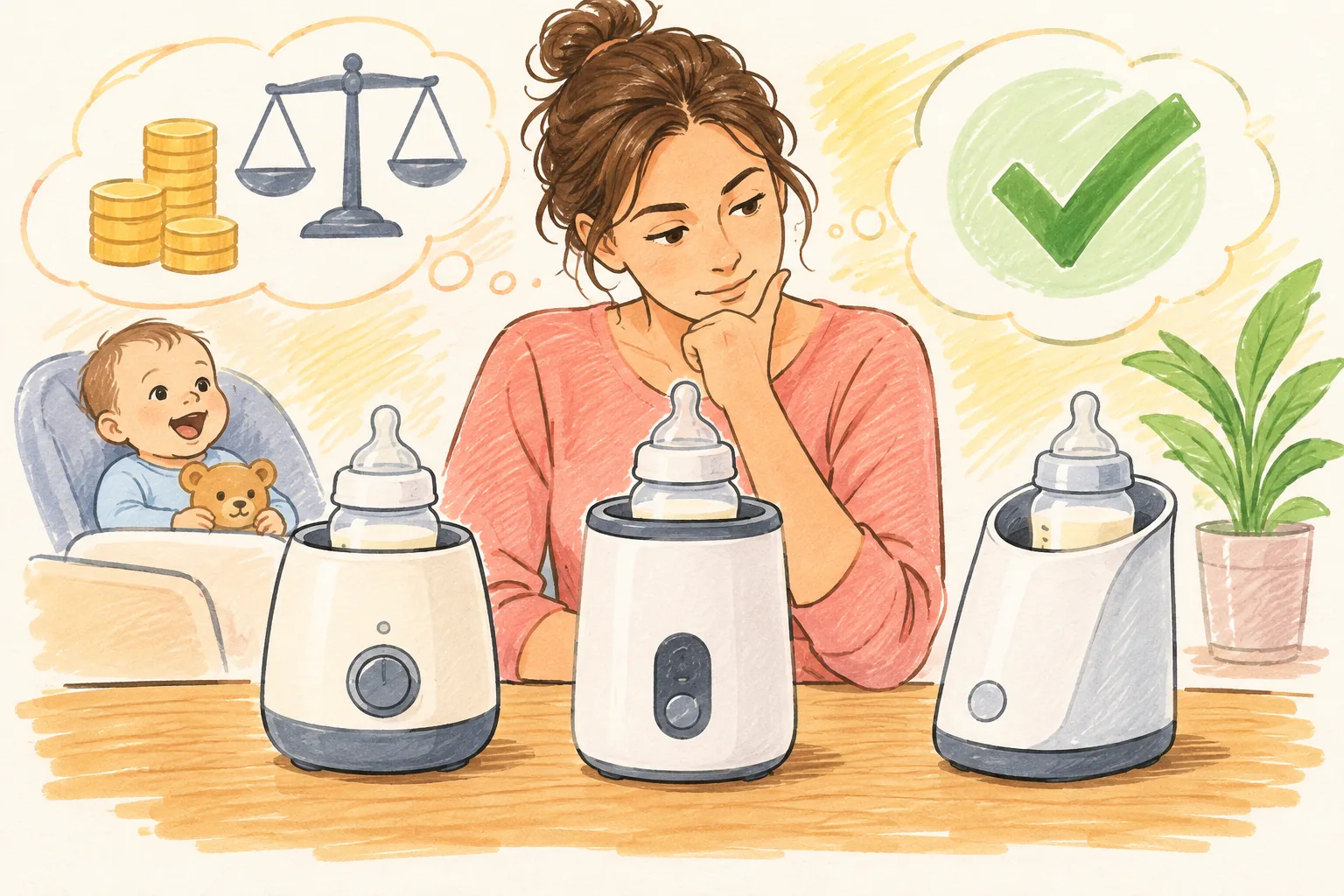
Bottle Warmer Price Comparison: Definition and Buying Context
A bottle warmer can be a small countertop appliance, a travel device, or a warmer designed to run from a particular power source. Those differences affect what a price means. A bottle warmer price comparison is an evaluation of the prices of specific warmers in a defined buying context—not simply a list of the cheapest products.
The context matters because two listings may describe products with different uses, included parts, or compatibility. A lower listed price may apply to a portable warmer without an adapter, while another product may be intended to stay on a kitchen counter. To compare them fairly, first identify what each product is meant to do.
When People Search for a Bottle Warmer Price Comparison
Caregivers may search for a bottle warmer price comparison while choosing between product types, shopping channels, or a new and secondhand purchase. The search is a way to narrow a decision; it does not guarantee that the products shown are alike or that a particular listing is current.
For example, someone preparing for overnight feeds at home may compare countertop models, while a caregiver who travels may focus on portable options. A shopper considering a secondhand warmer has another set of questions: Is the exact model identifiable? Are the parts included? Can the manufacturer’s instructions still be found?
Shopping channel is part of the comparison, too. A retailer, a manufacturer’s store, and an individual seller may describe the same model differently. Before treating two prices as comparable, check the model name and the contents of each listing. If you buy from a private seller, review practical guidance on shipping when selling through classifieds before arranging delivery.
Compare Like With Like: Identify the Warmer Type First
Start by sorting products according to where and how they will be used. A countertop warmer is generally presented as a home appliance, but its exact controls, capacity, and instructions vary by model. A portable warmer may be designed to move between locations. A travel-oriented warmer may depend on a specified power source or accessories. Do not assume that “portable” and “travel-ready” mean the same thing.
- Countertop warmer: Compare models intended for regular home use. Check the stated dimensions, controls, bottle fit, and what the package includes.
- Portable warmer: Check how the product is powered, whether it needs a separate adapter, and whether its design suits the caregiver’s routine.
- Travel-oriented warmer: Confirm the power requirements and any vehicle or charging accessories described by the manufacturer. A product’s title alone may not explain what is required.
These categories are starting points, not guarantees about performance. Read the manufacturer’s information for the specific model. If a listing leaves out a power requirement or names only a broad product family, ask the seller or check the manufacturer’s product page before comparing prices.
A Caregiver’s Scenario: Night Feeds or Travel
Picture a caregiver setting up for night feeds in a bedroom or kitchen. A countertop warmer may fit that routine if it can remain in one place and the bottle is compatible. For this shopper, a portable model’s travel features may add little value. The better comparison is between home-use models that meet the same practical needs, with the package contents and model details checked side by side.
Now consider a caregiver who often feeds a baby away from home. A travel-oriented warmer might make more sense, but only if its power source and included accessories suit the trips planned. A product that depends on an accessory sold separately may have a different total cost from a listing that includes it. Check the product documentation rather than inferring requirements from a photo.
That distinction prevents a misleading result. The cheapest item in a search may not be a workable choice for the situation. Make a short list before comparing: where the warmer will be used, which bottle needs to fit, and what power options are available. Then compare only products that meet those conditions.
What to Check in Product Listings
Product titles can omit details that matter. Compare the exact model identifier, not just the brand or product family. If two pages show different model names, package contents, or power requirements, treat them as different products until the manufacturer’s information confirms otherwise.
- Bottle compatibility: Look for the bottle types or dimensions the manufacturer says the warmer supports. If the listing is vague, check the model’s official instructions.
- Power source: Confirm whether the warmer plugs into a household outlet, uses another specified supply, or requires a separate accessory. Do not assume that a cable or adapter is included.
- Included accessories: Read the package list for adapters, baskets, or other parts named by the seller. Compare like packages, or record the missing item as a separate cost to check.
- Condition and completeness: For a secondhand warmer, ask for the model label, clear photos, and a list of included parts. Check the manufacturer’s guidance on condition and use before deciding.
- Return and warranty terms: Read the actual seller or manufacturer terms. Do not assume that a used product carries the same coverage as a new one.
Use the manufacturer’s instructions when a listing and a product page disagree. A seller’s description may be brief or copied from another model, and a photograph may show an accessory that is not included. If you cannot confirm compatibility or power requirements, pause the comparison rather than filling in the gaps yourself.
A simple note can keep the exercise clear: record the model, listed price, condition, included accessories, and any detail that needs checking. That makes it easier to see whether an apparent price difference reflects the warmer itself or a different package.
Examples of Search and Comparison Language
Search phrases work best when they describe the intended use or product type. A caregiver looking for travel options might try “portable bottle warmer price comparison” or “compare bottle warmer prices for travel.” Someone shopping for a home setup might search for countertop models and then check each result against the same bottle and power requirements.
These queries are prompts, not proof that results share the same features. Search results may mix product generations, retailers, and used listings. Open the product pages and confirm the model details before drawing a price conclusion.
For a more focused search, add a detail that can be checked in the listing, such as the model name or the intended power source. Avoid treating broad phrases such as “best warmer” as a substitute for a specification check. The point is to find candidates that fit the caregiver’s situation, then compare those candidates on consistent terms.
Related Terms
Portable bottle warmer describes a warmer intended to be moved or used away from a fixed home setup. It does not, by itself, confirm how the device is powered, what accessories it needs, or whether a particular bottle will fit.
Bottle warmer compatibility refers to whether a specific bottle and warmer can be used together according to the manufacturer’s guidance. Check the exact models involved; a general statement that a warmer fits “most bottles” may not answer a caregiver’s question about one bottle.
Secondhand bottle warmer means a warmer offered for resale after prior ownership. The price is only one part of the decision. Identify the model, confirm which parts are present, and consult the manufacturer’s instructions and applicable seller terms before relying on the listing.
Keeping these terms distinct helps define the comparison. A portable bottle warmer is a product type; bottle warmer compatibility is a fit question; and a secondhand bottle warmer describes a purchase condition. A useful bottle warmer price comparison states which of those factors it covers, so a caregiver can judge whether the products being compared actually fit the same need.


