Why most used-item listings fail because the description is too vague
Learn why most used-item listings fail because the description is too vague, and how clear details build trust and more clicks.
On this page
- Why do vague used-item descriptions make listings fail?
- What does “too vague” actually look like in a listing?
- What details do buyers need before they click or message?
- How does vague wording reduce clicks and inquiries?
- What should a strong used-item description include instead?
- How can sellers write clearly without making the listing too long?
- What mistakes should sellers avoid when describing used items?
- How can a clearer description help a listing sell faster?
Why do vague used-item descriptions make listings fail?
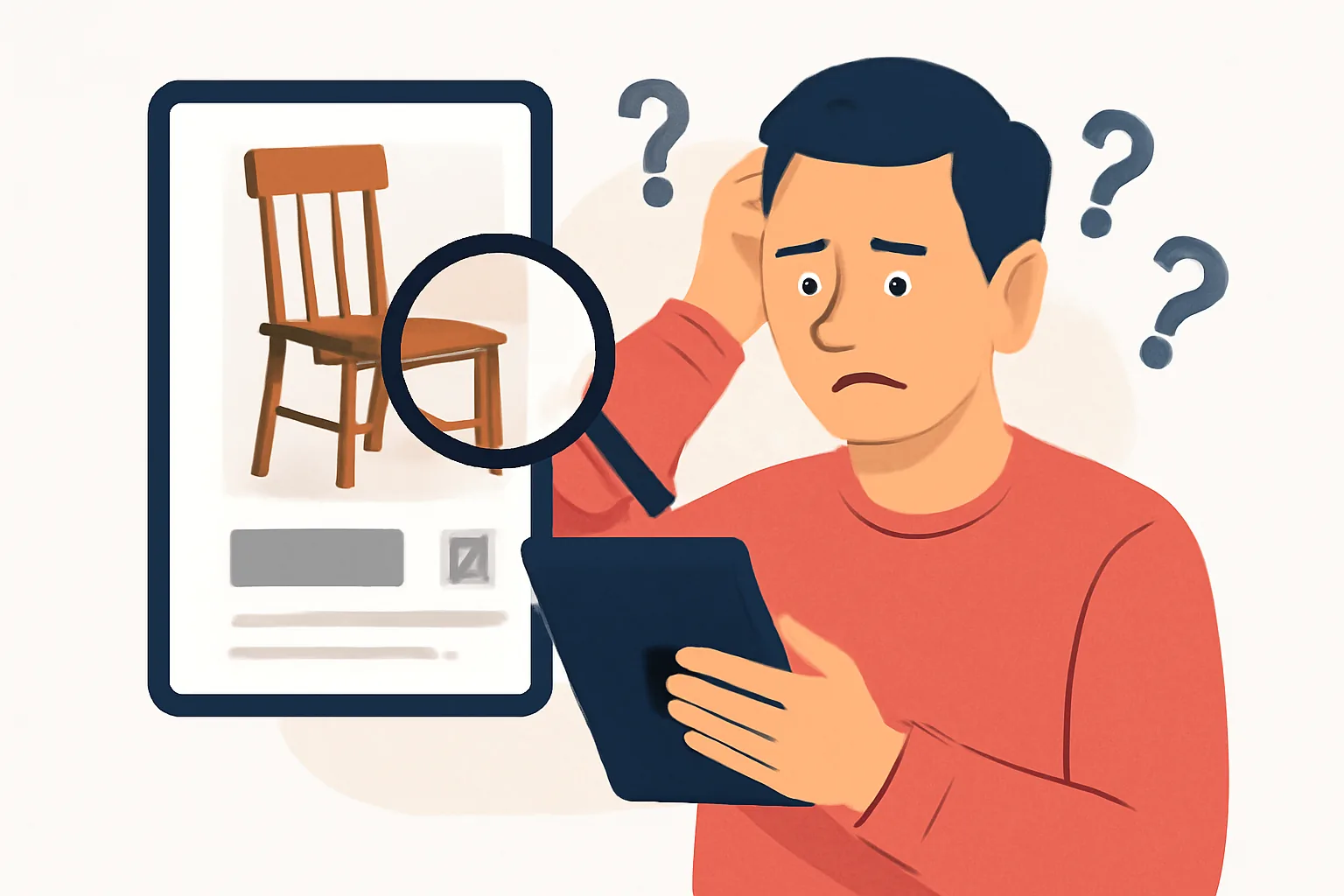
A used-item listing lives or dies on trust. If the description says only “good condition” or “works fine,” buyers are left guessing about scratches, missing parts, and hidden problems, and many will simply move on after 10 seconds.
The issue is not only bad writing. It is the buyer’s risk calculation. A person comparing 3 similar listings will usually choose the one that answers the most questions, because uncertainty has a cost, even when the item is cheap.
That is why most used-item listings fail because the description is too vague. A vague listing forces the buyer to do the work that the seller should have done, and most buyers will not message twice just to learn whether the charger is included.
Think about a bicycle listed as “used, works well.” That tells a buyer almost nothing about tire wear, brake response, chain condition, frame damage, or whether the bike has been stored indoors for 2 years. The listing may be real, but it reads like a guess.
What does “too vague” actually look like in a listing?
The classic weak phrases are easy to spot. “Good condition,” “barely used,” and “works fine” sound friendly, but each one hides a stack of questions that matter to a buyer.
A laptop described as “lightly used” could mean anything from a spotless machine with 1 owner to a device with a weak battery and a sticky keyboard. A sofa in “great shape” might still have a torn seam, a faint odor, or a stain under the cushion. Buyers notice that gap immediately.
Vague wording also shows up in the details that are missing. If the listing does not name the model, give the size, or mention whether the item has been tested, buyers assume the seller is avoiding something. That assumption is often enough to kill the sale.
Short descriptions are not the problem. Empty descriptions are. A 2-line listing can still be useful if those 2 lines name the item, the defect, and the included accessories.
What details do buyers need before they click or message?
Buyers usually want the same 6 things: exact condition, flaws, included accessories, size or measurements, model or version, and whether the item has been tested. Leave out 1 of those pieces, and the buyer starts filling in the blank with a worst-case guess.
A camera listing should say whether the lens is included, whether the battery holds a charge, and whether the shutter has been tested. A pair of boots should mention the size, heel wear, sole wear, and any scuffs on the toe. Those are not extra details; they are the reason the buyer is still reading.
Age matters too. “Used for 6 months” carries a different meaning from “stored in a closet since 2019.” The same applies to any item with moving parts, including appliances, speakers, gaming consoles, and power tools.
Tested status matters because many buyers do not want surprises. If a blender was plugged in and ran for 30 seconds, say that. If it was not tested, say that as well. Honesty here saves time later.
For readers who want more practical posting basics, the page on how admister works is a useful starting point, especially if you are listing your first item and want the process to feel less improvised.
How does vague wording reduce clicks and inquiries?
Search results reward the listing that feels easiest to trust. When 5 sellers are offering similar items, the one with clear condition notes usually gets the first click, while the vague one gets skipped without a second thought.
Vague wording creates friction. A buyer sees “nice condition,” then has to message to ask about scratches, then waits for an answer, then worries the answer will still leave something out. That chain is enough to lose a sale, even if the item is priced fairly.
Serious buyers also compare sellers. If one listing says “model X, size 42, worn twice, small scuff on the left heel,” and another says “barely used,” the first listing looks honest and efficient. The second looks lazy, or worse, slippery.
There is also a simple consequence: vague listings generate more low-quality messages. People ask broad questions like “Is it available?” or “Tell me more,” because the listing itself did not do the job. You answer more, but sell less.
What should a strong used-item description include instead?
A strong used-item description follows a plain structure. Start with the item name, then add condition, defects, what is included, how it was used, and any specs or measurements that matter. That gives the buyer a complete picture in 5 or 6 short beats.
Here is a practical order that works for most items:
- Item name and model
- Condition in specific terms
- Visible flaws or missing parts
- Included accessories
- How it was used
- Measurements, size, or compatibility details
A phone listing, for example, should say the exact model, storage size, battery condition if known, whether the screen has scratches, and whether the original charger is included. A chair listing should note the dimensions, fabric wear, wobble, and any repairs. Six details can prevent 6 follow-up messages.
Do not hide defects in soft language. “A few signs of use” could mean one small mark, or it could mean a cracked corner and missing hardware. If the item has a flaw, name it plainly and keep the wording direct.
If you are listing through a marketplace system, the support page for frequently asked questions may help you see which buyer concerns come up again and again, and those concerns often belong in the description before the first message arrives.
How can sellers write clearly without making the listing too long?
Clear writing does not need 300 words. It needs the right 30. A buyer can scan a short block of text faster than a long, polished paragraph that says almost nothing.
Use bullets for facts and one short sentence for the overall condition. That format keeps the listing readable and helps the buyer find the 3 points that matter most: condition, included items, and any defect. Long paragraphs tend to blur those details together.
One useful habit is to answer the likely questions before they are asked. If you know buyers will ask about batteries, smoke smell, original packaging, or compatibility, include the answer in the listing. This saves time on both sides.
Here is a simple example:
- Brand X coffee grinder, model 220
- Used for 8 months
- Works well and has been tested
- Minor scratches on the base
- Includes original hopper and brush
That is cleaner than “great grinder, barely used.” It gives a buyer 5 concrete facts, not a mood.
What mistakes should sellers avoid when describing used items?
The biggest mistake is hiding damage and hoping photos will cover it. Photos help, but they do not explain whether a crack affects use, whether a stain can be cleaned, or whether a missing cable stops the item from working.
Another common mistake is using salesy language instead of facts. “Amazing deal,” “must see,” and “like new” do not tell a buyer anything measurable. They sound like promotion, not information, and used-item buyers usually want information first.
Model details matter more than many sellers expect. If you leave out the exact version of a tablet, printer, or game console, the buyer may not know whether the item fits their needs. One missing number can turn into a wasted message or a returned item.
Do not assume the photos will do all the work. A photo may show color and shape, but it cannot reliably show size, test status, or internal wear. A listing that relies on photos alone is often the same as a listing with 4 unanswered questions.
People who need more guidance on selling and buying can also check the site’s staying safe as a buyer page, because the same habits that protect buyers also push sellers to write cleaner listings.
How can a clearer description help a listing sell faster?
Clarity builds trust in the first 15 seconds. A buyer who sees a precise description can decide faster, and that faster decision usually means a quicker message, a quicker meetup, or a quicker purchase.
Clear listings also reduce back-and-forth. If the item name, condition, and defects are already listed, the buyer has fewer reasons to send 4 separate questions. The seller spends less time repeating the same answer, and the buyer feels the process is more orderly.
There is a filtering effect too. Clear descriptions attract buyers who actually want the item in that condition, and they discourage buyers who expect something different. That is useful because it cuts down on mismatched expectations, which are one of the most common reasons deals stall.
A seller listing a used stroller, for instance, can name the model, note that one wheel sticks slightly, mention that the rain cover is included, and say the fabric has been washed once. Those 4 facts help a parent decide quickly instead of asking for a second photo and then disappearing.
If you want a deeper look at selling patterns and posting habits, the buying & selling guides can help, especially if you are trying to figure out why one listing gets attention and another gets ignored by noon.
The last thing buyers want is a mystery item at a fair price. They want enough detail to judge the item in 1 pass, and they reward the listing that gives it to them.