How to Sell Used Furniture Locally Without Getting Scammed
Learn how to sell used furniture locally without getting scammed with safer pickup, honest listings, and payment checks.
On this page
- How to Sell Used Furniture Locally Without Getting Scammed
- Prepare the furniture so the buyer can inspect it in person
- Use a listing that reduces misunderstandings without overexplaining
- Handle buyer messages in a way that filters out scam patterns
- Set ground rules for an in-person furniture handoff
- Accept payment only in ways that match the item and risk level
- Protect yourself if the sale gets awkward or the buyer changes the terms
- Keep a simple record of the sale in case of later dispute
How to Sell Used Furniture Locally Without Getting Scammed
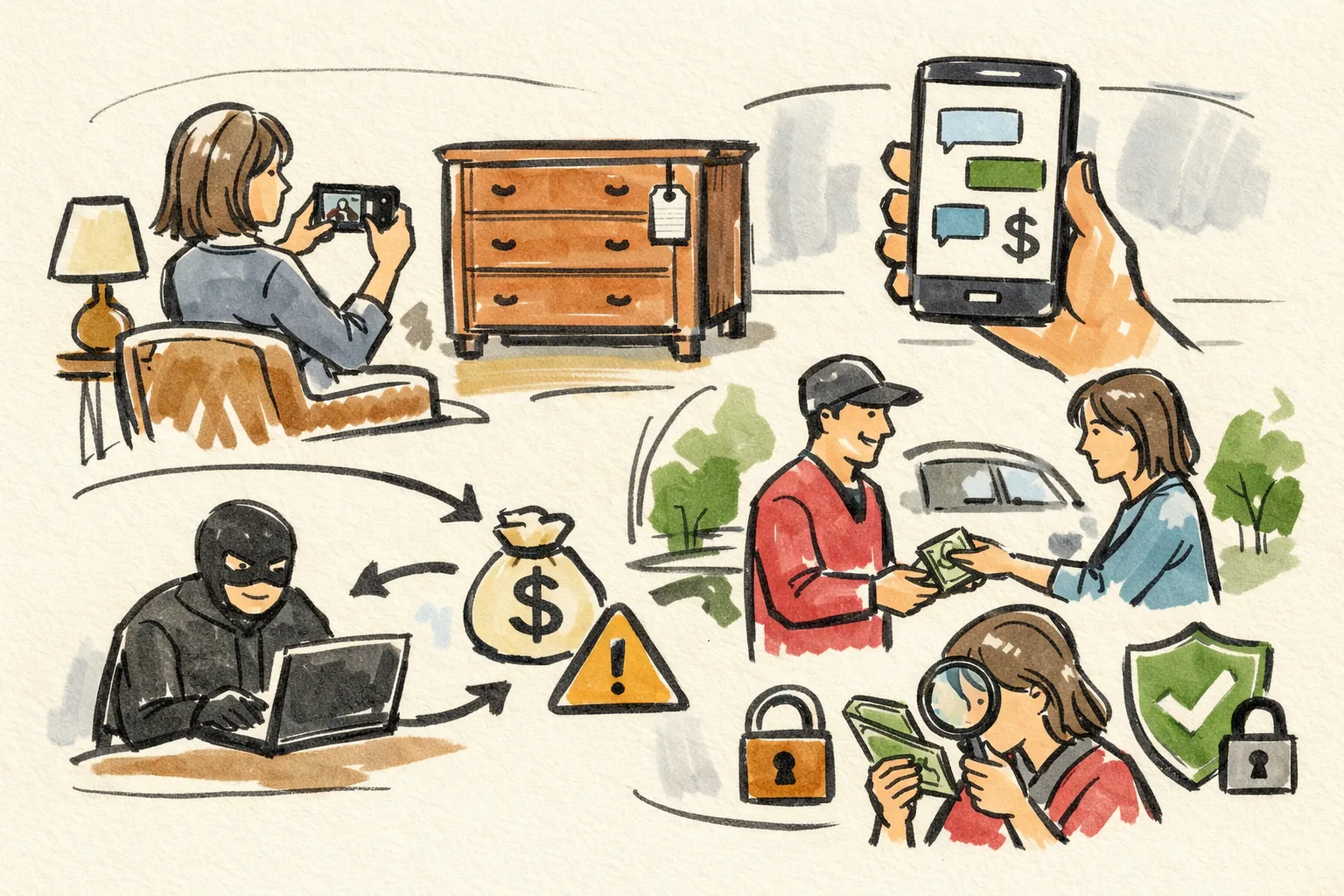
Selling a couch, dining table, or dresser is not the same as selling a lamp. The item is bulky, the buyer wants to see it, and the pickup itself can become the risky part. If you are figuring out how to sell used furniture locally without getting scammed, the safest approach is to plan the handoff before you post the listing, not after someone is already in your driveway.
For most furniture, you will be choosing between porch pickup, curbside pickup, or short-radius delivery. Each choice changes the scam risk. Porch pickup works well for small-to-medium pieces because you can keep the item visible and keep the exchange at your door. Curbside pickup gives you more room and less pressure. Delivery can be fine for a heavy bed frame or sectional, but it adds a new problem: once you drive away, your control drops fast. That is why delivery should stay within a short local radius, and why you should know where the item will be set down, who will help move it, and when payment is confirmed.
Before you agree to any option, decide three things: where the buyer can inspect the piece, whether anyone will enter your home, and whether the item leaves your sight before payment clears. Those three questions catch a lot of trouble. A buyer who insists on “just taking it now” without seeing it, or who wants a friend to handle everything while they wait in the car, is already changing the terms.
Prepare the furniture so the buyer can inspect it in person
Furniture sells better when it looks cared for, even if it is used. Clean the piece before the buyer arrives. Wipe the table legs, vacuum the cushions, and remove lint, pet hair, and crumbs from drawers. If there are loose parts, put them in a labeled bag. One missing screw can turn into a 20-minute argument if you have not already sorted it out.
Take photos that show wear honestly. A shallow scratch on the side of a dresser should be photographed close-up, not hidden behind a decorative pillow. If the arm of the sofa sags on the left side, show that side in daylight. Buyers do not like surprises, and furniture disputes often start with a simple sentence: “That wasn’t in the photo.” Real photos reduce that line of attack.
Keep the measurements ready in writing. Width, depth, height, and any door-clearance issue matter for large-item sales. A buyer may ask, “Will this fit through a 30-inch doorway?” and you should not be guessing while they are standing there. If the item has removable shelves, hidden drawers, or a storage compartment, note that too. Small details save time.
For items with assembly parts, gather all hardware before the meeting. If you have the original hex key, extra bolts, or the manual, place them together. A dining set with no screws is not just inconvenient; it can become a dispute about whether the item is complete. That kind of disagreement is easier to avoid than to fix.
Use a listing that reduces misunderstandings without overexplaining
A good furniture listing is not a sales pitch. It is a factual record. Say what the item is, what it is made of, what comes with it, and what condition it is in. If the frame is solid wood and the top is veneer, say so plainly. If the bookshelf includes three adjustable shelves and one fixed shelf, write that. If the couch includes the two matching pillows shown in the photos, name them. Details matter because furniture buyers often compare listings side by side, and one vague line can create suspicion.
Do not write a paragraph that sounds like an apology. “Used but still nice” does not help anyone. Better: “Top has one 3-inch scratch on the back right corner. Drawer slides work. Hardware included.” That sentence is harder to argue with. It also helps avoid bait-and-switch accusations, because the buyer can see exactly what was disclosed before they came over.
If the item has a visible flaw, name it in the listing and in the first photo set. A stain on an upholstered chair, a chip on a table leg, or a repair on a drawer front should not be tucked away. If you are unsure whether a flaw counts as major, err on the side of stating it. One extra line is cheaper than a bad meeting. If you need wording help for marketplace fraud risks, you can also review वर्गीकृत विज्ञापनों पर बेचते समय शिपिंग for related scam patterns that show up in classified ads.
Keep the listing short enough that a buyer can skim it in under a minute. That does not mean leaving out the facts. It means using the right facts. A sofa listing with 8 clear bullets is better than one with 3 vague paragraphs. Buyers who want more can ask. Buyers who want drama usually will.
Handle buyer messages in a way that filters out scam patterns
Messages can reveal a lot in the first 2 or 3 replies. A serious buyer usually asks about size, condition, pickup timing, and payment. A scammer often skips those basics and goes straight to pressure. They may say they are “out of town,” ask for a code, or push you to continue on another app. If the first message is strange, slow down.
Answer odd logistics questions directly, but do not chase them. If someone asks whether they can send a driver without seeing the piece, say no. If they ask for your email or try to move off the platform immediately, keep the conversation on the listing channel until they have shown basic seriousness. A good rule is simple: move forward only when the buyer can answer 2 basic questions about pickup and payment. If they cannot say when they can arrive and how they plan to pay, the deal is not ready.
Watch for rushed language. “I need this today,” “I can pay extra,” and “I’ll send a friend right now” can be harmless, but they are also common pressure phrases. Do not let urgency replace your process. The furniture is still your furniture until the money is verified and the pickup is settled.
One more useful filter: ask one practical question that only a real buyer would answer. For example, “Will you need help loading the dresser, or are you bringing a truck?” A real buyer usually knows. A scammer often dodges. That tells you plenty in 15 seconds.
Set ground rules for an in-person furniture handoff
Pick a place that keeps the transaction simple. For most local furniture sales, that means your porch, your driveway, or a public place with space to park and load safely. Avoid dark corners, isolated lots, and spots where you would need to open the back of a van in a hurry. Furniture takes room, and room invites problems if the setup is messy.
If the buyer wants to bring extra people, decide in advance whether that is acceptable. Two extra helpers for a couch are normal. Five strangers circling a cabinet is not. You are allowed to say, “One buyer and one helper, please.” That line is not rude. It is a limit.
Never load the item before payment is settled. A buyer standing beside a heavy desk can create pressure by saying, “We can sort the payment after it’s in the truck.” Do not agree. Once the piece is halfway inside a vehicle, your leverage drops and the buyer’s leverage rises. Keep the furniture where you can see it until the payment is confirmed and the terms are finished.
If the piece is large, have a clear path ready. Move rugs, clear steps, and make sure the item can exit without scraping walls. This is not just about protecting your house. A cluttered handoff gives a dishonest buyer an opening to complain about damage that happened during movement. The cleaner the path, the fewer excuses.
Accept payment only in ways that match the item and risk level
For a local furniture sale, the safest payment is usually the one you can confirm immediately in front of the buyer. Cash is simple because it is physical, but count it carefully. For higher-value pieces, some digital payments can work if you can verify receipt before release. That is why you should not rely on “I sent it” as proof.
Be extra careful with methods that can be reversed, disputed, or faked. If a buyer says they paid from a phone screen, check whether the money actually arrived in your account, not just on a screenshot. A screenshot is not payment. A voice note is not payment. A text that says “payment pending” is certainly not payment.
If the item is expensive, ask yourself whether the payment method matches the risk. A $40 side table and a $900 sectional are not the same. The more valuable the furniture, the more you need to verify the payment before releasing it. If the buyer resists basic verification, that is not a technical issue. It is a warning.
For cross-border or currency-specific situations, check how the platform handles the payment type before meeting. If you need a related guide on marketplace shipping scams, see वर्गीकृत विज्ञापनों पर बेचते समय शिपिंग. That article is about shipping, not local pickup, but the same lesson applies: confirm money first, then hand over the item.
Protect yourself if the sale gets awkward or the buyer changes the terms
Some buyers arrive late and act as if that gives them room to renegotiate. It does not. If they are 30 minutes behind schedule and then want a lower price because “the photos looked better,” you can say no and end the meeting. The price was set before they came. A late arrival does not reset the deal.
Also watch for the classic door-step change: “There’s a scratch, so I’ll only pay half.” If the scratch was already shown in the listing, the answer is no. If the buyer claims the item is different, ask them to point to the exact issue. Honest buyers usually refer to a real detail. Dishonest buyers often move from one complaint to another until you give in. Do not bargain under pressure in your own driveway.
If the buyer wants to pay less after seeing the item, or asks you to hold it while they “go get the rest later,” end the deal unless you have already agreed to that structure. A simple walk-away rule helps: if the buyer changes the price, the payment method, or the pickup terms at the door, the sale stops. No argument needed.
That rule is especially useful when you are tired or the weather is bad. Rain, cold, and a waiting buyer can make anyone impatient. Still, impatience is how people get talked into bad deals. One firm no can save you 20 minutes and a lot of regret.
Keep a simple record of the sale in case of later dispute
After the handoff, save the listing copy, the message thread, and any payment confirmation. If the buyer’s name appears in the platform record, keep that too. A quick note with the pickup time can help later if there is a question about whether the item was collected on Tuesday at 6:15 p.m. or some other time. You do not need a legal dossier. You need enough evidence to show what was agreed.
If you can, take one final photo right before pickup and one after the item leaves. That gives you a visual record of condition and completion. For a large piece, this can matter if the buyer later says the sofa was missing a cushion or the table had a different finish. A photo is not fancy. It is useful.
Keep screenshots of any unusual requests too. If the buyer asked to change the meeting place three times, or tried to switch payment methods at the last second, save those messages. Those details are small, but small details often decide whether a later complaint looks real or made up.
One last habit helps with future sales: note what worked. If curbside pickup on a Saturday at noon felt safer than evening porch pickup, remember that for the next couch or bookshelf. Good records make the next sale easier, and they also make it harder for someone to rewrite what happened after the furniture is gone.